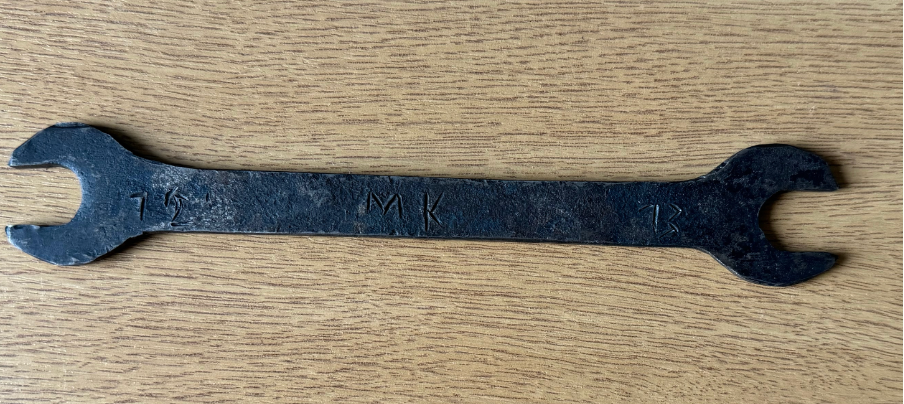
A VERY SPECIAL SPANNER
It is October 2004. I am in Liberia working on a project to rehabilitate thousands of young fighters who have been caught up in a decade-long and bloody civil war. An increasing number of them have taken up the offer of receiving $300 in return for giving in their weapon and in the hope of work or being trained for work. Such work as is available, funded by the UN, is generally manual and menial and even when people are trained (such as in computers or making furniture) there are few jobs for them. My task is to try and create opportunities for them to work through reinvigorating the small businesses that were previously run by local entrepreneurs – about which you can read more in New wine in old skins (pending).
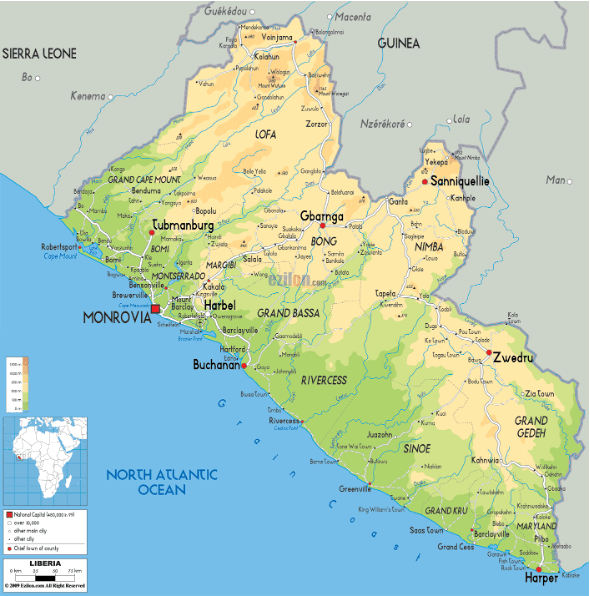
This story starts as I leave Monrovia to be driven northeast to Gbarnga, the administrative capital of Bong county. My driver is taking me on a fact-finding mission to see what businesses have survived or might be revived. We are travelling in a brand-new Nissan double-cab pick-up, recently collected from the port. In terms of the pecking order of their perceived ruggedness and reliability, Nissan comes below the Toyota Hilux but above Mitsubishi. But it is fine for our purposes as much of the road to Gbarnga is tarred, if potholed. We make good time out to the rural areas until the vehicle splutters to a halt, as if we are out of fuel. But we are not out of fuel. Almost certainly air has got into the fuel pipeline or pump – says the smiling driver. No problem – he’ll fix it!
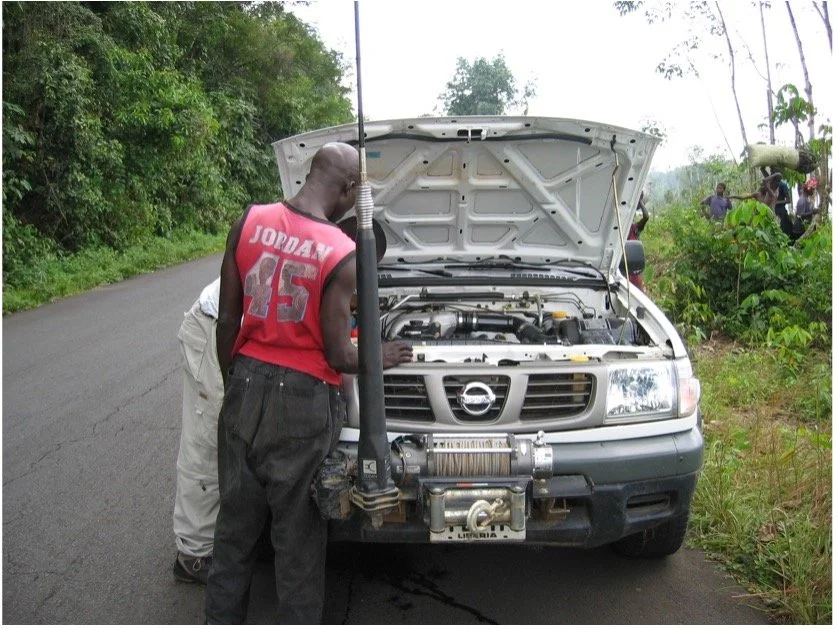
Climbing out he checks around the vehicle for its set of tools. After several minutes he tells me, with a sheepish smile, that there are no tools. They were almost certainly nicked when it was on the boat or in the port.
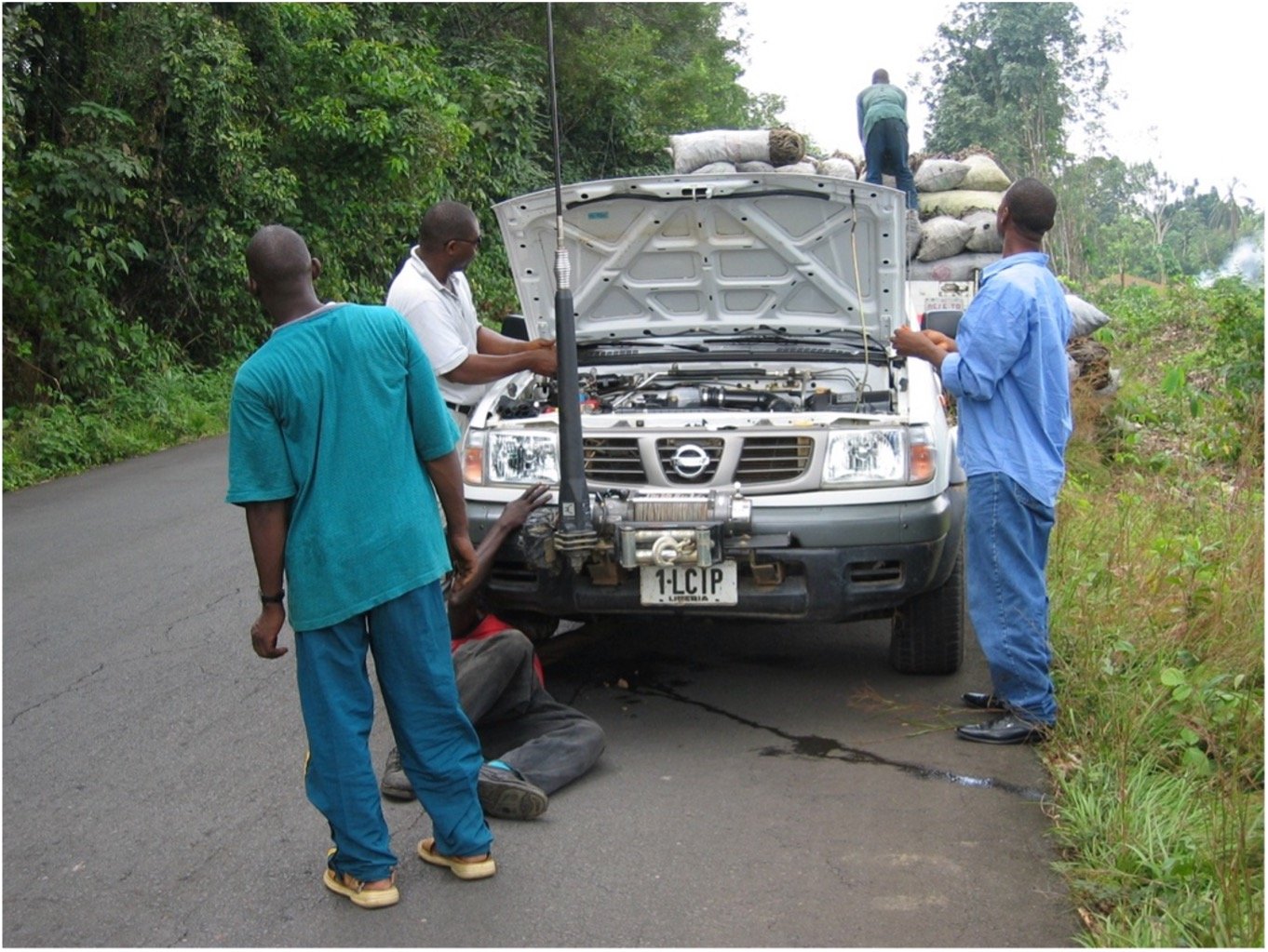
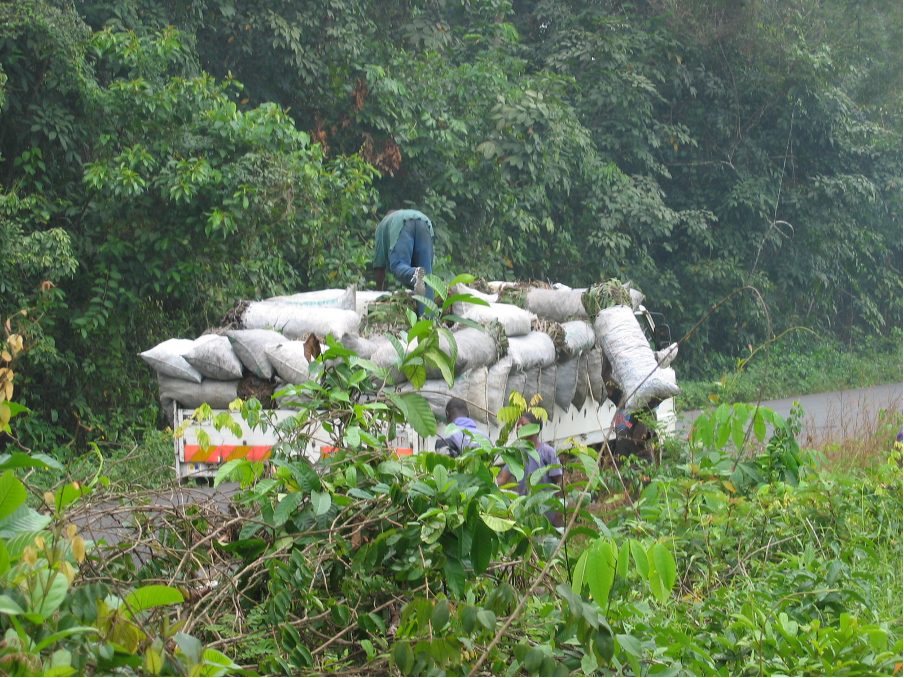
We are stranded. But by good fortune we have stopped by a field in which people are making charcoal from old rubber trees and a trader has pulled up and parked. He is loading up bags of the charcoal to take back to sell in Monrovia. Seeing our plight he kindly lends us the spanner that we need. Half an hour later, the air has been evacuated from the fuel line and we are set to go.
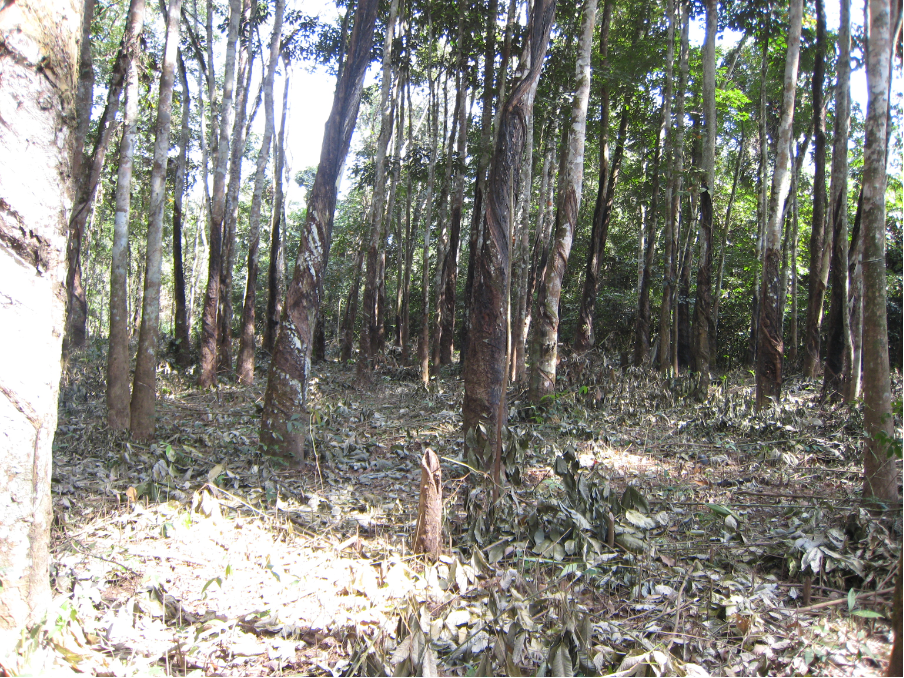
The charcoal has been made by a group of people who have set up camp here to make it from the rubber trees visible in the background.
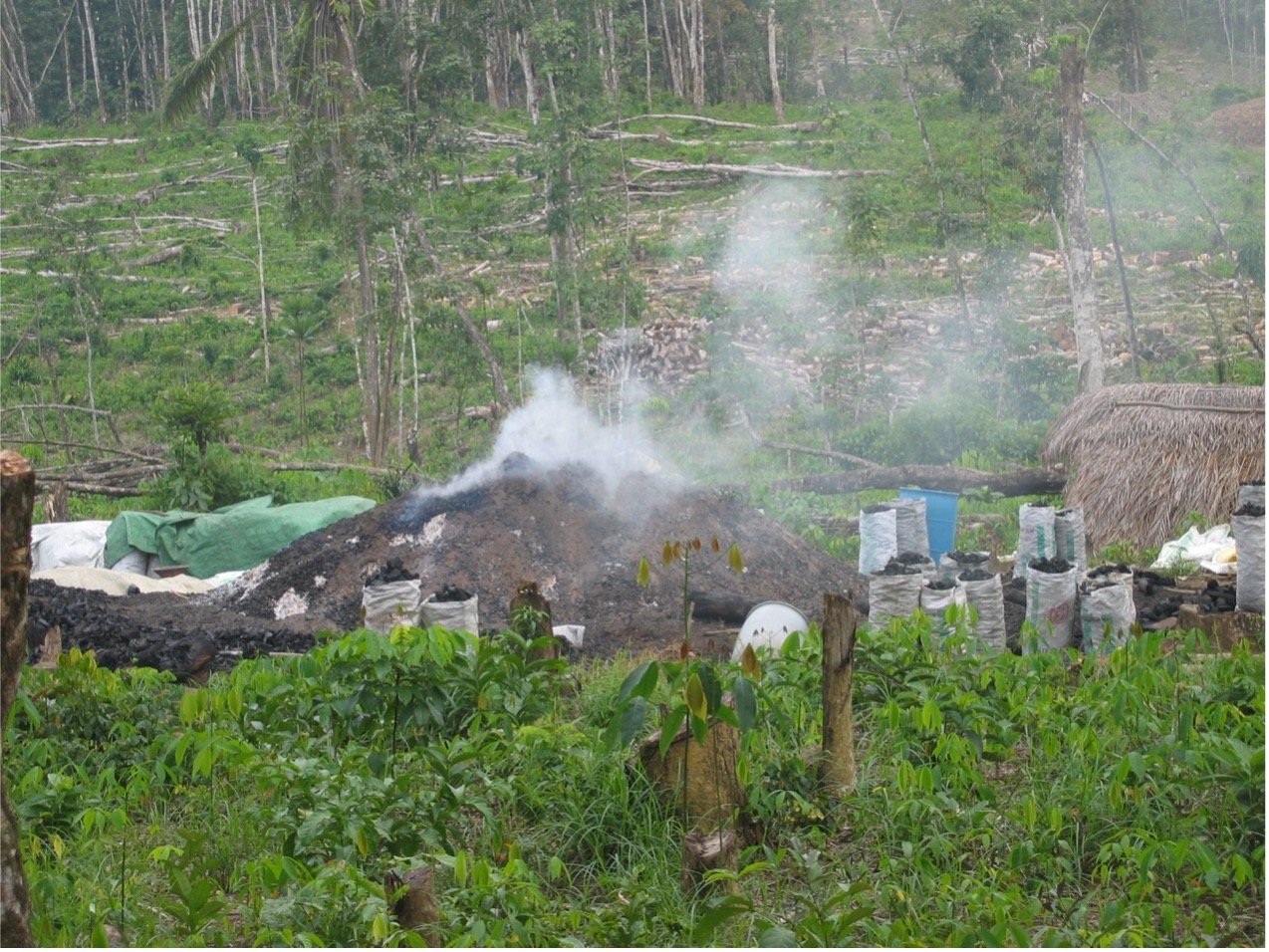
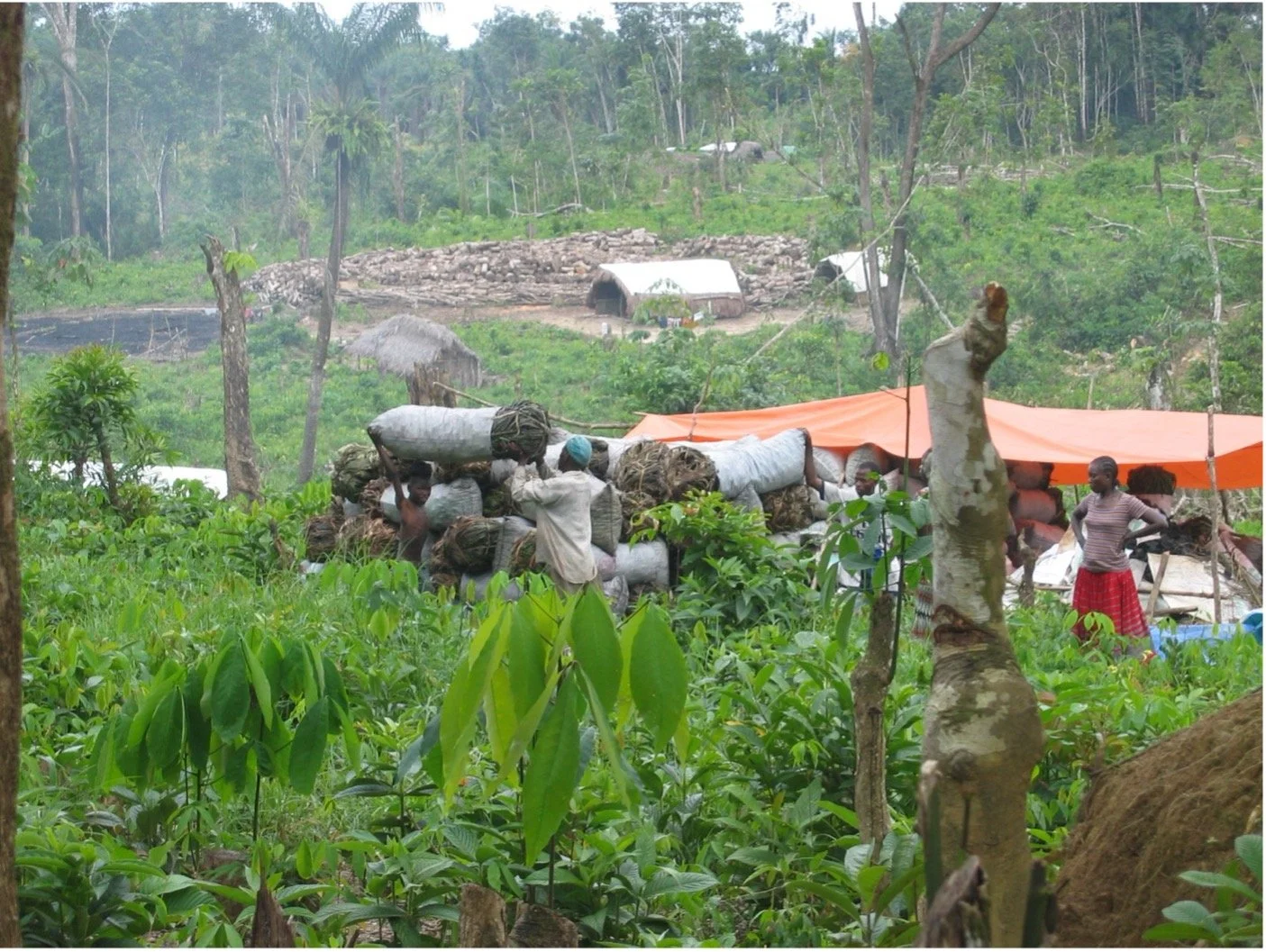
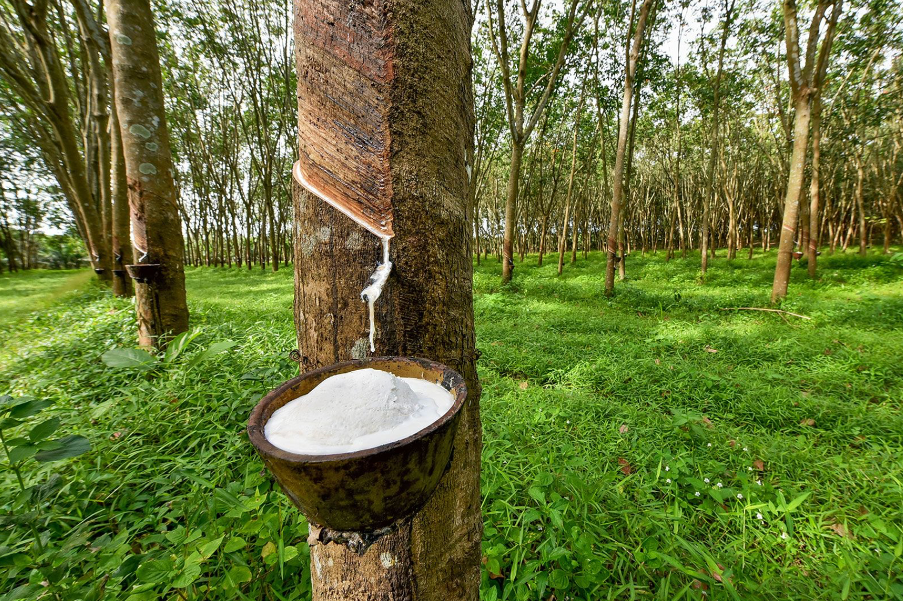
To backtrack a little, the story of commercial rubber in Liberia began in 1926 when the Firestone company recognised the country’s ideal growing conditions and established the first plantation. Since then, rubber has expanded to become a leading source of employment and income, and Firestone remains the dominant company and source of foreign exchange to this day. These rubber trees,that are being used to make the charcoal at the place where our pickup spluttered to a halt, have been irretrievably damaged by “slaughter-tapping”. Rubber is normally harvested by scraping off the bark of a small area of the tree trunk, below which is placed a receptacle to collect the latex (photo and more background courtesy of Encyclopaedia Britannica). The amount scraped is insufficient to damage the tree and the process is repeated carefully over time, allowing the bark on the areas previously harvested to recover.
During times of conflict (including during WW2 when rubber was urgently needed) those niceties are often ignored as everyone is desperate for income – whether those who are fighting to purchase guns and ammunition or those who are suffering who need of funds to survive. The bark is continuously stripped and the latex tapped – slaughter-tapped - so that the trees will eventually die, or at best take years to recover and be of no commercial interest. The trees below have been slaughter-tapped, have no commercial future and will probably be used to make charcoal.
Back at the pick-up, after the air leak ihas been ficed fixed and the spanner returned to the trader, we are back on the road to Gbarnga - conscious that we have no tools should we have another leak. Arriving in Gbarnga, we come across this shack by the roadside, behind which is a pile of scrap metal.
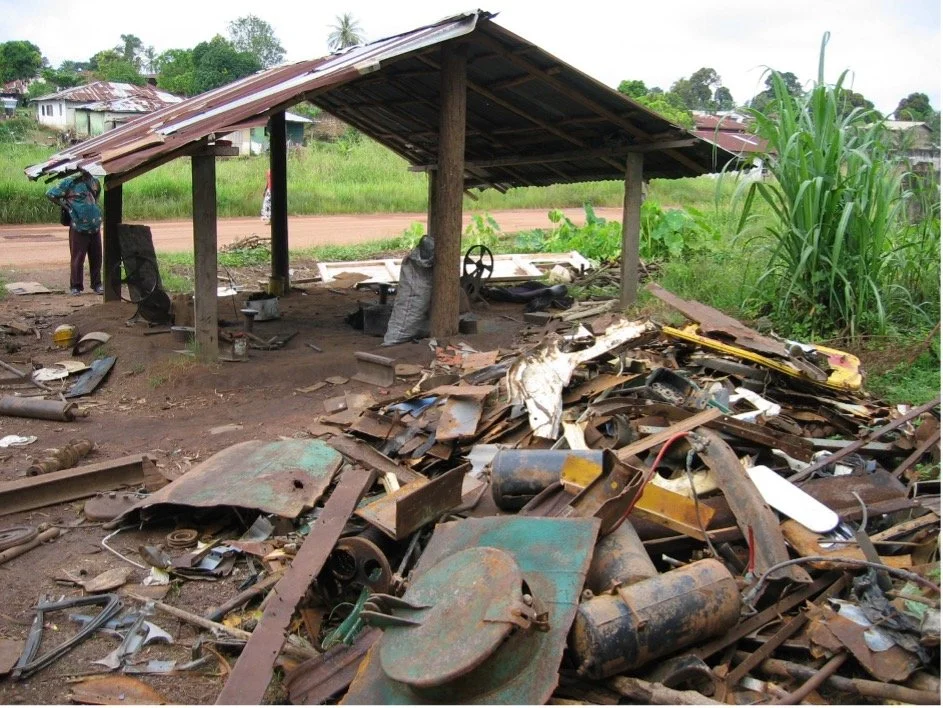
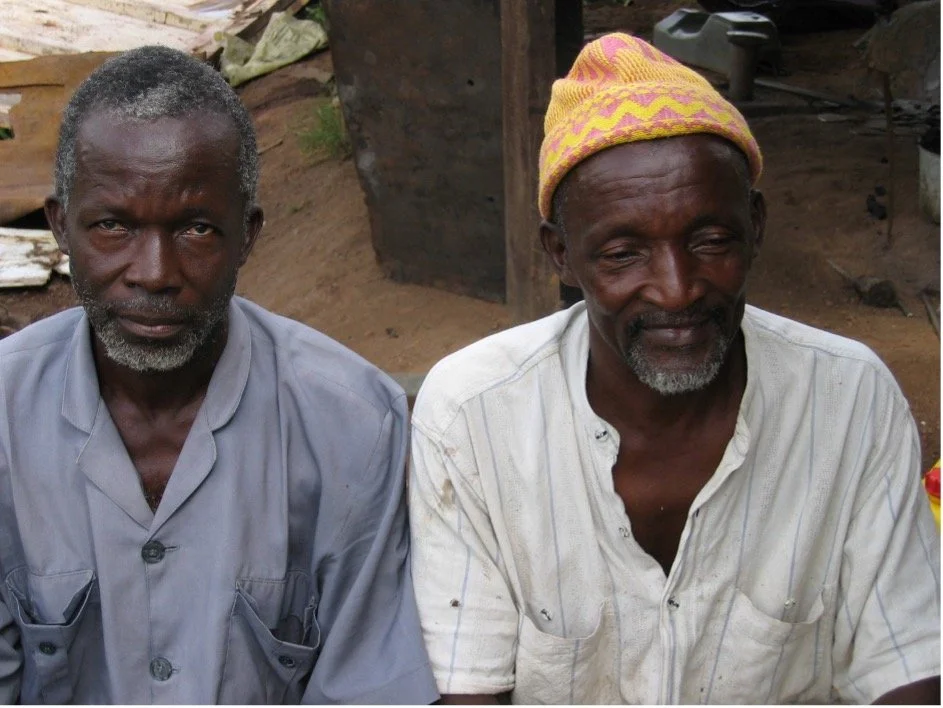
Ever keen to talk to anyone who has a business, we stop and clamber out to meet the owner and engage in conversation. Musa Koroma, in the bobble hat, is the blacksmith - who it appears can make pretty much anything from this pile of scrap - and beside him is his business partner.
Below is his “workshop”……….
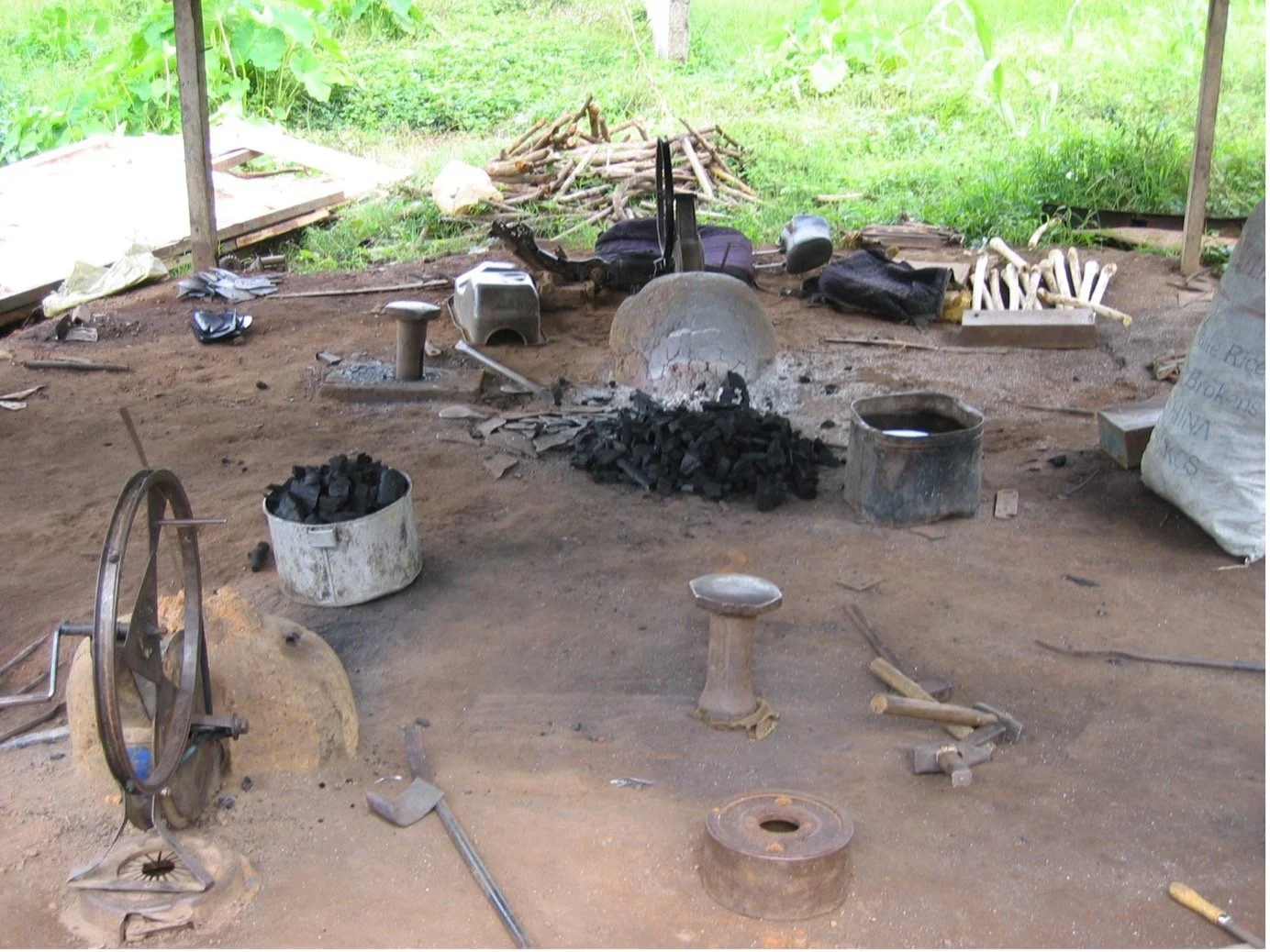
….from which he then proudly shows us the cutlass and machetes that he has made from the scrap….
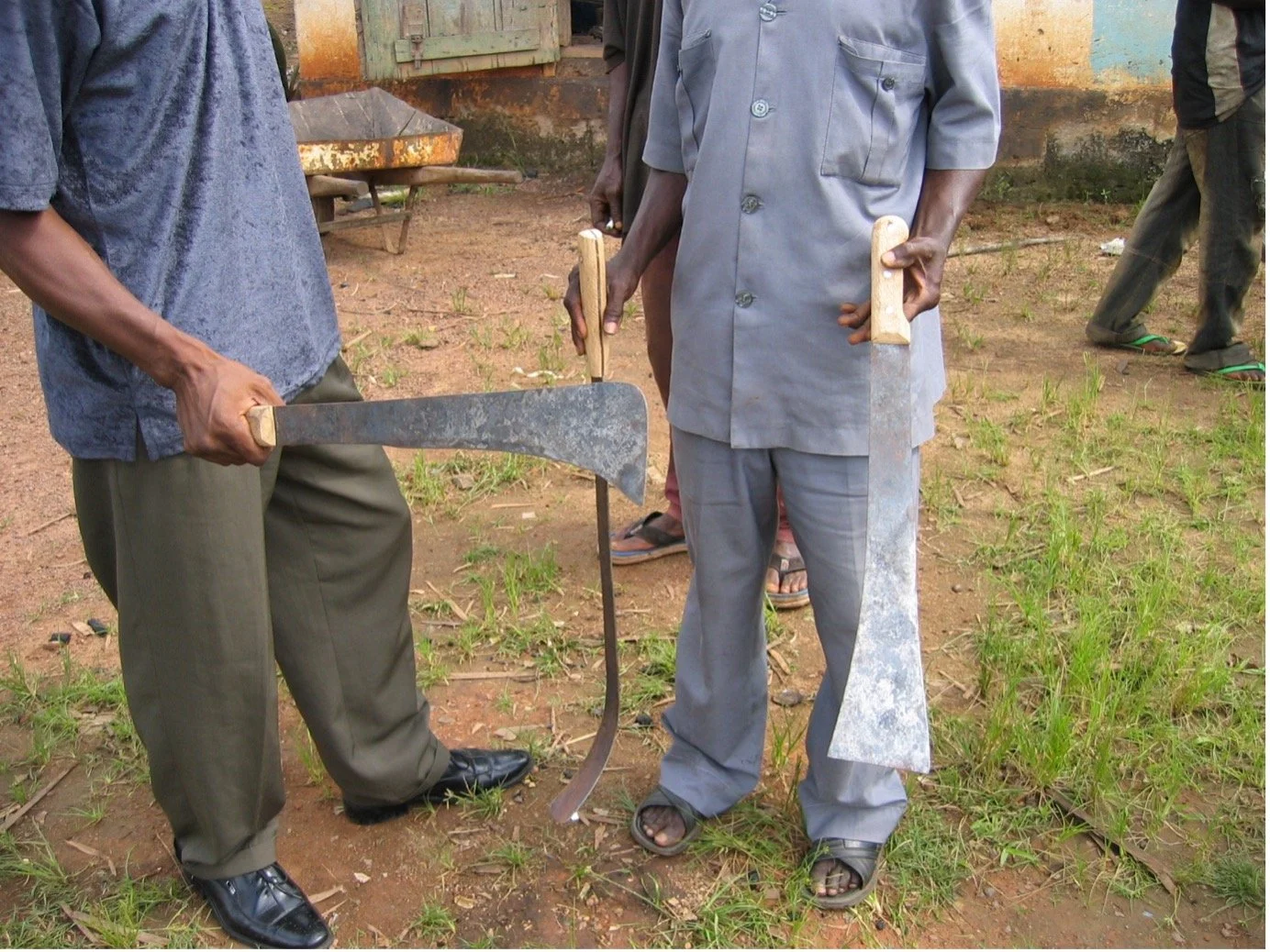
As our conversation continues we share the story of the air-leak, about how fortunate we were to meet the charcoal-makers and our continuing worry about the lack of the spanner that we would need should it happen again. Without hesitation he offered to make us a spanner. Looking around at the “workshop” and the pile of scrap I smile and politely decline. But he insists….and it would be his privilege.
With nothing to lose I agree to his proposition and ask him to proceed - confirming that we need an open-ended spanner with 12mm at one end and 13 mm at the other. He wants it to be a gift, with which I feel uncomfortable, and we eventually agree a price of $5.
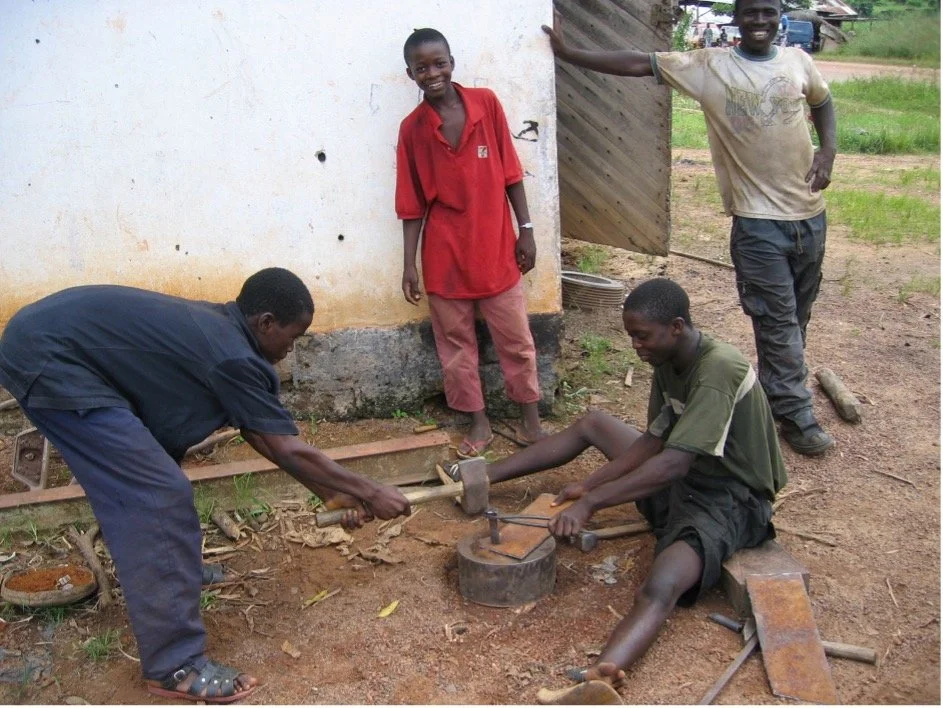
He calls over one of his “boys” and instructs them to go ahead. Calling in a couple of his mates, the three of them rifle through the pile of scrap junk – eventually focusing on a piece of steel plate about 6 mm thick, 10cm wide and 15 cm long. With just a hammer and chisel they start “cutting” the broad outline of the spanner.
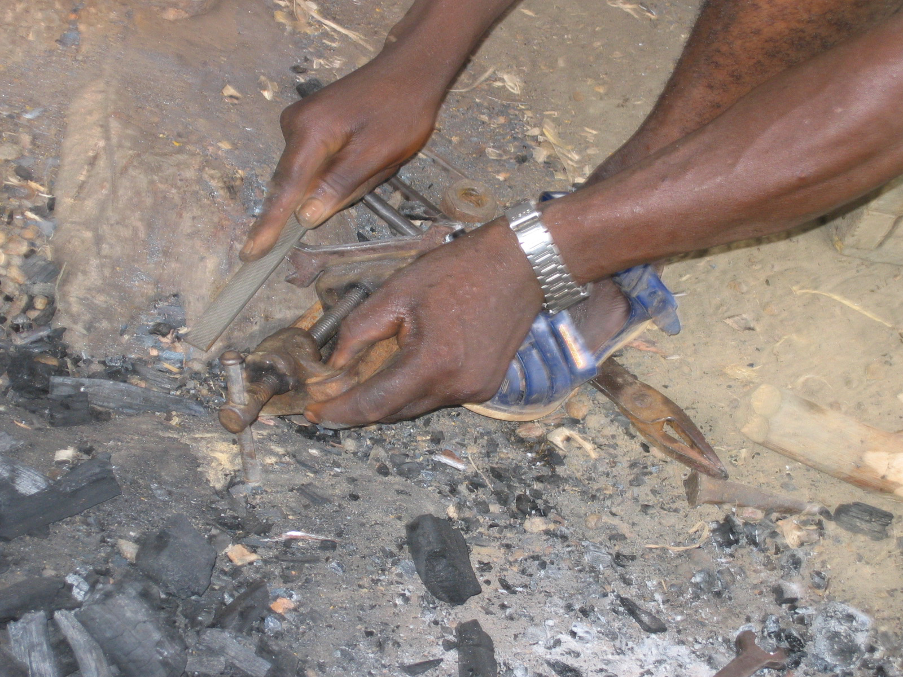
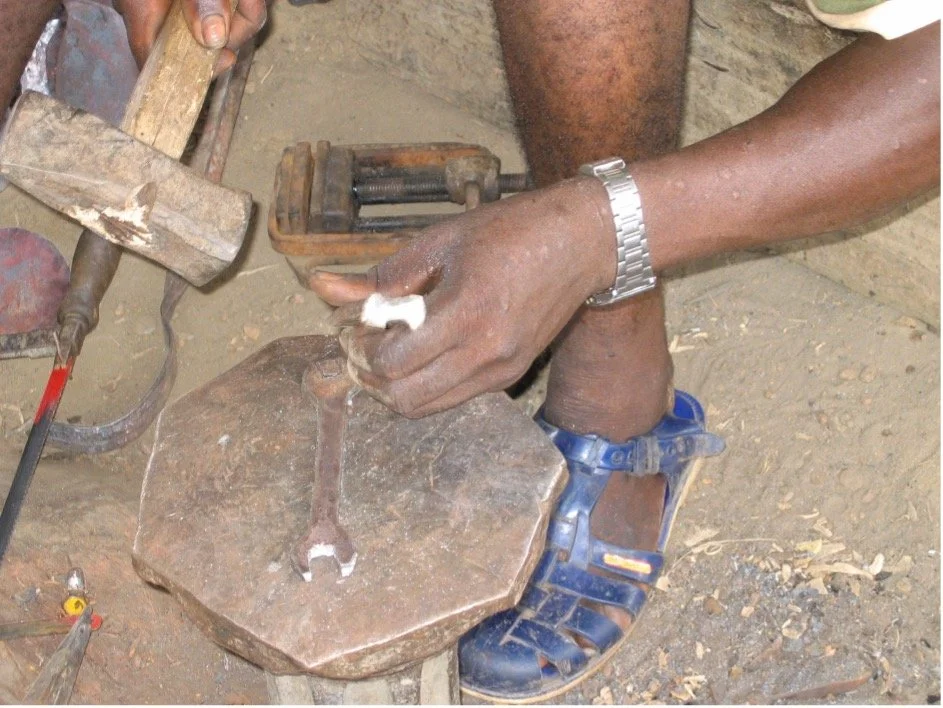
They then start work with a coarse file….
And then a finer file….
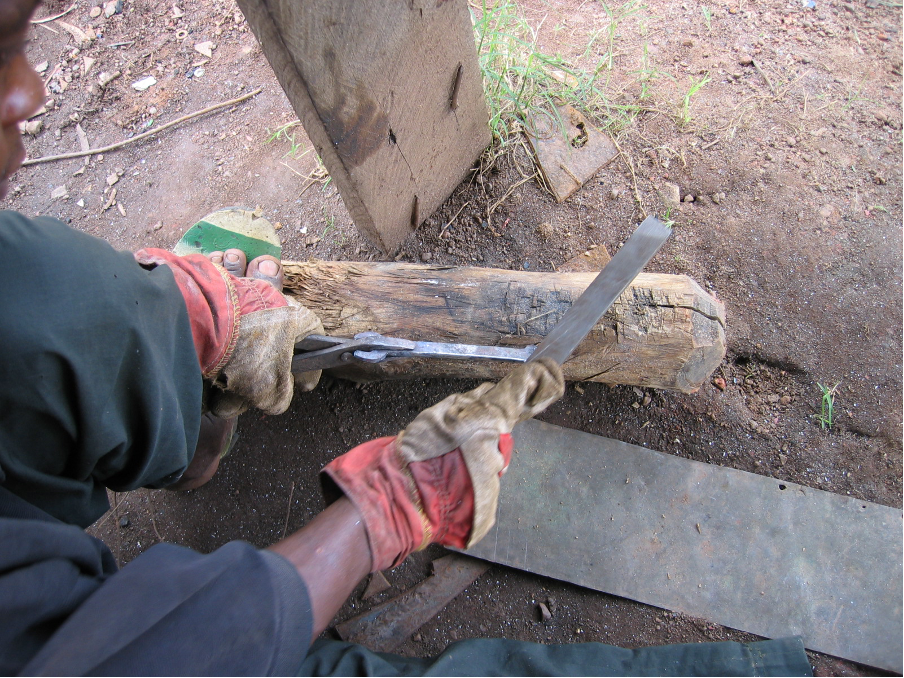
Then cool it in water to strengthen it….
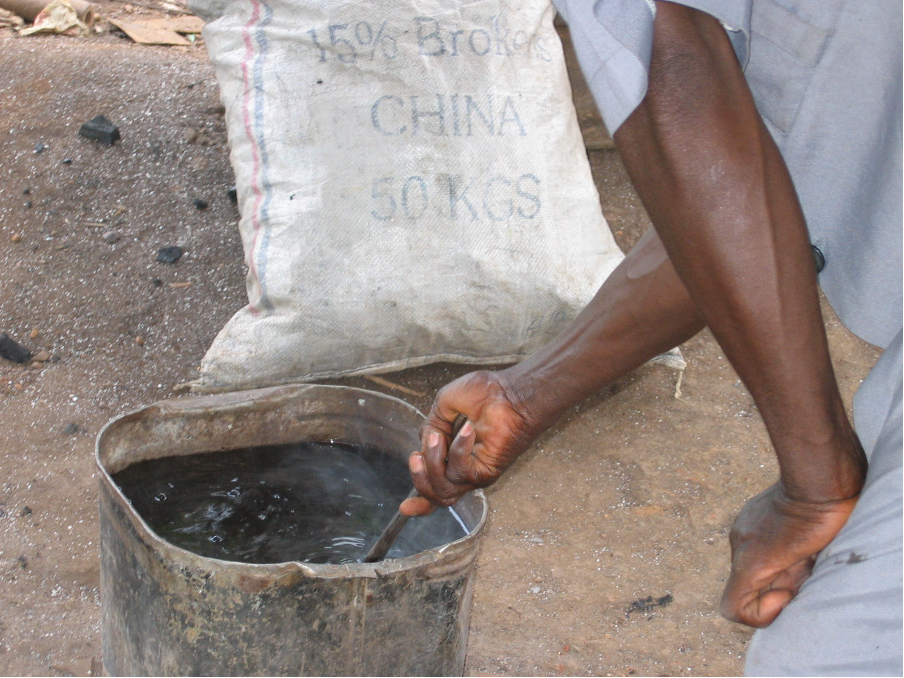
….to produce the finished spanner that fits precisely the nuts of 12 and 13 mm for which it was designed…all made by hand with nothing more than hammers, chisels, files, fire, water, hand power, determination and an abundance of skill…..
And here it is on my desk….