WHY FARMING AND WHY AFRICA?
Aged 15, my father became the Principal of a Methodist Training College in the Peak District of Derbyshire. Reflecting the itinerant nature of his work, I had been sent away to a Methodist boarding school at the age of ten. Being something of a mouse and with no interest in sport, I did not fit in well. I spent much of my time at school escaping to the music room for solace with either piano or clarinet.
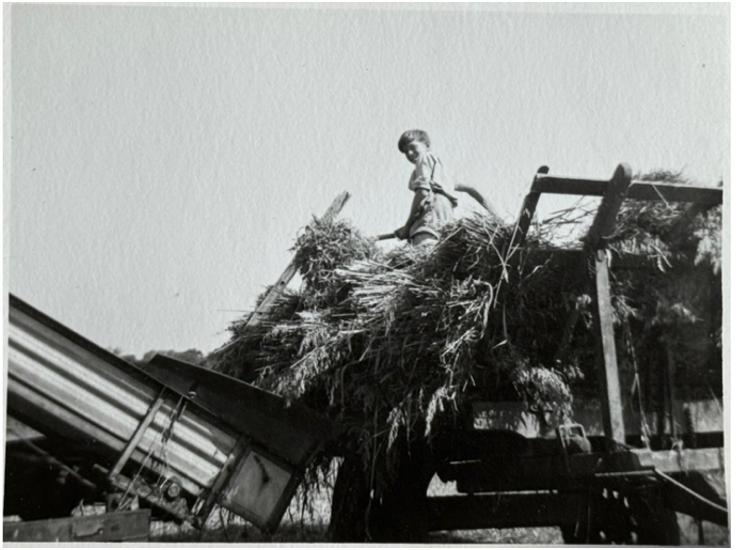
Attached to the training college was a small farm, a mixture of pasture, dairy cows, sheep and a few acres of oats and kale. It bordered the River Derwent and then folded up into a steep millstone grit escarpment. When I first returned home from school, and with some hesitation, I approached the farmer and his wife. I had spent some time on a farm in Cheshire when I was about 12 (see picture) and much enjoyed it so I was relieved that they welcomed me and allowed me to do odd jobs like mucking out the cows, feeding the calves, cooling the milk in the churns and loading hay onto a flat-bed trailer. I loved being out in the open, often alone and doing physical work. In due course I was permitted to engage more closely with the cows, calling them in for milking, giving them hay, washing their udders and eventually putting on the vacuum cups and seeing the milk emerge into the enclosed buckets. The cows were responsive to how you treated them and above all seemed non-judgemental – an approach to life that has stayed with me.
Aged eleven I was asked by the headmaster what I would like to do when I grew up. When my enthusiasm for being a steam-engine driver was dismissed as lacking in aspiration I suggested that instead I might become a Minister like my father. This was met with enthusiasm and I was placed on a trajectory that was entirely based around the arts – Greek, Latin, English, French and Ancient History. Hence I completed my first round of A levels having not had a single hour of science.
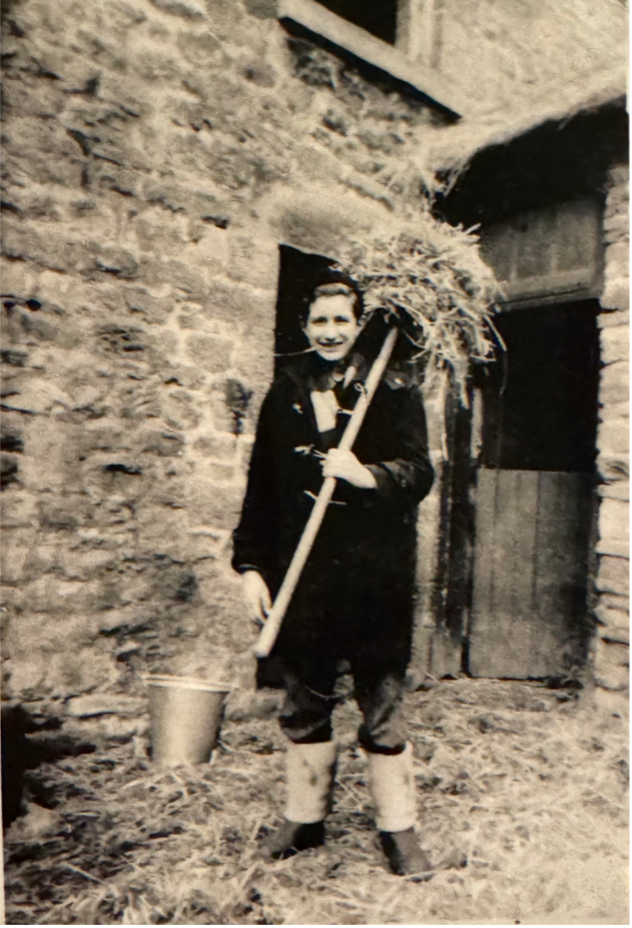
Meanwhile back on the farm it was not long before I decided that I would like to study agriculture although I knew this would be difficult given my total lack of science.
On the third of February 1960, aged 17, I cycled back home from the farm – smelling as usual of cows - and after supper we watched the news on a grainy 12-inch black and white television. It included a report from Cape Town where the then Prime Minister, Harold MacMillan, had delivered what is referred to as his “Winds of Change” speech. In it he signalled that the British Government would no longer impede the colonies seeking independence and highlighted the need for Britain to assist them in the process. This was my “road to Damascus” moment. I decided, then and there, that I wanted to study agriculture so that I could work in these newly independent countries.
It took nine years to transform the dream into reality. The first step was to undertake an additional year at school studying biology and geology whilst applying for a place to study agriculture. Despite my lack of basic science, I received an offer from Armstrong College, Newcastle – then part of Durham University – subject to (a) my undertaking a practical year on a farm whilst studying botany, zoology and chemistry at night school, (b) doing a preliminary year at university focused on basic science and (c) securing a positive reference from my headmaster. The latter proved not to be as easy as hoped. When I met the headmaster, a dour war veteran with an artificial leg, to seek that reference his face was impassive. “Do you realise that you are only the second boy in the 200-year history of the school who has studied agriculture? Why can’t you study a a proper subject of which you and the school can be proud?” But I wouldn’t budge and eventually he agreed to support my application providing that I undertook to “study the poetry of the land” – a commitment that I now realise I fulfilled some 55 years later with The Soil Never Sleeps.
I spent a year doing long days of practical farming. Up at five to do the milking I would then travel on my BSA Bantam 125cc motorcycle to evening class to study more science. For the first six months I was on a farm in the south of Derbyshire where, amongst other things, I learnt to lay hedges and to carry 90 kg sacks of grain. For the next six months I came back to the hill farm where I had first fallen in love with farming and where, amongst many other things, I learnt dry stone walling. I learnt many lessons from the farmer, Horace Dalton, a man of great warmth and of few words, and from his shy wife Bessie.
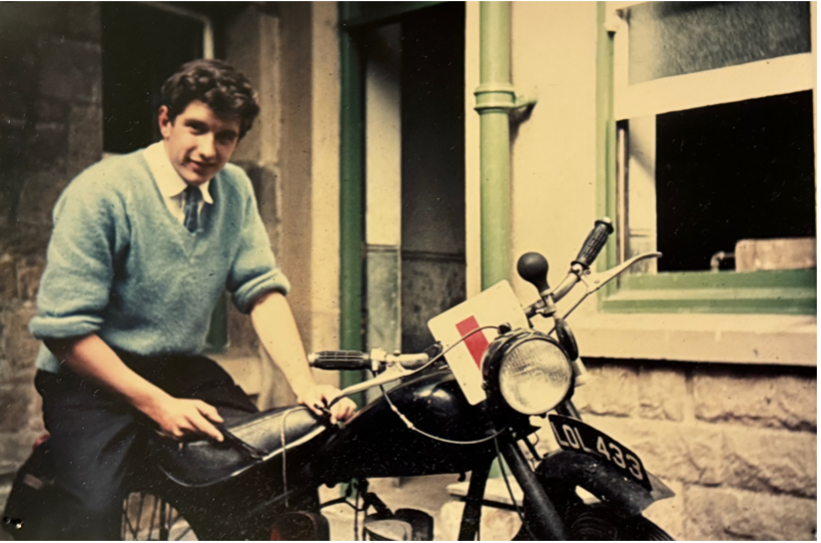
In September 1961 I set off on the 150-mile journey to Kings College, Newcastle – then part of Durham University. I travelled up on my little 125cc BSA Bantam, with a trunk strapped precariously on the back containing everything I needed. With a maximum speed of 45mph, grinding slowly up the two-lane A1 with occasional pit stops, it took about five hours to get there. Eventually I arrived to install myself in a shared room in a hall of residence.
After a year of working outside on a farm, often alone and rarely alongside more than a couple of people, I found myself somewhat overwhelmed by the crowds – it was a bit like going back to school. In my first year, the Department of Agriculture was housed in a splendid brick building in the main quadrangle, next to the Department of Architecture (see picture below). On my first day I walked up the quad to the department, smiling and saying hello to everyone I met - just as I would do in the Peak District. No-one smiled back. On reflection I am surprised I was not arrested.
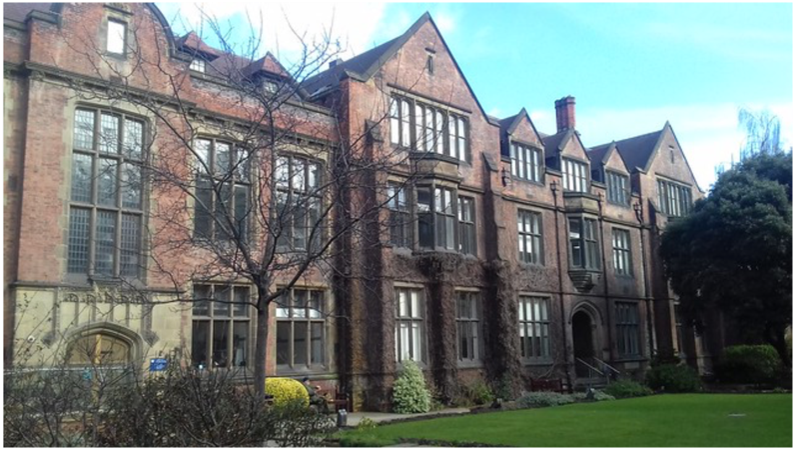
Here I found myself unavoidably having to engage with people, with making decisions about who to set next to in the lecture hall or the dining room. Agriculture students (Agrics) had a tradition and a reputation for heavy drinking and for meeting downstairs in “the Bun Room” every Thursday evening to do just that. Reflecting my Methodist upbringing, alcohol had never appeared in my life. I had no interest in it and saw no reason for engaging with it now so I didn’t join them in the bun room. I was not being judgemental and, although I made good friends with fellow students, I am sure some saw it like that.
Despite having a New Zealander as Head of Faculty, the Department’s outlook was very parochial – focused on the north of England and what lay to the north of that. When I wanted to do a special study on peas I had to get the permission of the Senior Tutor as peas were grown south of the River Humber (i.e. south of Yorkshire!). When I wanted to do a study on hops I had to get the approval of the Prof – as hops were grown south of the River Trent (south of Nottinghamshire!). The department’s horizons seemed to be limited to what grew in the UK, with a focus on the north of England. We never learnt anything about trees nor about soil biology. This came back to haunt me when I later arrived in Africa to teach tropical crops!
I studied hard and got engaged in various social schemes. One of these, the Coal for the Old Scheme (about which more below), convinced me that “it doesn’t have to be like this” and that change is possible. I passed my general agriculture degree then spent the summer working 16-hour days for 7 days a week on the pea harvest in Lincolnshire. Together with a couple of other students we were driving elderly articulated Bedford lorries pulling trailers, that had earlier been towed by tractors alongside the mechanical harvesters, from the field to the Birds Eye factory at Louth. We earned good money, slept in a caravan which only had cold water and soon decided to grow beards.
Returning to the college, no longer part of Durham University but of the newly established Newcastle University and with a new agricultural building, I spent a final year working towards an honours degree in crop production. Motivated by my wish to work in agriculture overseas I plastered the wall of my room with cards dotted with bullet points about potatoes, fertilisers, animal nutrition, pests and diseases – and totally immersed myself in them. To the surprise of many, myself included, I was a awarded a first-class honours degree and was encouraged to continue my studies as a postgraduate student at Wye College, where I duly arrived and found myself under the tutelage of Professor Graham Milbourn. At our first meeting he asked me what I would like to study. When I asked what the options were he advised it was either peas or maize. As peas had the shortest growing season, (and not because I had spent a summer carting peas in an articulated lorry) and because this would allow more time to engage in extramural activities, I chose peas.
Three years later, with a doctorate in crop physiology under my belt and as you can read in ‘travels of a slow thinker’, I set off for Africa.