THE WONDERFUL WORLD OF WORDS
Between the ages of four and ten, Tom went to school in the village. Initially at Kings Stanley Infants School before transitioning to the junior school a few hundred yards away across the playing field - now merged to become Kings Stanley Primary School. The school is about a kilometre away from our house and we had the option of walking along the road, or up the Cotswold Way when the weather was fine or cycling - initially on a trailer bike….

….and latterly on his own two wheels….

When we were walking to school our conversation often used to veer round to the origins and meaning of words - an interest that I inherited from my parents and which seemed to be shared by Tom. During his last year at junior school I thought that this interest might be extended to his peers, so I suggested to the head teacher that I might write a few vignettes of words frequently used, with an illustration by Fiona, to test this idea. The first couple of words stimulated interest - since they created awareness that words came from somewhere. But later it became clear that an extra dimension was needed to sustain their interest - and that dimension proved to be words linked to football or a film or pop music! Only fifteen such vignettes were written but they were fun at the time and may still be of interest to someone who wants to encourage his or her children or grandchildren to learn about the meaning and origins of words. Here they are….with the cartoons drawn by Fiona - starting with the introduction….
INTRODUCTION
Every day we talk to each other. We talk to our friends, family and teachers – and we do it using words. We use words to tell other people what we are thinking about and what we want them to know, to share ideas and to warn people of danger. As we talk to them, we assume that whomever we are talking to knows the meaning of the words that we use – for if they did not know the meaning then it would be pretty pointless talking to them. Imagine trying to explain the rules of cricket to someone who only spoke Russian! So understanding the meaning of words is important.
Here is a simple example. We all use the words “right” and “left” and we know what they mean. But in fact many people confuse their right and their left. In many situations it may not matter, but suppose that we were climbing a mountain, you were tired and you could not find anything to hold on to – then someone shouted out “there’s something to hold on to just on your left”. If you then stretched out to your right, you would lose your balance. It could be serious. So when we use words it is important to know what they mean. But it can also be fun understanding where words come from or knowing whether there are other words that could make the meaning clearer.
We will find that many words come from other languages – including Latin and Greek. How boring! Not really. For example, Latin is the language that the Romans spoke – and remember that the Romans ruled Britain for over 300 years from around AD50 and you can see the results of their being here at, for example, Cirencester. Did you know that the Latin word for camp is castra and that most of the place names ending in cester or chester were Roman camps – for example Chester, Manchester, Gloucester and Cirencester. The Romans came from Italy and Latin gradually evolved into the language that Italians speak today. We will find that many of the words that we look at originate from Latin or Greek or old French, German or Scandinavian languages.
In the wonderful world of words, each week we will look at just one or two words – understand what they mean, where they come from and how they relate to other words that sound similar. This is for fun. You will not be tested on it – although you might like to try them out on someone at home. Please collect them each week and save them in the plastic folder. The first word – over the page – is TRACTOR.
NUMBER ONE – TRACTOR.
“Tractor? I know what a tractor is”. Of course you know what a tractor is – but do you know why it is called a tractor? Well here’s a clue. What does a tractor do? The main thing that a tractor does is to pull things – ploughs, carts, harrows, sprayers – because the word tractor comes from the Latin word “tractus” which means “pulling”.
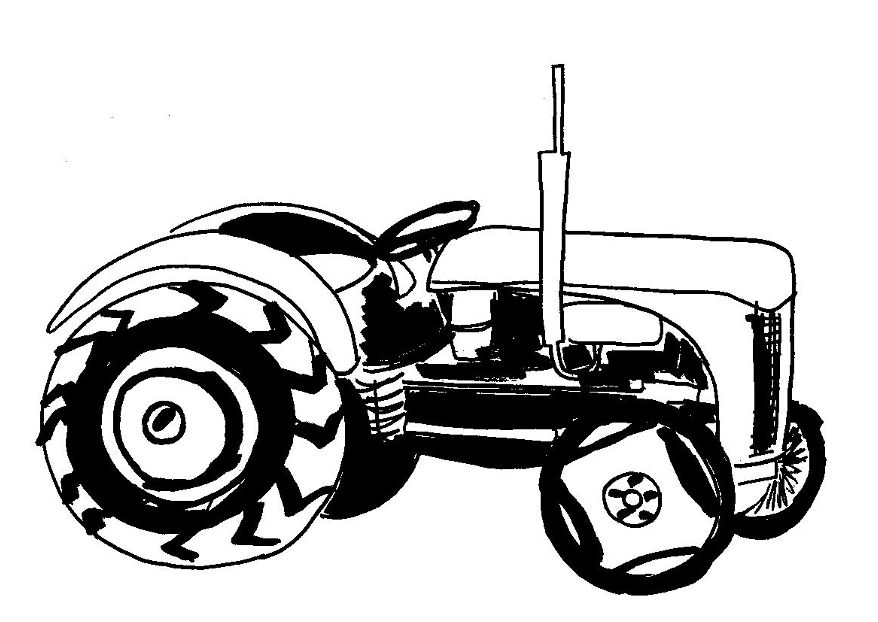
Can you think of any other words that involve the sound “tract”. Well, how about traction. You sometimes see these old steam-driven traction engines around our country lanes. Their original job was to pull implements across fields. If you hurt your back you might be taken to hospital where they would lie you down and slowly pull you at both ends of your spine, to relieve the pressure on your back. This is called traction.
If you have a mountain bike they probably have those knobbly tyres. Why? Because they grip in the muddy ground and pull you through – they give the bike traction.
Sometimes when you read a book it has some extracts from other stories. Extracts are a part of a story – parts that have been pulled from the story – because “ex” means “from” and “tract”, as we now know, means pulled. If you go to the dentist you may have an extraction – which means that a tooth is “pulled from” your mouth.
Can you think of any other words that include “tract” – how about distract, attract and contract. Any others? If you distract your Mum’s attention so that you can get a second biscuit you literally “pull” her attention somewhere else whilst you try and get the biscuit. If you attract someone, you “pull” his or her attention towards you.
So next time that you see a tractor, that you ride your mountain bike and find that you have good traction in the mud or that you read an extract from a book – remember that its origin is the Latin word for “pull”.
NUMBER TWO – OLOGY.
I know that OLOGY is not really a word, but it is a part of lots of words, like technology. OLOGY comes from the Greek word LOGIA, which means “the knowledge or understanding that a person has about something”. LOGIA comes from the Greek word LOGOS, which means a WORD. So OLOGY means the KNOWLEDGE or UNDERSTANDING of something. Let’s look at some OLOGIES and see what they mean.
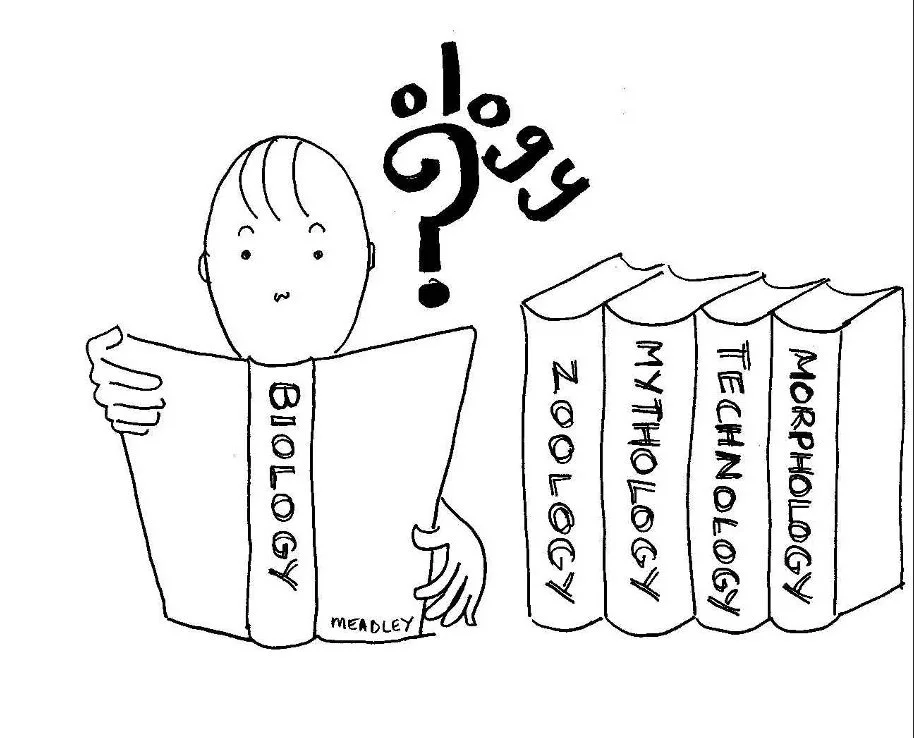
BIOLOGY. The Greek word BIOS means life or way of living. So BIOLOGY is the OLOGY (understanding or knowledge) of BIO (life).
TECHNOLOGY. “Techno” also comes from a Greek word meaning arts or crafts. Originally, technology meant “understanding the skills of the various crafts” – such as spinning, weaving and basket-making. As people developed engineering and scientific skills, the word came to mean the general understanding of how things work – such as the petrol engine, electronics or computers. Technology means the OLOGY (understanding or knowledge) of TECHNO (or what makes things work).
MYTHOLOGY. A myth is a made up story usually involving supernatural people or powers. It comes from the Greek word MUTHOS, which means exactly the same thing. So we have the OLOGY of MYTHS.
MORPHOLOGY. It is not a word that you use every day in the playground, but you do know about morphing. You see it on your TV screens or at the cinema, when they take a face or a person and stretch it into all sorts of different, often funny, shapes. That’s morphing. It comes from the Greek word MORPHAY, which means a form or shape. So morphology is the OLOGY (understanding or knowledge) of MORPHS (forms or shapes).
STILL INTERESTED? If so, turn over the page and there are some more “ologies” for advanced Wordstars. If not, get out your books or games and take a look another time.
FOR ADVANCED WORDSTARS. In the table below are some more “ologies” – all of which mean the knowledge or understanding of something. It starts with words that you often hear and then gives some words that are less common, but which have interesting origins – this time mainly from Greek words. Column one gives the OLOGY word. In column two, in each line you need to say “the knowledge or understanding of” ………… whatever words are there (for example, the knowledge or understanding of the environment). The third column tells you the origin of the part of the word that comes before OLOGY.
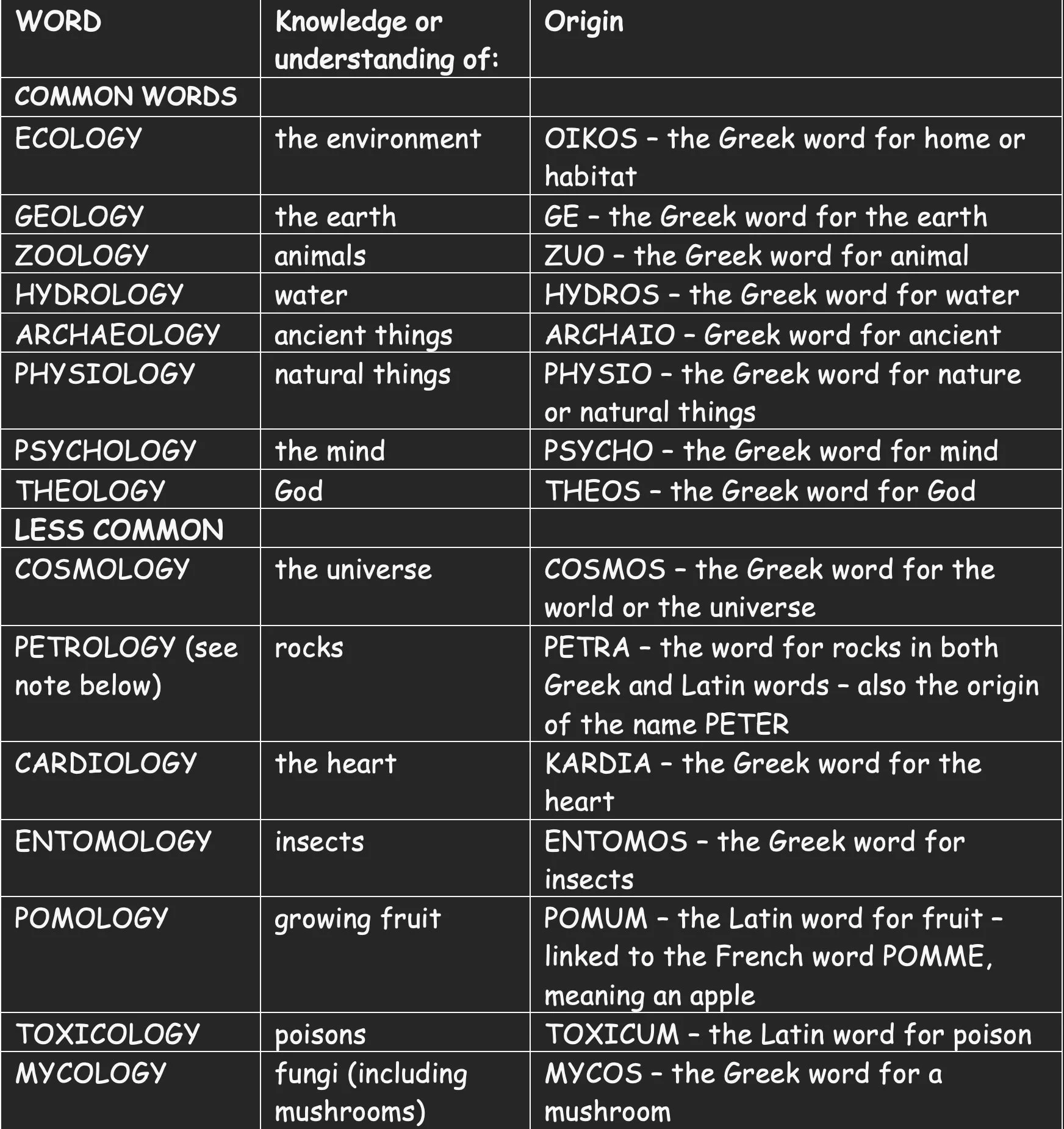
NOTE ON PETROLOGY. This word is related to PETROL that we use in our cars and lawnmowers. As you know, petrol is refined from oil, which is drilled and pumped out of the rocks. The word PETROL is a shortened version of PETROLEUM, with OLEUM being the Latin for OIL. So petroleum (which we now shorten to petrol) is OIL (oleum) extracted from ROCKS (petra).
NUMBER THREE – DYNAMITE.
Dynamite is an explosive. It can be used in a helpful way, such as in a quarry to break down rocks into smaller pieces. It can also be used in a harmful way to make bombs to destroy buildings and kill people. Dynamite comes from the Greek word “dynamis” which means power, energy or force. Dynamite is made from nitro-glycerine and was invented in Sweden in the nineteenth century by Alfred Nobel
We sometimes describe people as being DYNAMIC – meaning that they are active and full of energy.
There are other words that sound like dynamic. What about DYNAMO? This is a machine that can convert mechanical energy into electrical energy. It used to be called the dynamo-electric-machine, but that is a bit of a mouthful so it was shortened to dynamo. In the old days, every car had a dynamo, which took power from the fan belt in the engine and converted it into electricity, which was then stored in the battery, where it was used to start the car or power the lights. The dynamos in the cars of today are called alternators, and are more efficient.
You know that dams are built to create reservoirs, to hold water. In some cases, the water in the reservoir flows down through narrow pipes, going faster and faster as it drops down many hundreds of metres, until it reaches the bottom and turns the wheels of a dynamo. This converts the energy of the rushing water into electricity, which can then be sent along wires to provide light and energy in homes and factories hundreds of miles away. In the past, before people knew how to generate electricity, flowing water in streams and canals was used to turn water wheels and drive machinery. There is one of these water wheels at Stanley Mill and another by the canal at Ryeford industrial estate.
All these words – dynamite, dynamic and dynamo - have their origin in the same Greek word meaning power, energy or force.
NUMBER FOUR - MICROSCOPE.
When you look down a microscope you can see things that are normally invisible because they are so small. This is because a microscope contains lenses that make the things that you are looking at appear to be bigger than they really are. The word MICROSCOPE comes from two Greek words. The first is MICROS, which means small. The second is SCOPOS, which means to look at or to examine. So a microscope is an instrument that allows you to look at (scopos) things that are very small (micro). Things that are so small that you cannot see them are often called MICROSCOPIC.
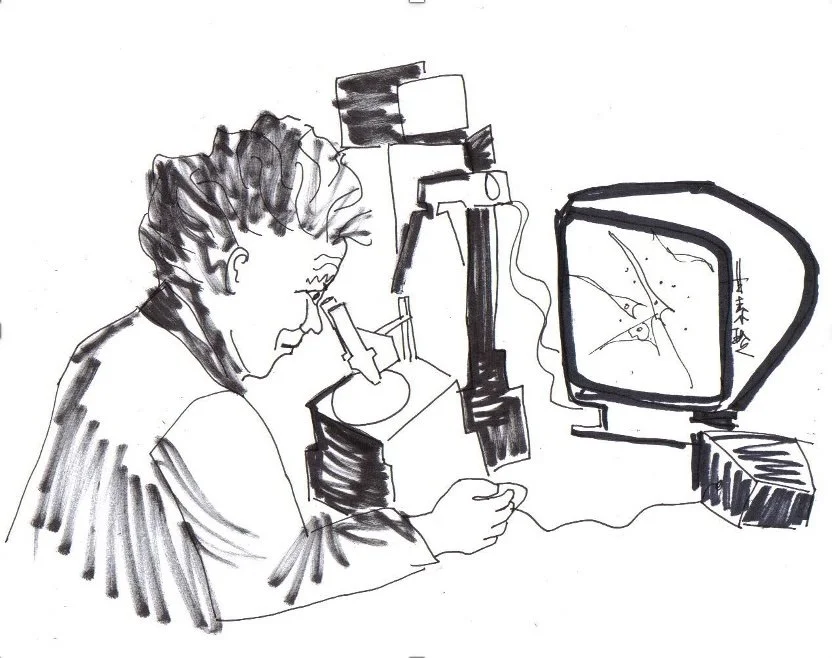
You will find the sound MICRO in a number of other words, meaning something that is small. When we looked at OLOGIES, we started with BIOLOGY – the understanding of life and of natural things. Very small living things (including bacteria and viruses) are called MICROBES and the science or understanding of them is known as MICROBIOLOGY.
When you become a pop star, you will sing to your thousands of fans using a MICROPHONE. PHONOS is the Greek word for sound. So a microphone is an instrument for making small (micro) sounds (phonos) louder so that people far away can hear them.
When you are measuring things in school you use metres, centimetres (one hundredth of a metre) and millimetres (one thousandth of a metre). When you want to measure something really, really small - something microscopic - then you can use a MICRON, which is one millionth of a metre.
Even the carmakers use MICRO – look at the Nissan MICRA or the Volkswagen MICROBUS.
Spies used to make their messages very small so that they would not be found out. One of their tricks was to make a MICRODOT. They would write a message on a round piece of paper, photograph it and then make the photograph smaller and smaller until it was the size of a dot. Then they would use the dot as a full stop in a letter. Nobody else would know that it wasn’t an ordinary full stop except the person receiving the letter, who would put the dot under a microscope so that he or she could read the very small letters in the message. Are there any microdots in this message?
NUMBER FIVE - TELESCOPE.
As everyone is taking French this week, the Head Teacher has asked that we include both the English and the French words!
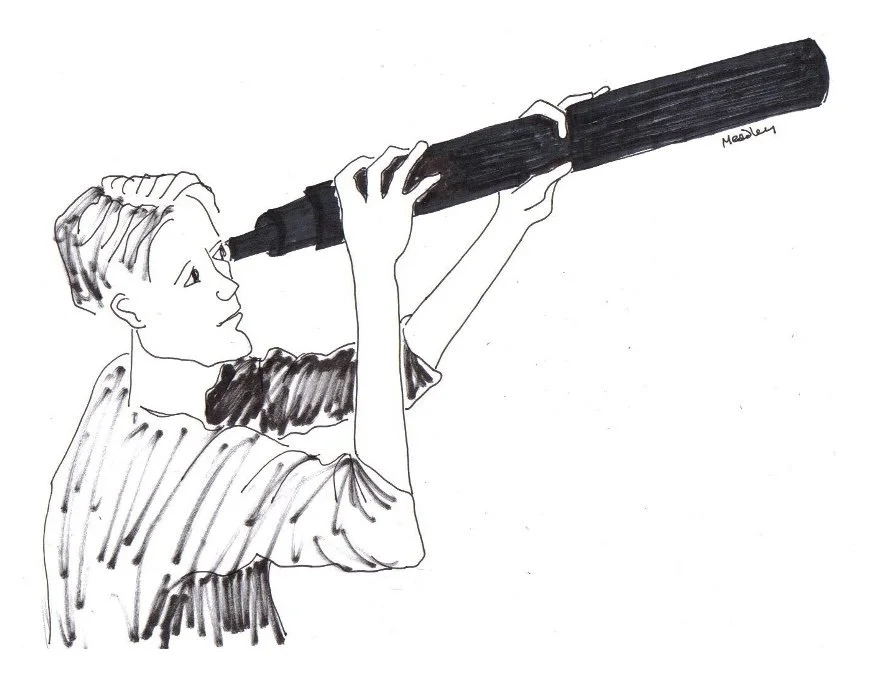
Remember the MICROSCOPE – an instrument that makes tiny objects visible? So what is a TELESCOPE? Again it comes from two Greek words. We already know SCOPOS (meaning to look at or to examine). TELE means “far away” or “far off”. So a TELESCOPE is an instrument that allows you to see (scopos) things that are far away (tele). Fortunately the French word (téléscope) is almost the same.
“It’s Granny on the telephone”. PHONOS is the Greek word for sound (remember microphone?). So a telephone (téléphone in French) is an instrument that carries sound to a far off place or brings sound to you from a far off place. Using a telephone you can talk to your Granny when she is not with you - whether she is in Stroud, Paris or New Zealand (Nouvelle Zélande).
Ever thought why the telly is called television? Vision is the same word in both English and Latin, meaning sightor something you can see. So television (télévision in French) literally means seeing something that is coming from far away.
Before the telephone was invented, a ship that wanted to send a message to another ship in its fleet did so by showing different coloured flags at different angles to represent different words. This system was called a telegraph. GRAPHOS is the Greek word for writing or drawing. So telegraph means writing something (or sending a message) from far off. Later on the flags were replaced by a code made up of dots and dashes representing different letters, which could be sent along wires linking different towns. These messages were called TELEGRAMS. Today we speak to people by telephone using satellites. All these ways of communicating from a distance are known as TELECOMMUNICATIONS.
And finally, when you want to photograph something that is far away and difficult to see you use a TELEPHOTO lens. So any word that starts with TELE (or télé in French) is to do with things that are far away. Advanced WORDSTARS might want to turn over the pageand learn about some rather spooky things involving TELE.
FOR ADVANCED WORDSTARS. Here are a couple of interesting words to do with things that we cannot really explain – telepathy and telekinesis.
Telepathy is the ability to influence what someone else is thinking about, or to know what someone else is thinking about, without touching him or her or speaking to him or her – even when that person is far away. It is something like when someone says to you “I can read your mind”. Again this comes from two Greek words. The first is PATHOS, which means feeling or suffering. The second is TELE, which we know means “far away”. So telepathy means “understanding what someone is feeling from far away”. There is a joke about two psychiatrists who meet in the street and greet each other. One says to the other “I see that you are feeling very well today, how am I?”.Telekinesis is more complicated and we will use Roald Dahl to explain it. I expect that many of you have read his book called MATILDA, in which the seven year old Matilda suffers in school from the bullying headmistress called Miss Trunchbull. One say, Miss Trunchbull is so horrid to her that she decides to do something about it. Miss Trunchbull is sitting at the teacher’s desk, on which is a glass of water in which one of the pupils has put a newt. The story continues: “The Trunchbull was sitting behind the teacher’s table staring with a mixture of horror and fascination at the newt wriggling in the glass. Matilda’s eyes were also riveted on the glass. And now, quite slowly, there began to creep over Matilda an extraordinary and peculiar feeling. The feeling was mostly in the eyes. A kind of electricity seemed to be gathering inside them. A sense of power was brewing in these eyes of hers, a feeling of great strength was settling itself deep inside her eyes. But there was also something else altogether, and which she could not understand. It was like flashes of lightning. Little waves of lightning seemed to be flashing out of her eyes. Her eyeballs were beginning to get hot, as though vast energy was building up somewhere inside them. It was an amazing sensation. She kept her eyes steadily on the glass, and now the power was concentrating itself on one small part of each eye and growing stronger and stronger and it felt as though millions of tiny little invisible arms with hands on them were shooting our of her eyes towards the glass she was staring at. “Tip it” Matilda whispered. “Tip it over”. She saw the glass wobble. It actually tilted back a fraction of an inch, then righted itself again. She kept pushing at it with all those millions of invisible little arms and hands that were reaching out from her eyes, feeling the power that was flashing straight from the two little black dots in the very centre of her eyeballs. Once more the glass wobbled. She pushed harder still, willing her eyes to shoot more power. Then, very slowly, so slowly she could hardly see it happening, the glass began to lean backwards, farther and farther and farther backwards until it was balancing on just one edge of its base. And there it teetered for a few seconds before finally toppling over and falling with a sharp tinkle on the desk top. The water in it, and the squirming newt, splashed out all over Miss Trunchbull”.
This ability to move an object without touching it is called telekinesis. KINESIS is from a Greek word meaning MOVEMENT and TELE, as we know, means “far away”. So telekinesis means “causing things to move from far away”.
Telescope, telephone, television, telegraph, telegram, telecommunications, telephoto lens, telepathy and telekinesis – all involve bringing closer something that is far away.
NUMBER SIX - THERMODYNAMICS.
Don’t panic – because this week we are going to learn that just because a word is long it does not mean that it is difficult to understand. Just carry on being a word detective, break the word down into its parts and then look for clues. Here is a clue. The word has two main parts - THERMO and DYNAMIC. We know all about DYNAMIC from the third week – it means power or energy. So we know that thermodynamics is something to do with power or energy.
What about THERMO? Any clues? When you go on a picnic or go away for the day, you may want to have a hot drink. How can you arrange that? Take a thermos flask. This is a glass cylinder, with two layers of glass to create a vacuum, and it keeps liquid warm for several hours. Its name comes from the Greek word THERMOS, meaning heat. So THERMODYNAMICS means energy generated from heat.
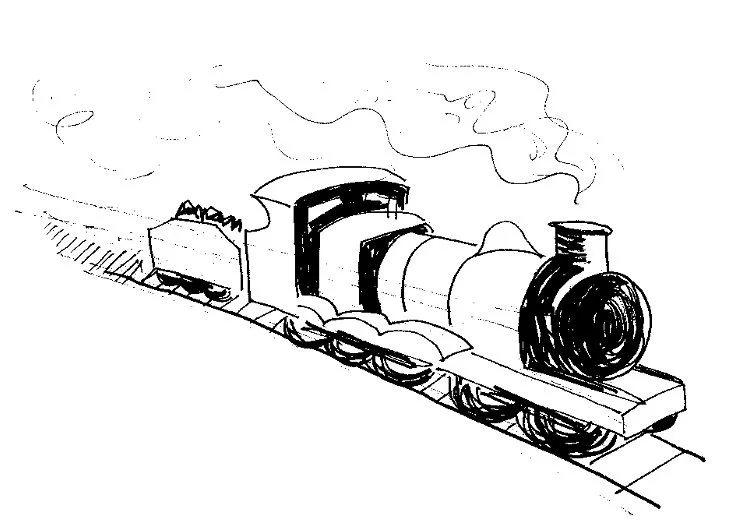
Let’s take a practical example. How do steam trains work? A steam engine has a boiler, which is full of water, and a coal fire that heats the water until it boils. When water boils and turns into steam, it expands and pushes the pistons in the cylinders that turn the engine’s wheels and drive the train forward. This is heat turned into power – or thermodynamics.
Let’s look at other words with THERMO in them. Feeling poorly? Along comes the doctor and puts a thermometer in your ear to measure the temperature of your body. Meter comes from the Latin word METRUM, meaning “to measure”. So a thermometer measures (meter) your body’s heat (thermo).
When you are sitting at home on a cold winters’ day watching the television, and the radiators are keeping you warm, have you ever wondered why the room doesn’t get hotter and hotter? The temperature stays roughly the same because it is controlled by a thermostat, which turns off the boiler when the temperature rises to the point where you feel comfortable. The Greek word STATOS means “to stand still” . So a thermostat keeps the temperature (thermo) standing still (statos) or the same. In the old days, before central heating, during the winter many people used to wearthermalunderwear – which was usually made of wool - to keep them warm.
NUMBER SEVEN - PHOTOGRAPHY.
Until the arrival of digital photography a few years ago, photographs were produced as a result of a chemical reaction on light- sensitive paper. The shutter of the camera let in light, and what the camera could see was recorded on this light sensitive paper as a PHOTO – GRAPH.
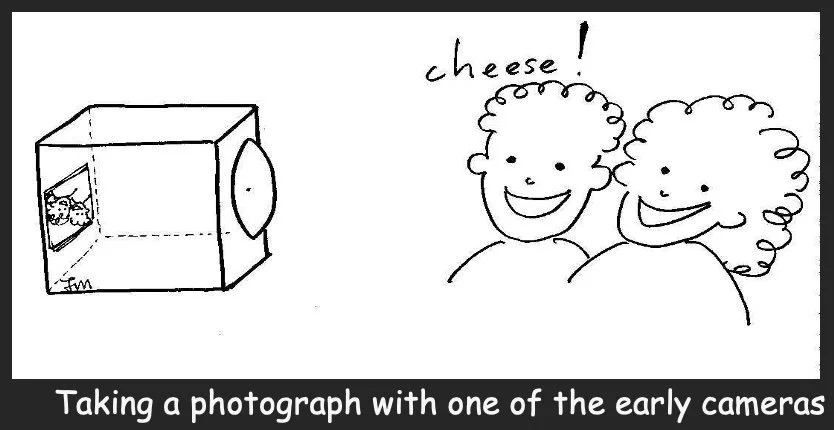
PHOTO comes from the Greek word PHOS, which means light. In science, a photon is a measurement of light. Photosynthesis is the process by which plants convert light into plant food. A photometer (we learnt about METER in thermometer last week) measures the intensity of light.
GRAPH comes from the Greek word GRAPHOS, which means writing or drawing – so a PHOTOGRAPH is literally a drawing (graph) that is made using light (photo).
Lots of words have GRAPH in them. The proper name for the lead in your pencils, with which you write and draw, is GRAPHITE. A person who analyses your handwriting is a GRAPHOLOGIST. When you meet your favourite pop star or footballer, you might ask for his or her AUTOGRAPH. AUTO is a Greek word meaning “one’s own” or “by one’s self”, so an AUTOGRAPH is a person’s own (auto) handwriting (graph).
Taking a photograph with one of the early cameras
When you become a famous traveller or politician, someone may want to write a book about your life. This will be called a BIOGRAPHY – because this is someone writing (graph) about your life (Bios). Remember BIOLOGY from week 2?. If you write the book yourself, it will be called an AUTOBIOGRAPHY.
The original word for printing is TYPOGRAPHY. The Greek word TYPOS means to make a mark or an impression on something. Before computers and typewriters, printing was done by carving letters or numbers onto a block of wood or stone or rubber - which was then dipped into ink and pressed onto paper, in so doing printing the letters or numbers. TYPOGRAPHY is literally making a mark on something in order to print from it.
Remember TELEGRAPH in week 5 – also using GRAPH.
GRAPH can also mean writing about, or studying, a subject. Hence GEOGRAPHY is studying and writing about the earth (GEO – week 2), its features, its people and its climate.
NUMBER EIGHT - HORTICULTURE.
Strawberries, tomatoes, lettuce and apples – these are fruits and vegetables that we grow in our gardens. Growing fruits and vegetables is known as HORTICULTURE. HORTUS is the Latin word for a garden and CULTURE comes from the Latin word CULTURA, which means to grow or cultivate something.
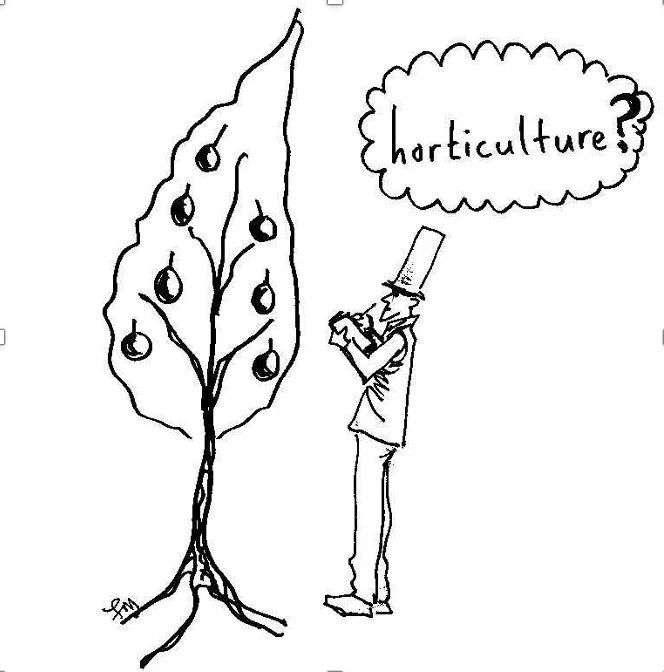
Don’t forget that there are lots of foods that we eat that we could not produce in our gardens. Bread is made from wheat and milk comes from dairy cows, both of which are raised in fields – for which the Greek word is AGER. Raising plants and animals in fields, rather than in gardens, is known as AGRICULTURE.
When you want to give someone a nice present perhaps you would give some flowers. If you don’t have flowers in your garden you would probably go to the florist (someone who sells flowers) in Stonehouse or Stroud. The word FLOWER comes from an old French word (FLOR), which in turn comes from a Latin word (FLOS) – both meaning a flower. Cultivating flowers is known as FLORICULTURE. The modern French word for a flower is fleur and for a florist is fleuriste.
What do marine commandos do? They are soldiers trained to serve at sea, but why are they called marines? MARE is the Latin word for the sea (as la mer is the French word for the sea). The Latin word MARINUS means “of the sea”. So a marine commando is a commando “of the sea”. When you buy your yacht you will anchor it at a MARINA. If you cultivate anything in the sea – such as salmon farming in Scotland or prawn farming off the coast of Thailand – this is MARICULTURE. However, if you were to raise fish in FRESH water then this would be called AQUACULTURE, because the Latin word for fresh water is AQUA. If you have a pond in your garden you will probably have some AQUATIC plants in the pond. Or perhaps you have an AQUARIUM at home for your tropical fish.
Do you like honey? If so, like Pooh Bear, you will know that bees make it. The term BEE comes from an old German word BIA, whilst the Latin word for a bee is APIS, and rearing bees for honey is called APICULTURE.
The word CULTURE has evolved over time to mean not only the cultivation of plants and animals, but also the cultivation and development of the mind and of the way that we think and behave towards each other, our customs and traditions. People in different parts of the world have different cultures – the customs and traditions of people in Pakistan or Kenya, for example, are different from our own and it is important that we understand and respect the cultures of different countries and communities.
NUMBER NINE - CENTIPEDE.
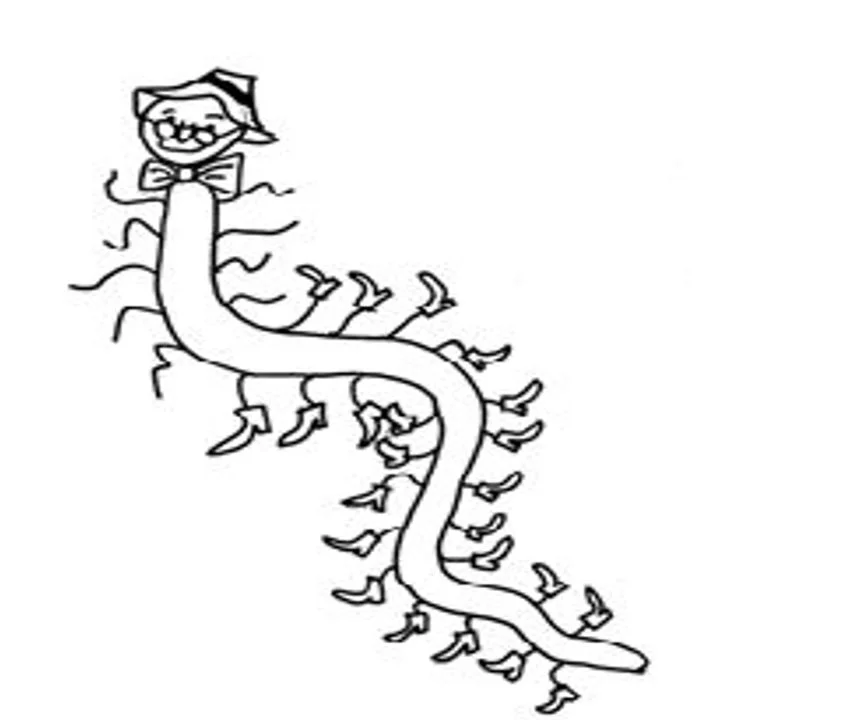
Those of you who have read James and the Giant Peach, by Roald Dahl, will remember that Centipede was one of James’s companions on his trip across the Atlantic Ocean. Centipede claimed that he had a hundred pairs of legs whilst Earthworm said he had only 37. Whatever the number, it took James two hours to untie the laces on all Centipede’s shoes.
We find CENT in lots of words. A CENTURY is a hundred years and we are now in the twenty first century. When we remember that it is 100 years since something happened [for example the birth of Einstein the scientist] we are remembering a CENTENARY. A person who is 100 years old is called a CENTENARIAN. An officer in the Roman army who commanded 100 soldiers was called a CENTURION. We measure temperature in degrees of CENTIGRADE (100 degrees centigrade is the temperature at which water boils) and we measure distance in CENTIMETRES (there are 100 centimetres in a metre).
CENT is also commonly found in different currencies. The United States currency (money) is the dollar, in which there are 100 CENTS. The South African currency is the RAND, in which there are also 100 CENTS. In the EURO there are 100 CENTS. Before the introduction of the Euro, each European country had its own currency.
The French Franc had 100 CENTIMES. In Spain and Portugal the currency was the Peso, in which there were 100 CENTAVOS. In Italy the currency was the Lira, which had 100 CENTESIMOS.
If a hundred is not enough, how about a thousand? Words that involve a thousand of something generally start with MILLI. This comes from the Latin word MILLE (the same word as in French), meaning a THOUSAND. So a MILLIPEDE is supposed to have a thousand legs (in fact it means it has a lot more than a centipede). There are a thousand MILLIMETRES in a metre, a thousand MILLILITRES in a litre and a thousand MILLIGRAMS in a gram. In the recent Olympic games the British 100 metre relay team beat the United States team by a millisecond – that is one thousandth of a second. In the year 2000 we celebrated the MILLENNIUM – a period of a thousand years. A MILLION is a thousand thousands (a thousand times a thousand) and to be a MILLIONAIRE you need to have a million pounds.
NUMBER TEN - ATOMIC KITTEN.
Is this a good name for a pop group? Let’s find out.
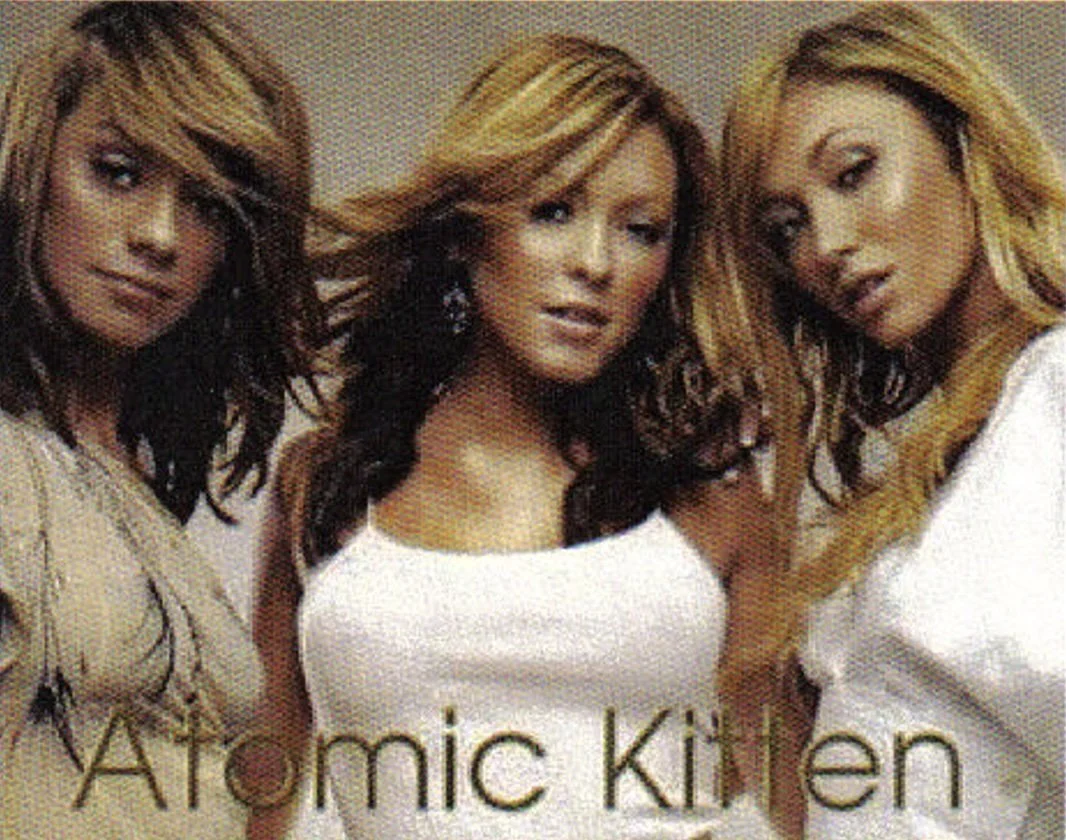
The word ATOM comes from the Greek and Latin word ATOMOS – which meant the tiniest, tiniest thing in existence – so small that it could not be divided. Hmmm – the tiniest kitten in the world! Is this a good name for a pop group? Or perhaps it means something else. At the end of the nineteenth century Marie Curie, a Polish-born scientist working in France, was the first person to find that something called uranium was radioactive – knowledge that is used today for X-rays (for example to look at your bones if you break your leg) and also to treat cancer. Other scientists later found that it was possible to split an atom of uranium into smaller parts (or nuclei), a process that released huge amounts of energy. Today, the splitting of the atom is used for peaceful purposes in nuclear power stations to produce the electricity that powers your TV. It was also used in a terrifying way when, on 6 August 1945, the Americans dropped an atomic bomb (which they called Little Boy) on the city of Hiroshima in Japan – the nuclear energy released by the bomb killing a hundred thousand people and wounding even more.
Hmmm - does Atomic Kitten want to be thought of as a bomb? It’s unlikely.
On one of the Atomic Kittenwebsites is written the wordEXPLOSION in big letters. EXPLOSION comes from the Latin word EXPLODERE – which originally meant to chase something away by clapping your hands and making a loud noise – like hissing at, or saying “shoo”, to an animal that is annoying you. It later came to mean “exploding” with anger at something. Today it describes what happens when something bursts or shatters violently, loudly and destructively.
The words EXPLOSION and EXPLOSIVE imply that there is energy around. When something makes you sit up and look at it we say that the effect is “explosive”. Remember we looked earlier at DYNAMITE (which is also an explosive) and we described people who are active and full of energy as DYNAMIC. Is that what they mean?
Now, what about KITTEN? It is not only cats that have kittens; so do foxes, ferrets, beavers and rabbits. A KITTEN has also come to mean a girl or a young woman, particularly one who is playful, lively and even wild.
So ATOMIC KITTEN could mean the tiniest baby ferret; it could mean a destructive, explosive baby fox; or it could mean a young lady who is full of energy - and I suspect that this is what they want it to mean. But it is good to remember that the same words can mean different things to different people!
NUMBER ELEVEN - MANCHESTER UNITED.
70 years after the birth of Christ, a Roman commander built a wooden fortress covering 2 hectares at a place he called Mamuciam – which means “a breast shaped hill” – on the road between Chester and York (both important towns in Roman Britain). The commander was Julius Agricola, who later became the Emperor of Rome. The fort remained in operation until 411. The Saxons renamed it Manigceastre, which eventually became Manceastre. In the tenth century the Saxons built a church that became a cathedral, and the town became known as Manchester.
A game like football was played in China as early as 200 BC - and the Romans played a game called HAPASTUM on a rectangular field with two teams aiming to throw the ball beyond the opponent’s goal-line, the defending side being allowed to tackle and kick. It was probably played by the Romans at Mamuciam, but probably not known as Mamuciam United! Football as we know it today began in English public schools around 1845, from which a number of clubs emerged. The rules were formally drawn up at a meeting of these clubs in 1863, resulting in the formation of the Football Association.
So much for Manchester, now what about UNITED? This word is related to lots of others that include UNI – which comes from the Latin word UNUS, meaning ONE. A UNICORN has just one horn. A UNICYCLE has only one wheel. A UNIT means one of something.
When we say that something is UNIQUE we mean that there is literally only one of it in the world (from the
Latin word UNICUS which means “the one and only”).
When we all sing the same tune together we are singing in UNISON. The Latin word SONUS means “a sound”, so UNISON means “one sound”.
When we talk about the world that we live in and all the other planets in space, we refer to it as the UNIVERSE. The Latin word VERSO means “to turn” – you find it in the word REVERSE, which means to turn round and go back. The UNIVERSE literally means “everything turned into one”. UNIVERSAL means that something is the same everywhere. A UNIVERSITY was originally a place where people learned about the things that were important in the universe.
At school you wear a uniform. The Latin FORMUS means “shape or beauty”. It describes what something looks like. A UNIFORM makes people look the same.
The word UNITE comes from the Latin UNIRE – to join together into one. A Union is a group of people who are united, and UNITED means that everyone is working together and shares a common purpose. Hopefully that is true of Manchester United.
NUMBER TWELVE - SPIDERMAN 1.
Those of you who have NOT read James and the Giant Peach, by Roald Dahl, should think about doing so. Those of you who have read it will remember that it was Spider who saved that cheeky Centipede when he fell over the side of the giant peach into the Atlantic Ocean, and when James jumped after him to save him. It was Spider who spun the thread that was long and strong enough to haul both Centipede and James back up to the Peach – and she did it instantly. What distinguishes spiders from other creatures is their capacity to spin this sticky thread from organs within their bodies (called spinnerets), along which they can move up or down and produce the web to catch food.
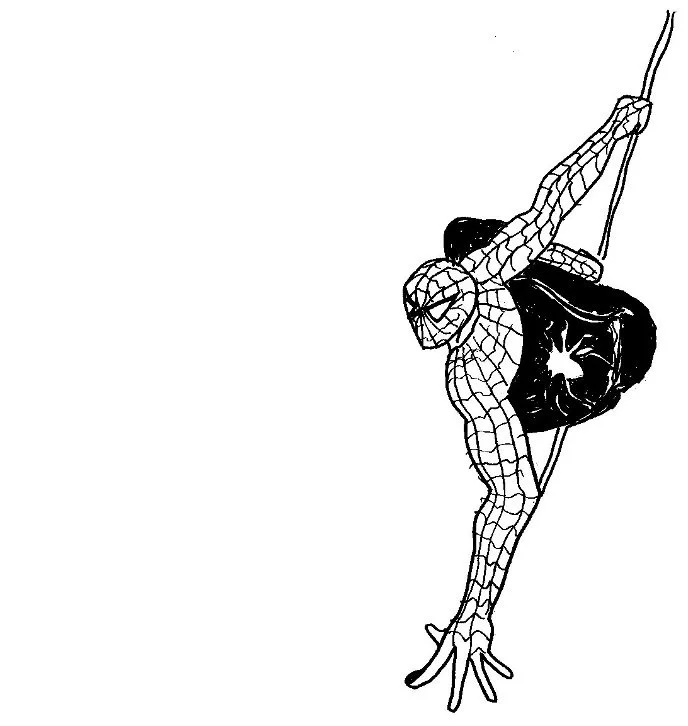
It should not come as a surprise to you that the word SPIDER comes from an old German word SPINNE, which means a female spinner. We humans use thread all the time – to make clothes and curtains and ropes and sheets – but we cannot produce it ourselves. We can only make thread out of a mass of wool or of cotton fibres using a spindle, which spins and twists around very fast and brings the fibres together.
Spinning has come to mean something that is going round very fast. Your washing machine first washes the clothes, rinses them and then spins them dry. When you go home after a heavy day at school, I expect that sometimes your heading is “spinning”. In cricket, a slow bowler spins the ball so that it changes direction or speed when it hits the pitch in order to confuse the batsman. When a car gets stuck in the mud, its wheels are usually spinning around without getting any traction.
A spider makes a WEB in order to catch its prey. The word WEB is linked to an Old German word WEBAN, which means to WEAVE or to form threads into a fabric. And that is what we do when we weave cotton threads together to make cloth, from which we make our clothes. When you put on your uniform next time, remember that it was made in a factory where the machines copied a spider and wove together fibres that had previously been spun, using a spindle, from cotton or wool.
Spiderman first appeared in 1962. Peter Parker, who was considered by his friends to be a bit of a nerd, was visiting the Science Museum when a mutant spider bit him. As a result he inherited some spider characteristics. He has small hairs on his fingers that act like suction pads so he can climb up walls. He can spin threads like a spider that shoot from his hand – so that he can swing from building to building. He can weave the threads into mini-webs to capture his enemies. He has a sixth sense that allows him to anticipate what is going to happen – and to take action before his enemy does.
When we watch Spiderman we think that he is amazing and cool. But to a spider I guess he’s pretty ordinary.
Next week - SPIDERMAN 2
NUMBER THIRTEEN - SPIDERMAN 2.
According to Greek mythology, a young girl called Arachne believed that she could make tapestries faster than anyone else. She was so confident of this that she challenged Minerva – the Goddess of Knowledge – to a race. Arachne lost the race – and Minerva turned her into a spider. That is why the biological name for the spider family is ARACHNIDS.
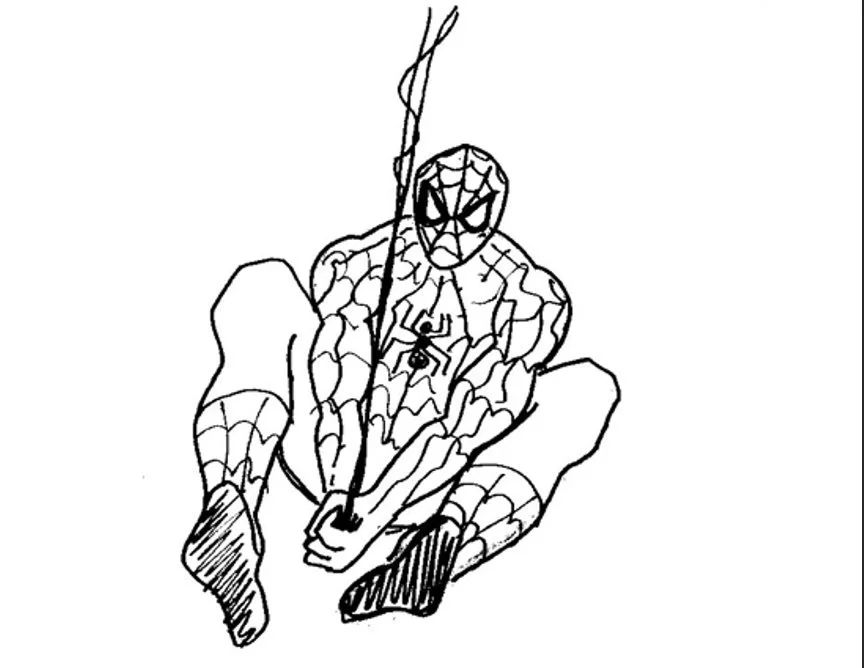
However, Spiderman was not a spider – but a MAN. The word MAN comes originally from MANU – which is a Sanskrit word (Sanskrit is the ancient language of the Indian subcontinent) meaning the human race (known as Homo sapiens), as distinct from animals or spiders! We sometimes refer to it as MANKIND, which includes both men and women – as in the proverb that says: “When the wind is in the east, tis neither good for man nor beast”
But as the word MAN evolved it came to mean an adult male person, as distinct from a woman or a boy. To MAN we can add a prefix to describe more clearly the person concerned. For example we can find a barman, a postman, a swordsman, a guardsman, a gentleman, a chairman, an Englishman, a Frenchman, or a countryman. We talk of someone being MANLY or entering MANHOODBut just to confuse you, we find MAN in lots of words that are not strictly to do with men or mankind. For example, when you dig the school allotment you are doing MANUAL work. This comes from the Latin word MANUS, which means a HAND - the French word for hand is “le main”. Here are some words using MAN in this sense.
When you are doing something and someone says to you “let me help you”; you reply: “No, I can MANAGE”. Manage literally means to be able to HANDLE a horse or a weapon.
We think of MANURE as something that farmers put on the land. In fact it is a shortened version of MANOEUVRE – like a driver manoeuvres a car into a parking bay. It is an old French word literally meaning to work (OEUVRE) by hand (MAN) and originally meant that a person had the right to occupy, manage or cultivate a piece of land – including enriching the land by applying his animal’s waste products – or MANURE.
When a factory MANUFACTURES something, it literally makes it (FACTUM comes from the Latin word to MAKE) by hand (MANU) – which is what happened before factories were mechanised. When you publish a book, or write exams at secondary school, the text is a called a MANUSCRIPT – literally meaning written (SCRIPT is from the Latin SCRIBERE, meaning to write) by hand (MANU).
So what about SPIDERMAN? For sure he is a MALE – like a postman or a gentleman. But he is also pretty good at MANoeuvring and, being something of a nerd he can probably write a pretty good MANUscript. In fact he seems to MANage quite well.
NUMBER FOURTEEN – ARSENAL
“UP THE ARSENAL! UP THE GUNNERS!”. These are some of the more polite phrases used by the supporters of Arsenal Football Club. It is unlikely that either they, or Gunnersaurus in the picture, are aware that ARSENAL is the first word that we have looked at so far that comes from Arabic.
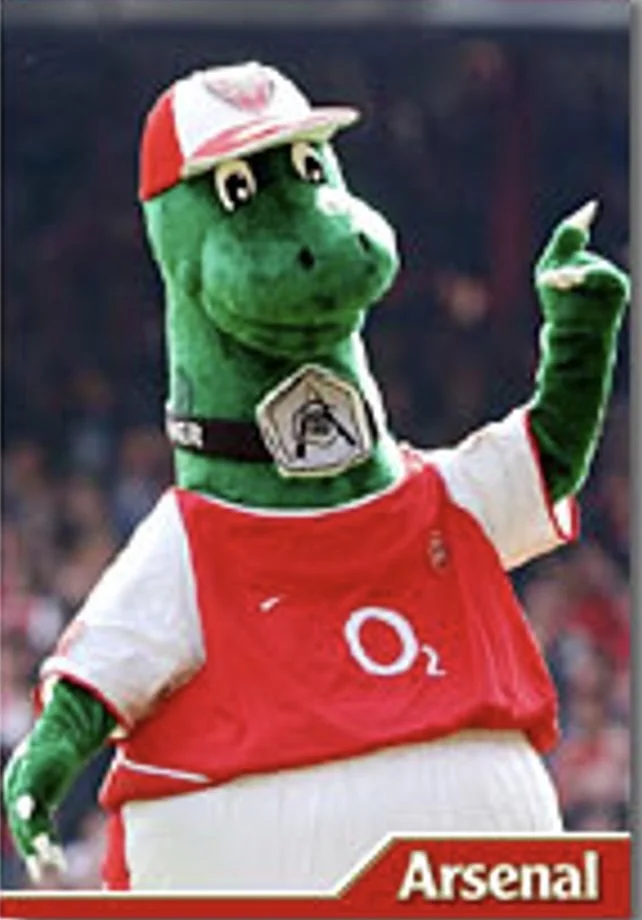
ARSENAL literally means a workshop and comes from two Arabic words. These are DAR (meaning a house) and SENA (meaning to fabricate or to make). DARSENA means a house (or place) in which things are fabricated. Over time the letter D was lost and it became ARSENAL, meaning “a dock for the reception, construction, repair and fitting of ships” and also “a government establishment for the storage or manufacture of weapons and ammunition”. Today an arsenal means a place where weapons are kept. If you are competitive about conkers, why not tell you friends that you have a good arsenal of conkers!
If an arsenal is where weapons – including guns – are kept then it is not surprising that Arsenal Football Club is also known as “THE GUNNERS”.
What other words sound like ARSENAL? One is ARSENIC. We generally think of it as a poison that is used in detective stories. In fact arsenic trisulphide, which occurs naturally as a mineral, was originally used by artists as a yellow pigment or dye for their paintings or pots. ARSENIC comes from the Persian word ZARNIK, which means gold.
The word ARSE is often used jokingly – but was originally used to describe a particular part of an animal – and is related to the Greek word ORROS, which means the rump. The rump is that part of the body from which the tail springs – and has come to mean an animal’s (or a person’s) buttocks. It is an important part of the body – especially as you sit on it most of the day!
Finally - ARSON. This is when someone maliciously sets fire to a house, a ship or a forest. It generally happens when someone has a grudge against someone else. We sometimes read in the local newspaper that a barn full of hay has been set on fire and “the police suspect arson”. You may remember the huge forest fires in California last year – which people believed were the result of arson. The word ARSON comes from the Latin word ARDERE, meaning “to burn”. It is a coincidence, but there seems to be a link between ARSENAL (where weapons are made) and ARSON (setting something on fire deliberately), which is what most weapons do.
Hopefully ARSENAL has some good weapons in its arsenal and some good shots amongst its players
NUMBER 15 – THE INCREDIBLES
Wow, that’s amazing, unbelievable. How did Mr. Incredible, Elastigirl, Violet, Dash and Jack-Jack do it? I mean – how did they beat Syndrome’s amazing powers? I can’t believe it - it’s INCREDIBLE.
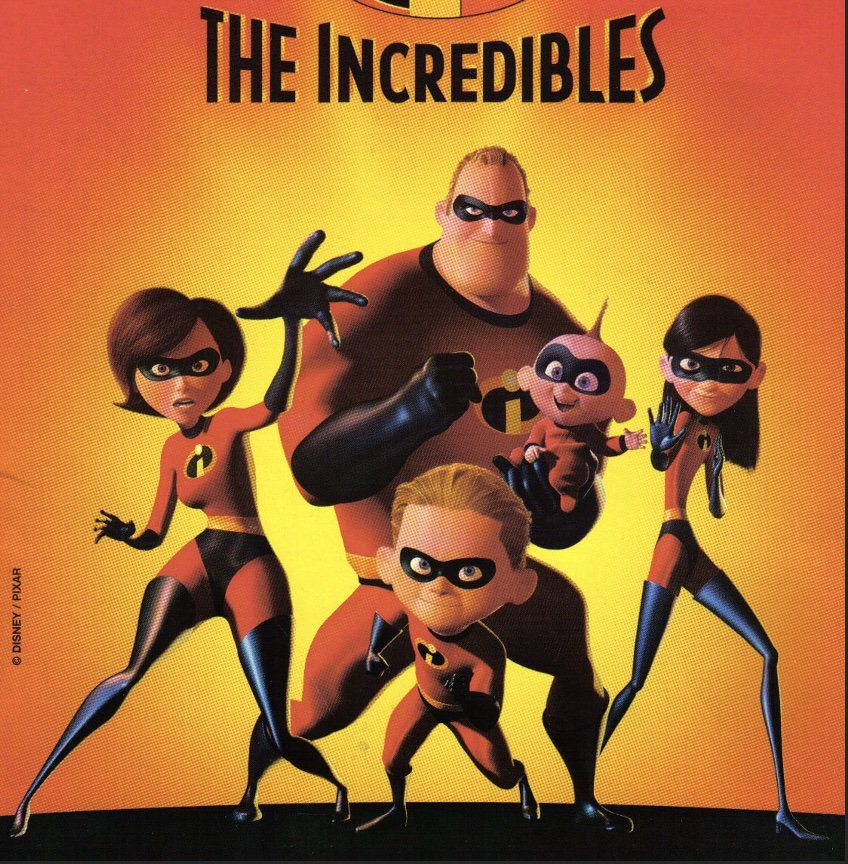
Incredible is a word that we use all the time – like we use “brilliant”. “What a lesson Miss gave us today – it was brilliant, it was awesome, it was incredible!”. But what does incredible actually mean?
It comes from a Latin word CREDO, which means “I believe”. What the Church believes is defined in the CREEDs, which begin with the words “I believe in God….”.
When you go out shopping, your Mum or Dad probably uses a credit card. A credit card is really only a bit of plastic, so why is a shopkeeper willing to hand over your new clothes, game or book when all he has seen is a bit of plastic? The reason is that the credit card was issued by a bank, which believes that the person whose name is on the card is honest and will pay the credit card bill at the end of the month. To have a credit card you must be creditworthy, which means that the bank believes in you.
When you buy your first car, it will probably be on credit. This means that you will pay for the car over a period of 2-3 years, but you will be able to use it immediately as if you had paid for it in full. You can buy it on credit because the garage owner believes that you will continue to pay for the car each month.
When we believe something or somebody, we say that it or he or she is credible. If you go to Stroud on a Saturday afternoon, the teenagers will be dressed up in the latest fashions, trying to impress each other – because the latest fashion gives them STREET-CRED (or street credibility).
If we do not believe something or somebody, then we say that it or he or she is INCREDIBLE. It might be incredible because we do not believe what the person said or did or it might be because we do not understand HOW something happened. For example: “I saw this man eating fire – it was incredible”. You know (and believe) that it happened because you saw it, but it was incredible (unbelievable) because you did not understand how it was done.