A BOOK CONCERNED WITH AGRICULTURAL DEVELOPMENT IN AFRICA
DISCOVERED: A BOOK I WROTE 45 YEARS AGO ABOUT AGRICULTURAL DEVELOPMENT IN AFRICA
At some point in the past I appear to have written the text for “A book concerned with agricultural development in Africa”. I say “appear” because I have no recollection of writing it. But here it is on my desk together with my hand-written notes, discovered whilst rifling through some boxes. It is about 120 pages long and typed on a typewriter, which suggests that it was written no later than 1980 – some 45 years ago. It reflects the conventional thinking of the time and does not merit being published today. However, the introduction bears repetition because it reflects the lens through which I was looking at the time – very much influenced by my conventional training and experience in those early years and with its focus on technology having all the answers. Here it is….
INTRODUCTION. There is, we are told almost daily, a world food crisis. We can see the prices of food commodities rising sharply and read of the starvation which is common in many areas of the world. At the same time, we read of the many new developments in agricultural technology which could radically increase the output of food – hybrid seeds, feed additives, fertilisers, drugs for livestock, irrigation and sophisticated equipment. The crisis continues despite these advances in technology because there is a wide gap between the sources of that technology and its implementation in the field.
The aim of this book is to try and explain to interested people in non-technical language the extent of modern agricultural technology, why the "technology gap" exists and what can be done to encourage its adoption in the field.
During the last few years, I have had the opportunity to work in agricultural development in several African countries and to visit many more, initially as a university lecturer and latterly involved in practical commercial agricultural development. I base all my comments on field experience and not on academic papers or attendance at conferences on agricultural development. I have not attempted to cover each aspect of agricultural technology in detail, but only to give enough for the layman to appreciate both its scope and its problems. I have not, for example, covered many of the latest developments such as slow-release fertiliser, trickle irrigation or irradiation storage. For this reason, specialists may feel that these subjects are inadequately covered.
I have not tried to relate the book to any one country because I consider there are several basic issues which are common to all the so-called developing countries of Africa. Readers acquainted with particular countries may feel my comments are not directly applicable to their area, but the underlying principles will almost certainly be valid.
Again, I have generally not taken sides on the moral arguments on development which are put forward by the various political, sociological, religious or commercial lobbies. The technical problems remain the same, and the decisions affecting them will almost certainly be made by indigenous politicians.
My starting point is that agricultural development and the implementation of agricultural technology is necessary if there is to be enough food to go around. I remember being asked by an African student why I was working in Africa, disturbing the erstwhile contented subsistence farmer and trying to impose agricultural development. My answer was that it was, in fact, the indigenous government that wanted to develop agriculture to feed its own growing urban population, to reduce the current food import bill and export agricultural commodities to generate foreign exchange. Agricultural development and the implementation of agricultural technology in some form or other is inevitable.
The book begins by drawing several sketches of different African agricultural producers and how they make decisions relating to these new agricultural techniques. The second section outlines the technology which is available and attempts to show the problems which inhibit its direct implementation. The final section considers the way in which the African agricultural producer may be enabled or encouraged to utilise and implement this technology.
The book is designed to be read by all who are puzzled by the fact that the much-acclaimed agricultural technology is apparently having little effect in increasing food production. It will not give all the answers, but it may provide a little deeper understanding of the issues involved.
I would feel embarrassed to write in this way today. Whilst there are aspects of technology that have brought benefit, there are also many negatives – witness the significant downsides of the Green Revolution in India - and I have a still-growing appreciation of indigenous knowledge (witness the continuing transition to “natural farming in India) that until now has been largely subsumed by technology and corporate interests.
I continue to appreciate reading both the poetry and prose of the US farmer-poet Wendell Berry, particularly as encapsulated in his chapter called “Nature as Measure” in his book The World-ending Fire. Here, he coins the phrase “Farming as a conversation with nature”. An extract from that chapter [1] follows:
[1] From ‘Nature as Measure’ by Wendell Berry. Found in The World-Ending Fire pp 63-64.
Industrial agriculture, built according to the single standard of productivity, has dealt with nature, including human nature, in the manner of a monologist or an orator. It has not asked for anything or waited to hear any response. It has told nature what it wanted, and in various clever ways has taken what it wanted. And since it proposed no limit on its wants, exhaustion has been its inevitable and foreseeable result.
This, clearly, is a dictatorial or totalitarian form of behaviour, and it is as totalitarian in its use of people as it is in its use of nature. Its connections to the world and to humans and the other creatures become more and more abstract, as its economy, its authority and its power become more and more centralised.
On the other hand, an agriculture using nature, including human nature, as its measure would approach the world in the manner of a conversationalist. It would not impose its vision and its demands upon the world that it conceives of as a stockpile of raw material, inert and indifferent to any use that may be made of it. It would not proceed directly or soon to some supposedly ideal state of things. It would proceed directly and soon to serious thought about our condition and our predicament. On all farms, farmers would undertake to know responsibly where they are and to "consult the genius of the place." They would ask what nature would be doing there if no one were farming there. They would ask what nature would permit them to do there, and what they could do there with the least harm to the place and to their natural and human neighbours. And they would ask what nature would help them to do there. And after each asking, knowing that nature will respond, they would attend carefully to her response. The use of the place would necessarily change, and the response of the place to that use would necessarily change the user. The conversation itself would thus assume a kind of creaturely life, binding the place and its inhabitants together, changing and growing to no end, no final accomplishment, that can be conceived or foreseen.
Farming in this way, though it certainly would proceed by desire, is not visionary in the political or utopian sense. In a conversation, you always expect a reply. And if you honour the other party to the conversation, if you honour the otherness of the other party, you understand that you must not always expect to receive a reply that you foresee or a reply that you will like. The conversation is immitigably two-sided and always to some degree mysterious; it requires faith.
He wrote this originally in 1989, not long after I was drafting the text for my “book”. He was clearly decades ahead of his time. If there is a single phrase that encapsulates my thinking now about how we need to farm for the benefit of both humanity and for the planet, then we should do so “as a conversation with nature”.
Following the introduction to my “book”, and before setting off within it to persuade the anticipated reader to “apply technology to farming”, I wrote several sketches of farmers, operating in different contexts, to consider how they might make decisions relating to the application of such technology. I have drawn these fictional portraits based on the many farmers that I met during those early years in Africa. In brief, they are:
Mzili Bakwati – living in a very dry area, raising his cattle and rain-fed crops
Mazibego – producing pineapples on a settlement scheme, supply a local canning factory
Dudu Takebo – a woman farmer whose husband is working away from home
Chingala Estates – the future of two people working on a sugar estate… Bob Watford (expatriate manager) and Joseph Mumbu (a cane cutter).
Mohamed Jaludin, a young man working on a committee-run state farm in a post-revolutionary state.
Here they are….
Mzili Bakwati smiled to himself as he watched the first rains fall. The characteristic smell of rain on dry soil tingled his nostrils. The dry season, which had dragged on for half the year, was over.
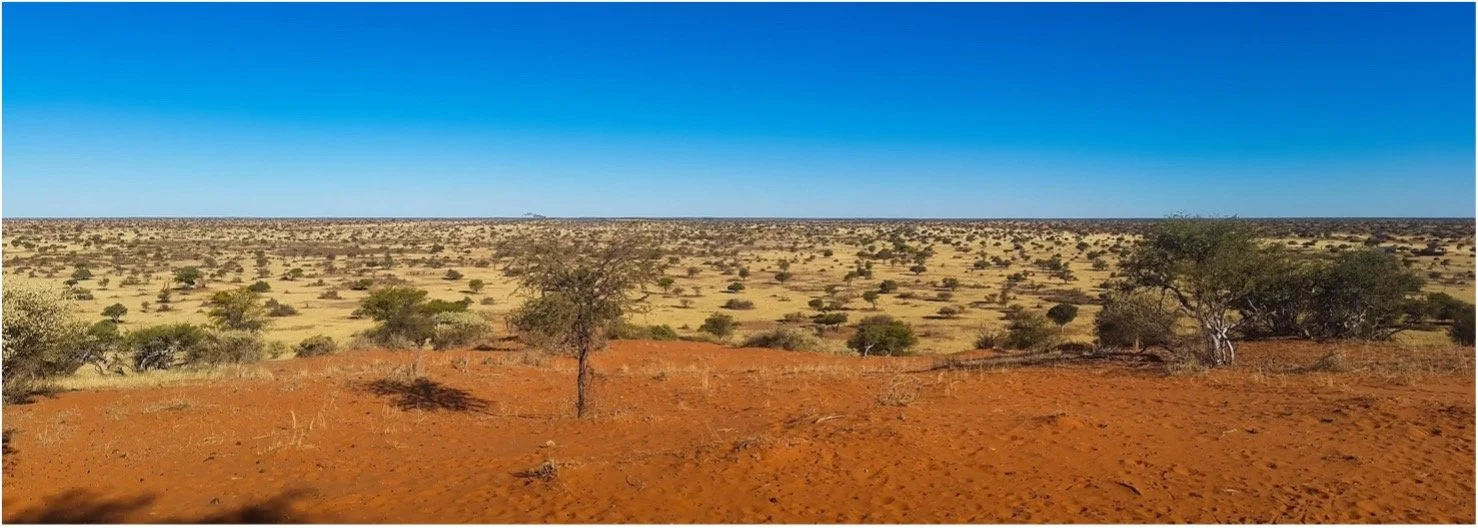
Bakwati was born nearly 60 years ago in this village, on the edge of the Karnie desert, which was still his home. There were about 200 huts in the village, each built of thatch, wattle and daub. In the centre of the village was a covered area of poles and thatch which served as a market. The village store, built only two years previously, had taken some of the trade from the market and it was easily identified by large tin signs outside emphasising Coca-Cola and Sunlight Soap. The only other building which stood out was the primary school which had four classes, but only two classrooms. Two large umbrella trees provided shade for the other two classes. Dotted between the huts were the beer halls where thick and potent home-brewed beer was ladled out in liberal quantities. Around the village was a thick and welcoming hedge of thorn bushes to regulate the flow of man and the beast in and out of the village.
Life for the inhabitants of the village was determined largely by the whim of the environment. As far as the eye could see the land was flat, the soil coarse and sparsely covered with scrub bush and thorny Acacia trees. Rain fell during six months of the year only – not a regular, predictable pattern of gentle rainfall but spasmodic and violent. Often weeks went by with no rain, the sun rising to beat down mercilessly with no clouds to deflect the heat in the day or retain it at night. Sometimes a tiny cloud would appear and grow in size as if fed by the prayers of the villagers - only to dissolve into nothing. Eventually, sun and clouds combined to form a sultry heat which grew and grew until it burst as a storm, with thunder and lightning as outriders of the torrential rain. As the volume of rain exceeded the capacity of the soil to absorb it, it gathered into pools, into small lakes which moved laterally over the ground, washing the soil away. After the rain the soil surface, smashed by the rain, dried in the hot sun into a hard layer like cement such that only a small proportion of the rain which fell actually reached the thirsty roots of the plants.
Bakwati had spent his childhood between the deserts and the village. Like most small boys in the desert he had herded his father‘s goats and cattle around the village and helped to cultivate the meagre crops. He was one of eight children who had survived from his father‘s two wives. There had been no school in his youth and his role had been simply that of an extra hand. Life was hard and simple. Inside the stark huts were mats for sleeping made by his sisters from grass they had collected. Baskets of woven grass were used for storing grain and only the cooking pots and hoe blades were made of iron.
His diet was based on sorghum – sorghum porridge every day and sorghum beer on special days. Beans, which could be dried and stored all year, were the main vegetable. Melons flourished in the dry environment and were eaten in season. Meat was an occasional delicacy and goats milk was soured to make a type of yoghurt. Water was a precious commodity fetched daily from a small spring within the village. It was used carefully as the nearest alternative supply was several miles away.
To strangers the desert was frightening. To Mzili Bakwati it was home. Almost as soon as he could walk, he was taken into the desert and taught to survive, where to find water in the sand, which berries to eat and how to recognise the snake and the scorpion. He was taught the regular grazing and watering routes, how to assist a cow when calving, and to milk a goat and make the soured milk he loved so much.
By the time he was ten Mzili was considered old enough to go out into the desert with his father‘s cattle and goats. As soon as the rain‘s fell he set out into the apparent wilderness. He took with him a small reserve of food but he was expected to survive on what he could find in the desert. For his animals he followed well defined and proven grazing routes. As the rain fell, the grasses danced into life and the scrub bushes turned from sultry grey brown to a vivid green. His cattle browsed on the tree leaves and the coarse pasture grasses while the goats scavenged behind the cattle. They stayed a few days at each watering point before moving on, leaving the trees and pastures a full year to recover before they were grazed again. And as the rain diminished, Mzili began to bring his herd towards home and the security of the village.
During his absence, his father had not been idle. He had kept the best oxen at home for ploughing but as they were still weak after the dry season it was several weeks before they were strong enough to turn the soil. The crops grew or withered at the whim of the rain-bearing clouds. In a good year his family spent many hours weeding the land and, as the rain ceased, they worked from dawn to dusk harvesting and thrashing the grain. In a bad year, when neither crops nor weeds grew, they could do little but watch the stunted plants struggle for survival and produce a few withered grains. At such times they became dependent upon their store of grains from previous years and collected berries and fruits that they would normally have ignored. After the harvest the children were told to collect the fibrous flowering grasses from the surrounding scrubland which were used for thatching, making mats and grain stores.
Life moved on from year to year with the pattern and quality of life determined almost entirely by the clouds, the sun and winds. But over the years his ancestors had learnt how to cope with the capricious climate and how to adapt swiftly and stoically to the uncertain seasons The traditions of his people were strong. It was the traditions which Mzili had learned as a boy and continued to follow as he grew up, married and raised his children.
Bakwati was about 40 when he noticed the first real changes in his pattern of life and it seemed to coincide with the arrival of the white people in the area. He had never understood their motives, but they seem determined to change the traditions and ways of his people. Some of them spoke his language and preached in the village about the one who spoke through the clouds in the skies. With them, they brought new medicine which was successful in healing his people from the many elements that affected them. At the same time, others came from the government who spoke through interpreters. They insisted that all cattle should be registered and should be put through troughs of a foul-smelling liquid and should be injected with medicine. The same people came and dug wells to provide water for his people and their cattle.
He noticed over the following years how the numbers of people in his village had increased because of the new medicines and needed more food and therefore more land was brought into cultivation. He noticed how the numbers of cattle and goats had increased, how they in turn needed more food, how they clustered around the wells and ate the grazing lands bare. Whereas once the grazing routes gave the land a full year to recover now the same lands were grazed repeatedly.
He worried about these changes. It was true there were more cattle but the pastures were weaker. And the man who brought the medicines and the wells had no control over the rains which determined the fate of his crops. He could not forget how his father had taught him how to survive even when the rains were poor. He would not give up his traditions easily. He looked up at the heavy, dark clouds. He stretched out his hands to touch the rain as it fell onto the dry earth. His wife came out to join him and they could only smile at each other. Perhaps the rains would be kind this year.
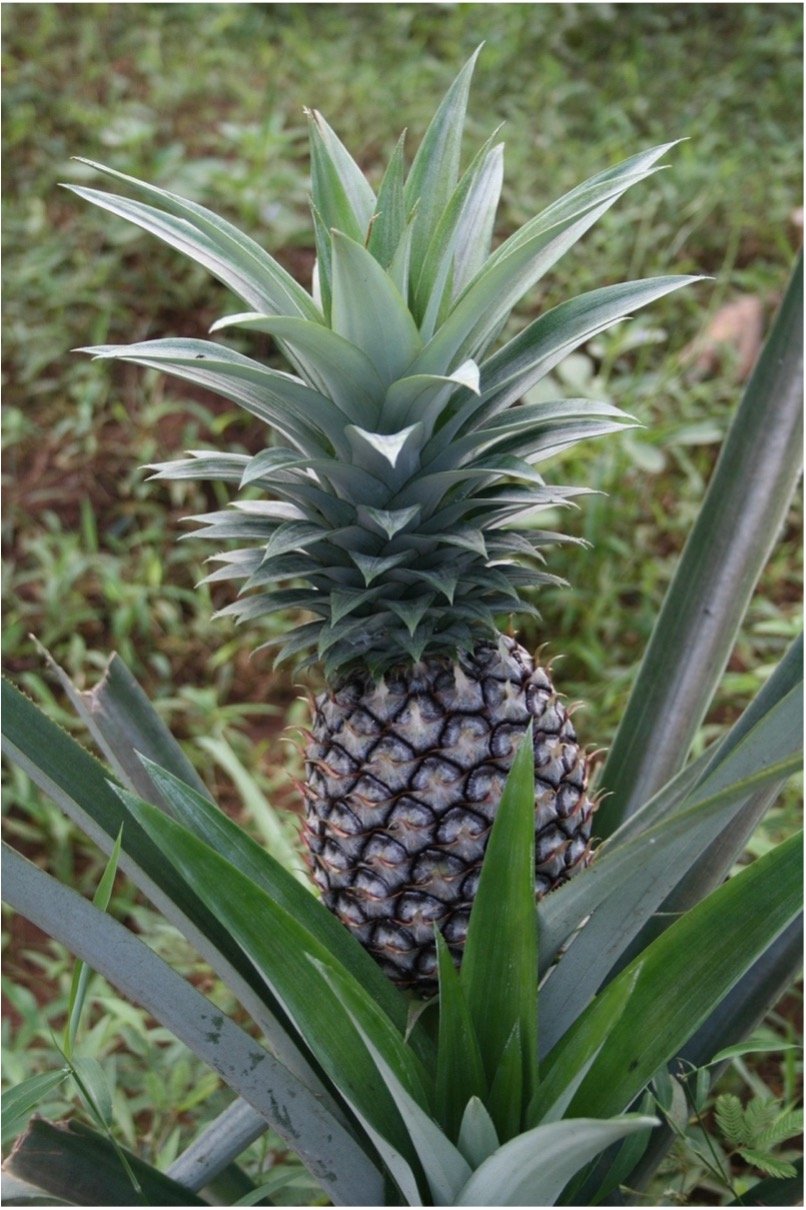
Mazibego sat on the steps of his neat house and looked at the clear rows of pineapples. He was pleased. He called over his wife who was working in the nearby vegetable patch, weeding between the pumpkins and groundnuts. Together they admired the regular rows of plants, contoured onto the slopes, with spiny, sword like leaves and the small fruits developing on the crown. They were well satisfied. As they stood there, a tractor passed by the back of the house, followed by a crowd of shouting children. An aircraft flew low overhead.
It was a beautiful, wide, shallow valley with deep red, rich soil. The land grew wheat and maize, pineapples and oranges, pawpaws and ground nuts. A tarred road ran through the valley connecting an iron ore mine to the railhead some 15 km distant, and huge 16-wheel lorries thundered past at frequent intervals.
The climate was kind. In winter, it was like a mild European summer, and in summer, it became hot but not unbearable. The main anxiety in the summer was the sudden violent thunderstorms, which could batter his crops and the lightning, which could often cut off the electric power supply – a convenience to which he had grown accustomed. Mazibego was married, and his wife had brought him seven children, of which six were still living. Five years ago, he had been a local farmer growing maize and groundnuts, with a few cattle for ploughing and for prestige. He usually had a small surplus at the end of the year, which he sold, taking it on a donkey to the road nearby and putting it on the bus to town. With his small cash income, he purchased a few essentials – a new cooking pot, a new plough and eventually he put a deposit on a bicycle.
Then, five years ago, he heard at a farmers' meeting, run by the government advisory officer, that a new scheme was to be introduced in the Maluba Valley – a scheme to settle farmers on land which had once been owned by white farmers, to grow pineapples for a new canning factory. He expressed his interest to the officer and learnt more about the scheme. The area in the valley was to be contoured against soil erosion and then subdivided into 15 ha plots. Roads were to be put in and a house built on each plot. Selected farmers were to be allocated a piece of land on which they grow pineapples to be supplied exclusively to the cannery. Obviously, a farmer would need money to buy planting material, fertiliser and other chemicals and to pay for labour and ploughing. All this would be provided by the company and each year the company would deduct from his sales to the factory all costs he had incurred. But he could only be allowed these services if he promised to work as instructed by the company.
Mazibego thought it over and eventually decided to apply. He had to go to several interviews and meet the manager of the cannery. They had asked him all sorts of questions, not only about his farming and family, but also about his attitude to the government and working with an expatriate manager in the factory. Hundreds of farmers had applied and Mazibego had been one of the lucky forty to be accepted. He remembered well the day they arrived at the scheme with a few belongings. They had handed over their huts and cattle and plough to his oldest son to look after in case they should need them again. They had been met by Mulungi, the African supervisor of the scheme, who showed them to their plot. The house was built of concrete blocks and had three rooms, a small kitchen and a corrugated iron roof. Otherwise there was just ploughed land.
They had been busy days. His wife and youngest sons dug a vegetable garden and built a small run for the hens. He had to attend courses every day, run by the African supervisor, on how to grow pineapples, how to plant, maintain and harvest – how to keep books of accounts and how to apply for a tractor from the tractor pool. He also had to visit the mission station five km away and find out about schools for his children and the clinic for his next child. It had been a busy time.
It was different now. The rich pineapples smiled at him from the field. Behind the house, onto which he had built two extra rooms, was a gleaming new Japanese pickup. From inside the house came music from the transistor radio. He had been very successful and the fact that all his goods were being bought on higher purchase, using credit from the factory for pineapples which he had not yet produced, did not seem to worry him.
They ate well. The basic component of the diet was maize meal, which they bought from the local store. Best white refined maize meal was all he would now eat. Vegetables and fruit came from the garden, and he bought a few bags of groundnuts from the farmers would had once been his neighbours. His wife cooked on a paraffin stove. Beer was plentiful. The local women brewed up in old 44-gallon oil drums near the store and they used anything to make the alcohol – sorghum, overwripe pineapple or pawpaw. Mazibego did drink rather a lot but surely that was the prize for success.
His children attended the school 5 km away. They walked there each morning and returned at lunchtime. It was a mission school subsidised by the government, and he had to pay a small fee each term – but he could afford it. His second oldest boy was now at secondary school and his teachers talked of his going on to university to study. Mazibego thought it would be good for his son to get a nice job with the government in the town and support him in his old age. His daughters were learning some useful crafts at school, in addition to reading and writing, but he didn’t like the ideas they brought home about food. They were trying to persuade his wife to cook the vegetables for a shorter time to make them more nutritious, but he objected to half cooked food. He was suspicious of all this learning – especially for women.
There was a clinic down at the cannery - free for farmers’ families on the settlement. He had never been himself as he did not trust the nurses, but his children had been for vaccinations, his son for treatment for a snake bite and they had cured the terrible hacking cough that his wife had carried for years. Without the cough, she certainly worked much harder in the vegetable garden.
Running the little pineapple homestead soon became a routine. He would arrange for a tractor to plough and fertilise the land, and then to lay the black strip of plastic mulch. Those black plastic strips absorbed the sun’s heat and warmed the soil, conserved moisture and reduced weed growth. They were marked with small yellow dots, and into these Mazibego put the planting material which had been supplied by the cannery. Planting was a busy time, but then he could rest whilst the material rooted and began to grow. Then it was time for weeding and applying fertiliser. He had been anxious to learn in the first years and did all he was told by the supervisors. Pineapples do not fruit until the second year, and this, although it meant no income during that time, allowed him time to learn the work. In the second year, there had been more planting, and at the end of the season, he had made his first harvest. He didn’t receive much income from it after the cannery had deducted his payments, but he was well satisfied.
Gradually, however, he found the work was becoming more arduous, and the supervisor was strict about how and when he should do the work. It was true he only had to ask for a tractor, or fertiliser or planting material, and he would receive it on the account. But the factory was trying to lengthen the season and insisted on planting at specified times and on spraying chemicals to make the fruits ripen at a certain time. This was not always convenient, especially if there was a celebration in his old village. Planting, weeding, harvesting, collecting planting material from the old plants – it was becoming hard work. Mazibego began to take on one or two labourers to do some of the more tedious work, receiving credit from the cannery to pay them.
He bought a truck on hire purchase to be more mobile. The cannery management then became suspicious. They refused credit to pay for the labourers – insisting that he do the work himself. He quickly found himself short of cash – but not short of an answer. One day he went down to the local market and talked to a few of the women who sold fresh fruit. The same night, he loaded up his truck with fresh pineapples and delivered them to the market. The price he received was twice that from the factory, and as there were no deductions, he prospered and was able to pay for his labourers and his truck. At the end of the harvesting season, however, he had not provided the factory with enough pineapples to pay off his debts. Mazibego told a long story to the manager about the problems of the season and of the poor rains. Fully aware of his devious scheme, but not wishing to stir up political trouble, the manager agreed to let the debts rest for a year.
So Mazibego smiled as he looked at his pineapples. He had a market for them whichever way he wanted it, and, if he played his cards right, he would get a far better income than his neighbours. After all, none of them had a shiny new truck. As his wife returned to the vegetable patch, he shouted to one of the labourers in the field to work a bit harder. Then went inside to turn up the transistor.
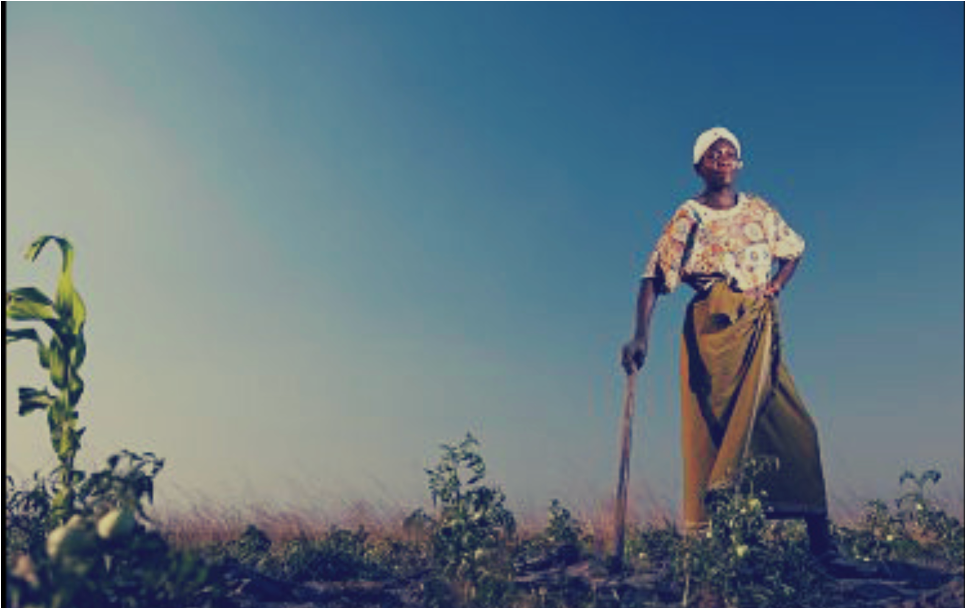
Dudu Takebo stood up. Putting down the hoe, she readjusted the position of the baby, which, despite the incessant buzzing of the flies around its eyes, slept peacefully on her aching back. She looked at the three lines of red earth which she had heaped up in the clearing and mopped her brow and neck, which were sweating profusely. Hearing a rustle, she quickly started and grabbed her hoe, fearing a snake. But there was no need for fear. The rustle was caused by Samson Lutula, who was returning from the river.
Samson did not farm, although his wife did have a small vegetable patch. He was a fisherman. Every morning, he left early with his fishing rod – a tall sapling about 3 m long to which was attached a fine thread. He walked for an hour along the narrow path which led from the village, carefully pushing back the tall grasses and creepers which tried to engulf him. He kept his eyes on the trodden red earth, avoiding the indiscretion of stepping on a puff adder or a scorpion. A final squelch through a slimy swamp brought him to the river bank. The river flowed fast most of the year, and the water was a muddy brown. It was in this water that he sought the tasty Tilapia fish so favoured by his neighbours and himself. He could not see the fish in the muddy water, nor the hungry crocodiles who waited patiently for the fisherman to inadvertently stick a limb into the water. Just last week, another fisherman had lost a leg to a crocodile and had only been saved by the quick reaction of Samson.
He was returning in the mid-afternoon when he came across Dudu in the clearing. They greeted and exchanged pleasantries. Samson had caught nothing that day, but he was still determined to make a big catch for the approaching wedding feast. Dudu belated her slow progress and the sand and flies but was grateful for the good rain they had had. Samson did not stay long, for it was not right to stay too long with another man’s wife. He knew there was powerful medicine in the village and that some adventurous men had recently died in their sleep. Nothing was ever proved, but it was said that the beds may have been impregnated with poison medicine. Samson completed his greetings and hurried on.
The village consisted of a number of thatched huts with mud walls in a clearing in the lush undergrowth. There were about three hundred people in the village in thirty-five families. The huts were in a regular pattern surrounded by beaten earth. There were no flower gardens within the village except for one belonging to the teacher. Around the village was a wall of vegetation, of tall grass bushes and trees – a hostile environment in which dwelt snakes, spiders, scorpions and wild pigs.
The lush vegetation resulted from the climate. It was warm in winter and hot and wet in summer. Water was not a problem for the crops, in fact there was so much rain that it washed the goodness out of the soil. The land was generally flat with frequent fast flowing streams and rivers. About 20 km away, there was a road.
Dudu was the third wife of Jacob Takebo, an elder of the village. Being the junior wife, she had to do much of the backbreaking work in the field. She was carrying her third child on her back and although only 22, she was expecting her fourth. Jacob had nine other surviving children by his other wives. Some of these “children“ were themselves married and bearing their own offspring. She had been married to Jacob for a dowry of six goats.
The huts they lived in were built of mud with a flat roof and were in constant need of maintenance. The land was the property of the village and allocated by the chief according to need and favour.
They owned little. Beside the usual cooking utensils they had some hoes, a few chickens and some goats. There were no cattle because of tsetse fly. The diet was based on cassava and maize, supplemented by ground nuts, vegetables and dried fish. Cooking was done in pots on wood fires as there was no shortage of wood in the area. They drank goats milk and water, but alcohol was of no interest to this village.
The village, despite its isolation, had a school. It was a robust building with a thin tin roof painted brick red. It had been built by the Catholic priests 40 years ago and had been taken over by the government when the church had been asked to leave this area. The government teacher was a keen man but could only teach up to the lower levels of primary education for he did not have the background of his predecessors. His house was distinguished by the carefully attended garden full of flowers but quite devoid of vegetables.
Sickness was common, particularly malaria, TB and anaemia, but the nearest clinic was twenty km away. It was run by the church, which, because they were providing a service which the government could not replace, was allowed to remain. If you were ill, you normally got better or you didn’t. If it was a serious long-term complaint, it was sometimes possible to carry the patient to the clinic, but it was a waste of time with bites from scorpions or snakes. Other members of the village preferred local medicine from the witch doctor, which was handier but often less effective and more expensive.
The farming year was a simple routine. An area of land was allocated by the chief. During the dry season the men of the village cleared the area of trees, shrubs and grass. The trees and shrubs were cut up for fuel and the grass dried for thatching. They did not burn it as in other areas. It was the women folk who then cultivated the land, entirely by hand, using small hoes. No one had seen a plough here and in any case no plough could cope with the tree stumps left in the ground.
After cultivation the next stage depended on the crop. For cassava, ridges were made and the short lengths of cassava stem stuck into the ridge. For maize and groundnut a small hole was made in the ground, the seed dropped in, and the soil returned and compressed with the foot. With the rains came germination and then the weeds. Weed control was one of the main tasks during the year, and the one most disliked by the women who had plenty to do at home with children, cooking and weaving their baskets from the dried grasses.
As the rains dried up the maize was harvested and the groundnuts dug up. The cassava plants produced large white roots, a cross between a potato and a parsnip which could be harvested any time from a year onwards or left in the soil for up to three years until needed. Dudu was preparing the land for cassava after the men cleared the area and she had formed several steep ridges already. She did her work knowing that this was the way that they had always farmed, but she was worried that, because of the increasing number of people living in the village, they were not resting the land as long as they used to.
They were never visited by officials from the government to advise them on how to grow crops, or exhorting them to sell any surplus to outside markets. Markets did not exist for Dudu and any surpluses were stored. The only government official they ever received was the policeman and the man who said he was from “the party“ and who used to teach the children songs and rhymes about the wonderful president whom they had never seen . There wasn’t much life for them beyond the village.
Dudu finished the third ridge and walked slowly back to the village. The sun was sinking over the trees. Besides each hut the women were shelling groundnuts, grinding cassava roots into flour and lighting the evening fires. Dudu sat down against the hut wall, which was still warm from the afternoon sun, and suckled the baby to her breast.
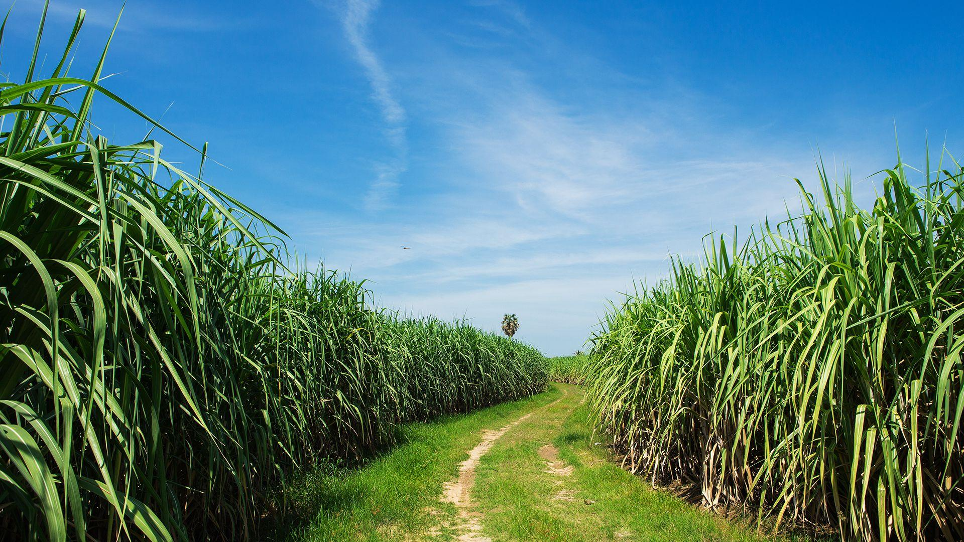
Chingala Estate came off the drawing board in 1954. As early as 1950, representatives of the European investment company had been combing Africa for an extension of its agricultural investments and interest had been expressed in the Chingala Valley. It had a good river flow, the land appeared in good heart and fairly flat, labour was plentiful and there were plans for an all-weather road passing through. The investigations followed, with the full consent of the colonial government. Soil scientists and agronomists studied soil and vegetation, the engineers and geologists checked for dam and factory sites, hydrologists checked the water flow and its quality while economists did all the things economists normally do. They returned to Europe and reported their findings. The soil and water were good, dam and factory sites had been found and the economics were sound. The bankers were approached in Europe, share advertisements appeared in the financial press and the money was soon raised. In 1951 the machinery and men moved in – huge earth-moving equipment for building the dam and levelling the land, tractors, jeeps, trucks and temporary housing. The local people who had farmed the land for years were moved off, compensated and offered employment on the site. The dam began to rise from the valley floor and water backfilled to form the embryonic reservoir. The factory, an ugly tin building, was erected along with offices and housing for staff. Roads were built, soil conservation measures implemented, fences erected, and experimental trials started. In 1954. The land was cultivated and planting began. The first sugar was produced on Chingala estate in 1955.
That was a long time ago, when the colonial government had been in power. A lot had happened in the meantime, new housing has gone up, the whole estate extended and more black faces were to be seen in management positions.
Bob Watford drove his light truck through the gates, past the security guard and up to the laboratory. He walked in. His assistant followed, carrying the bundles of cane samples for maturity testing. He walked over to the far side where his friend and colleague, Jim Forsyth, was checking some results on his electronic calculator. Jim was surrounded by glassware, bottles of brightly coloured chemicals, electronic meters of every shape and size and several African assistants who were weighing out samples and crushing cane on the miniature roller. For a time they talked about the state of the cane harvest and then they moved onto the topic which was uppermost in their mind - the future.
They had stayed on after independence as the African government, which had taken over, seemed mild enough. Certainly, it could not be accused of efficiency as they had adopted all the laborious, administrative procedures of their colonial forebears and taken on extra staff to ensure that the red tape was fully entangled. But politically they were making changes. Work permits for expatriates were no longer automatically renewed. They were insisting on the company increasing their local training programme. Both Bob and Jim had Africans who were at present overseas for training in Europe, Australia and the West Indies. They knew that such counterparts were intended to take over from them in the next few years. The government was also insisting on a rise in wages for the labourers whilst at the same time refusing to raise the price of sugar to the people. The company had replied that if wages rose it would be more economic for them to fully mechanise and to make several thousand people redundant. Bob and Jim had watched this process before in other countries. In one case the government had taken a 51% share. Once they have seen the accounts they immediately authorised a rise in wages and a rise in the price of sugar for they were aware there was no alternative. In another instance the government had nationalised the company completely. The expatriates had quickly left, production had gone down and the estate run into a huge debt. As there was no money to pay the wages near riots followed. Understandably, Jim and Bob felt insecure.
Bob had been at Chingala as an agronomist for over 10 years. He was forty, married with two children, both of whom were at boarding school in Europe at the company’s expense. He had a pleasant, air-conditioned house with all conveniences. They owned a large car, had use of a company truck and employed both a maid and a gardener. The club was only five minutes’ drive away, fully licensed at all hours and offered a swimming pool, golf course and tennis courts. It was true that the estate was a little isolated, being 100 km from the nearest town of any size, and that the conversation tended to cling to cane, wives, babies and bosses. But you couldn't live as well as that in Europe with only a BSc behind you. They ate well, had free medical facilities, an excellent pension scheme and subsidised drinks. The future of this was now in jeopardy.
The growing of the cane was relatively straightforward compared with other plantation crops, such as citrus or coffee. It was planted one year and harvested the next. After that first harvest the cane rapidly began growing again and was ready for harvesting again within another 12 months (known as the ratoon crop [1]). After six years, it was ploughed out and re-planted.
Chingala had every modern facility. There were over twenty-five tractors and the same number of lorries and trailers, and all types of implements for levelling, cultivating, irrigating, spraying and loading. Some spraying was even done by aircraft. The laboratory tested the cane for maturity, the plant leaves and soil for their nutritional needs and checked the factory standards. Bob sent the results of his variety trials to Europe for analysis by computer. But the cane was still planted and harvested by hand. Certainly, both activities could be mechanised, at a price, but using labour currently kept the cost down and gave employment to several hundred people. If the cost of labour went up then the machines would move in.
Bob worked hard. He left the house at five in the morning and drove to meet his assistant and workers. They were allocated their tasks for the day before he went round to check that his experimental plots were in order – trials on varieties, fertilisers and pest control. He would then collect samples from the field and take them to the laboratory for analysis. He was then free to deal with any problems that might arise.
The estate was divided into several sections, each of which was under an expatriate section manager, although many of them were shortly to be replaced by local staff. A section manager could radio through to Bob if he had a problem, such as bad drainage or a pest infestation, just as he would radio for an engineer if a pump broke down. Solving problems was what Bob enjoyed most.
Jim put down the calculator. After giving instructions to their assistants, they both left the laboratory and drove down to the club for a stiff drink. Far from easing their minds, their conversation had increased their feeling of insecurity.
[1] A new shoot or sprout springing from the base of a crop plant, especially sugar cane, after harvesting.
Joseph Limbu brought his machete down hard on the tough cane stem, pulled it away and threw it into line with the others that he had already cut. This was a good piece of cane for cutting, the stems thick and well-spaced and the weeds few. Other areas had been less favourable, a legion of weak stems which meant more thrusts with the machete and a host of weeds which cut the hands. He looked around at his fellow cane cutters, all rhythmically cutting, topping and laying the cane – backs bent in the sun of late morning.
Joseph had worked at Chingala now for seven years as a labourer and came from an area seventy-five kilometres distant. He had been dazzled by the bright, shiny goods some of his neighbours had brought after doing casual cane cutting at Chingala. Feeling little future on his own plot of land, he had decided to move to Chingala.
He brought with him his wife and six children. He was then forty, the same age as Bob Watford. He was received at Chingala by the personnel officer, who showed him to his quarters in the labourers’ compound of E section. The compound was surrounded by a tall, wire fence, and a uniformed man stood guard at the gate. There were about a hundred houses, built of concrete blocks with a tin roof. The houses were laid out in a regular pattern, separated by trodden earth. There was one tap on a standpipe for every eight houses, communal ablutions and a garden where families could grow vegetables.
Joseph was told he was to be employed as a labourer, responsible to the section manager through the supervisors. He was on three months’ probation, to be paid a cash amount monthly with weekly rations of maize meal, beans and meat and a supply of wood for cooking. He had found the work hard. Starting at five, he climbed into the trailer to be taken into the field and engaged in the seasonal activities of planting, hand weeding or cutting. He worked on a task basis and would go home when the work was done. It was monotonous work with a meagre pay each month, but he had received a bonus each year from the company.
During the seven years he had worked well and had been promised the job of irrigator, an easier job for an older man, which simply meant guiding the water into the irrigation furrows. He had found the company fairly understanding, though hardly generous. In addition to his three-roomed house, his pay and his rations, there were other facilities on the estate. A community hall showed films and arranged games for the children. There was a primary school, but it was difficult to know what to do with the children when they finished school. There was only limited work on the estate, and they had lost many of the ties with the community they had left seven years ago. Only the top few went to secondary school, and his eldest son was not one of these. He sat around at home and was a nuisance to everyone.
The company also provided medical care for all employees and their families. The nurse came round to the compound every week to see the young children, and when he had gashed himself badly with a cane knife, he had spent several days in the small hospital.
Yes, it was monotonous work, and it was easy to moan, but he did at least have security – a guaranteed meal every day, some cash and care for his family. He certainly did not have that when he lived in the bush, sweating behind the oxen, guiding his plough, peering into the clear blue sky to see if the rain would fall to germinate his crops.
Joseph stopped cutting cafe to watch a tractor go by. It was followed by another huge machine and a Land Rover full of white men. The men got out and watched the monster machine. It ploughed into the tall cane and began cutting it and loading the lorry, which ran alongside. Joseph stared. A machine was cutting the cane. A machine was doing his job.
The machine finished its demonstration and went away. The strangers got back into the Land Rover and drove away, smiling. Joseph thought again about his house, his family, his rations and his job – and his hand trembled slightly as he brought the machete down.
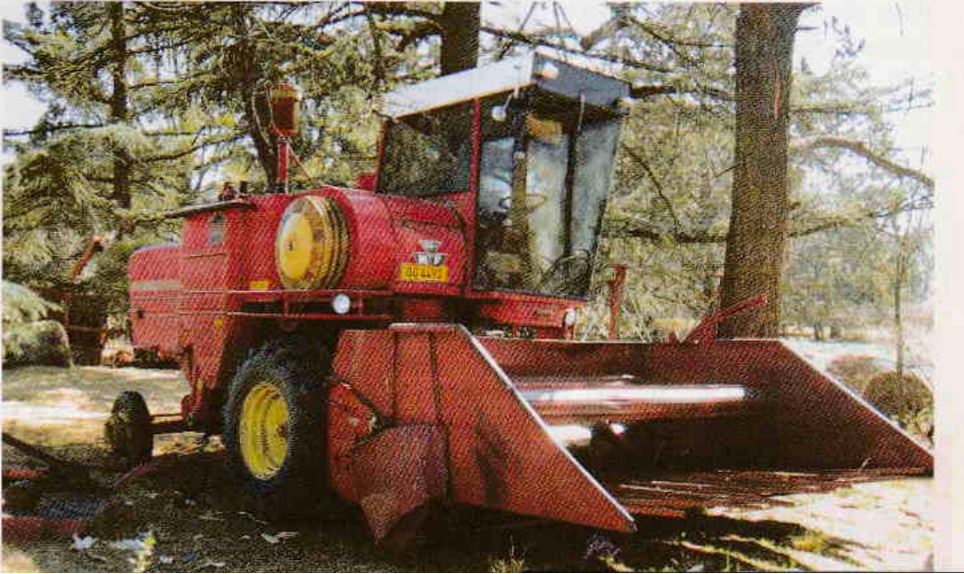
There was an expensive, grinding crash. Mohamed Jaludin stopped the old, red combine harvester and leant forward wearily on the steering wheel. The sun burnt the back of his neck. He straightened and rubbed his dusty eyes until they were red.
Tired, he climbed off the superstructure of the machine. He lifted a metal lid, peered in and found what he had suspected – the bearing shells of the thrashing drum had gone. They were dry as a bone and clearly had not been greased for a long time. Returning to his seat, he started the engine and began the long drive home. The procedure he must follow was clearly laid out – return the machine to the workshop, advise the manager and prepare a report for the committee. As he drove home, he looked discontentedly at the vegetation around him – a mixture of wheat and weeds - more weeds than wheat.
Mohamed was only 20. He had lived in the valley all his life. In fact, he was born on this very farm. It was a long valley, some 200 km from the source of the river until it opened into the coastal plain. It was well served by both road and rail. In the upper steep regions of the valley, many small farmers fought daily with nature to make a living from the unwilling soil. But as it opened out into the floodplain, the valley became much kinder. The soils were deep and, with the exception of the occasional rise, needed no soil conservation measures. The river flowed strongly through most of the year, and with the Mediterranean not far away, the climate kept the frost at bay.
The first European settlers had arrived some 100 years ago. Within 20 years, much of the valley was cultivated with wheat, citrus, rice, vegetables and vines. A few cattle were kept to graze the stubbles and horses were introduced for ploughing. Mohamed’s predecessors were employed as farmworkers. In the early part of this century, the colonial government developed a major irrigation scheme in the valley. Dams were built, which spawned concrete canals and open drains. Within a few years, a large part of the valley became irrigable. Machines were brought in to replace the horses. A research station was built, and the valley’s agriculture rapidly absorbed the new technology. It became one of the most productive in Mediterranean Africa.
The troubles began with the revolutionary movement. Mohamed remembered it well, although he was young at the time. The resentment, which had festered amongst the more ambitious of the indigenous people employed as workers in the fields, developed into strikes and eventually into outright hostility. The armed troops brought in to quell the troublemakers only generated more violence. For many months, there was fighting in the valley. Farming was neglected in the cause of survival, canals were smashed, machinery, rusted, vines lay unpruned and unharvested, weeds flowered and seeded profusely. The land returned to nature.
After independence, the new government adopted a socialist line. It moved slowly, but in one direction. They took the view that the land belonged to those who farmed it and that all land was to be nationalised and redistributed. In some cases, the land went to individuals, but in most cases, the large farms were designated as state farms to be run by the farmworkers along prescribed lines. Farm committees were set up to run the farms by consensus.
Mohamed was one of six children. His father still worked on the farm, and they lived in the same house in which he had been born. The house was built of brick and was adequate for their needs. Their diet was based on wheat supplemented with vegetables and occasional meat, cooked on a wooden stove.
He began his education in the local primary school at the age of six. He continued to secondary school before taking a three-month course in practical agriculture at his father’s command. He returned to the farm and was allocated a position as a driver. However, he was far from content with his lot. The standard of farming was poor. The slow communal procedure of decision-making meant that practices were often implemented too late. Many members failed to accept responsibility or show initiative. Mohamed had plenty of ideas, but they rarely passed the committee stage. Although there was plenty of machinery on the farm, its maintenance was poor, and spares were always short. All supplies came through government agencies, who rarely appreciated the urgency of the situation in the field or even understood the farming year. Last year, the fertiliser had arrived too late for planting, and two of the seven tractors were permanently out of action owing to a shortage of spares. Last year’s wheat crop was still in the store, host to a plague of hungry insects, whilst the government marketing agencies exchanged memoranda about transport. This year’s wheat crop was again poor as a result of late planting and inadequate weed control. Mohamed thought it was barely worth harvesting.
Such unnecessary wastage was frustrating. He was not over keen on farming, and his outlook had been modified by his three months in the town. It was there that he had seen the good life of government servants, that he had seen the bronzed legs of the emancipated girls, that he had seen the cinemas and bars and the riches of the newly discovered minerals changing hands. He became less inclined to sit on a tractor all day, exposed to wind and rain and subject to the whims of committees of old men. The town offered money and excitement, regular employment and fixed hours, new people to meet and the sight of those legs completely hidden from sight in rural life. He was attracted by the superficial excitement of the towns - quite blind to the overcrowding, the shanty towns, the poverty and disease and the rats which scuttled in every alley and drain.
As he coaxed the old red machine back to the farm, through the poor crops and under the hot sun, he imagined himself seated outside a pavement café in the town and watching the girls go by. As he approached the machine shop, he resolved he wouldn’t stay a day longer. Tonight, he would slip quietly away to the town and lose himself, find some work and some of those emancipated girls. Farming was for old men.
Decision times……. Comfortably ensconced in an easy chair at the club, Bob Watford was dividing his attention between the glass of whisky in one hand and the Sugar Journal in the other. He skipped through the rather boring pictures of sugar "personalities” and editorials on sugar politics until he saw an advertisement for a new cane harvester. Unlike the older models, this was a self-propelled machine which, according to the advert, could eat up to 35 tons per hour. Together with his whisky, he moved over to the writing desk and jotted down the name and address of the manufacturer. He drove over to the main office and dictated a letter to the same address, asking for further details.
A fortnight later a large envelope arrived containing details of the machine, its power source, rate of work, servicing requirements and, in small print, the cost. In the same envelope was a letter written on heavily embossed, headed notepaper from the export sales manager which indicated that further information was available and that a representative would be sent out to arrange a demonstration if required. Bob dispatched all this information to the production manager, adding a memorandum of his own to suggest further investigation would be worthwhile. The prompt reply told him to get on with it.
He first wrote off for information on all harvesting machines so that he could make comparisaons in terms of productivity and cost. He quickly found out that there was more to machine harvesting than he had imagined. The machines would only work satisfactorily on level ground. This would mean either continuing to harvest the slopes by hand or indulging in some expensive levelling. The cane would have to be planted very carefully in rows to ensure an even feed into the cutter bars. New, more upright varieties of cane would be necessary. The trailers would have to be modified to accept the chopped cane from the harvester and a completely new unloading device developed for the factory. But despite these problems, Bob was spurred on by the fact that these machines could replace many men, men who could be very troublesome in the hands of a few skilled union leaders.
He approached the issue from two angles. The first was physical. He wrote off to the main sugar research stations to obtain detailed figures on the effect of heavy harvesters on soil compaction, aeration and tillage, ratoon growth and yield. He determined what degree of land levelling was necessary, which varieties were suitable for mechanical harvesting and what modifications were necessary for trailers and factory. He calculated how many machines were necessary, the stocks of spare parts which would have to be kept and the number of labourers that would no longer be required. His completed physical report was then sent to the head office in Europe for the second stage of the investigation – by an economist.
As the whole of the company's cash flow and accounts were fully computerised, it did not take long for the economist to undertake the computer run. A short telephone conversation with the computer systems analyst was all that was required. The information was fed into the willing computer – the cost of the machine, number and cost of spare parts, running costs, antitipated rate of depreciation, rate of credit repayment, savings in terms of labour no longer required, cost of oher long-term measures necessary to make machine harvesting possible and all other relevant data. The computer print-out indicated the relative cost of harvesting by hand and by machine over a period of five years, taking all these factors into account, and showed only a marginal difference.
The economist, then re-ran the programme several times altering the basic assumptions used in the calculation to show the effect of an increase in the wages paid to labourers, a change in the sale price of sugar, increased interest, rates, inflation, rising costs of oil and raw materials – a process delightfully known as sensitivity analysis. These new results swung in favour of long-term mechanisation when measured purely on economic grounds. They were carefully documented, together with Bob Watford’s report, into a bound volume, and submitted to the board of directors. The directors were a motley crew of financiers, landed gentry and career engineers of whom only a few had ever seen sugarcane growing. They in turn submitted the report to their merchant bankers who agreed that, based on the figures presented (which they had themselves recalculated to their satisfaction), the introduction of the cane machine harvester was an economic investment. Chingala estate was instructed to go ahead with field trials for the cane harvester.
Joseph Mumbu was not the only labourer to have seen the cane harvester swallowing up the cane. His fellow workers had also seen it, had talked together and approached the head of the union. He, in turn, had contacted his uncle who was related by marriage to the Minister of Agrioculture. Three days later the whole mecahnical harvesting project was dropped following a call to the Managing Director from the Minister of Agriculture. The same day, the government announced its intention to take over 51% of the shares of Chingala Estate and, in a dramatic pronouncement, assured the labourers of a secure future. Wtihin a month they increased both labourers’ wages and the price of sugar. Share prices fell in London and Wall Street and head office changed its merchant bankers. Bob Watford handed in his notice. Joseph Mumbu is still cutting cane.
……….It was a hot day. Mzili Bakwati was sitting on one of the primary school benches in front of the newly completed Farmers’ Shed. He was glad that he was wearing only his goatskin skirt and his ceremonial beads. Next to him sat the deputy Minister of Agriculture, resplendent in his best dark suit, white shirt, and tie – sweating profusely. Arranged in a circle around the dignitaries sat several hundred of the local farmers and their families.
The primary school choir completed its renderings, and the children dissolved into the circle of families. The Deputy Minister rose, mopped his brow, pulled out his notebook and began to speak. “Chief Mfuntali, councillors and fellow farmers, I feel greatly honoured to be able to represent the Minister of Agriculture, who unfortunately has been called to a Cabinet meeting, at the opening of this farmers’ shed. As his Excellency, the President has stressed many times, Agriculture is the most important aspect of development in this country, and I myself believe………. Bakwati began to doze off in the heat and humidity which preceded the rains and his mind slid back to the origins of the farmers shed.
The turning point had come with the arrival of Hezekaih Bakwebo. One morning, Hezekiah came to see him. They had exchanged greetings, shared some stewed beans and eventually begun to discuss the purpose of the visit. Hezekiah was a field officer from the Ministry of Agriculture who had recently completed his diploma at the agricultural college and had been appointed to this region. He had to come to see Bakwati because he was a respected and influential man. Bakwati, in turn, listened to what the young man had to say and agreed to meet again, although he knew that this young man, still wet behind the ears, could not teach him very much. There was several more meetings at which he quietly listened to the young man. Although he did not believe what he said he could not fail to admire his enthusiasm.
Hezekiah talked a great deal about what the government was doing to help farmers and one day he invited Bakwati to attend a farmer’s day to be held at the experimental farm some 50 km away. Bakwati eventually gave in to the persistent requests of the field officer and agreed to be at the Mission station at the appointed time to meet the lorry which would take him. He was true to his word, and, along with several other farmers, he bumped his way over the rough road to the experimental farm.
He was quite amazed by what he saw. Sorghum was planted in straight lines and not scattered randomly or mixed with beans, sunflowers or even weeds. The plants were short but had a big, full heads of seeds. The oxen he saw we were strong, powerful beasts and he simply refused to believe that the hens laid 150 eggs a year. Coming back in the lorry, he mused on these things. It was not long before Bakwati returned to the experimental farm for a week-long course where he watched, learnt, discussed and argued. He learnt about the new seeds, techniques of planting, fertilisers,and most important of all, about markets and money. In the ensuing months, he talked with Hezekiah about his ideas, about how to raise money, about how and where to sell produce and about how they could put their cows to a good bull. Eventually, Hezekiah suggested that Bakwati and his fellow farmers might like to take advantage of a new scheme from the government and form a farmers’ cooperative. The farmers would have to get together and pull their resources and money but, with technical and financial help from the government, they would be able to build a farmers’ shed to store their seeds and equipment, hold lectures and meetings. They would be able to buy larger amounts of what they needed, which would be cheaper. They would be able to store their harvest, free from insects, and to sell to the mobile markets which the government would set up.
Bakwati mulled over this for a long time before he gathered his fellow farmers together to put forward the idea. Most of the farmers were very sceptical. They had always shared when times have been bad, but to pull all their resources was something quite new. They held many meetings, and the whole scheme nearly foundered when one of the older farmers asked for a sample of the new seed that Hezekiah was so keen to distribute. The sample was duly delivered and shared amongst the farmers. At the next meeting, the farmers unanimously rejected the new seed. They had given it to their wives who had found that it made tasteless, grey porridge and lousy beer. It was only by the combined persuasion of Hezekiah and Bakwati that the farmers agreed to consider the scheme in general and ignore the seed.
It was one year and many meetings later that a committeee was finally formed with Bakwati as chairman and Hezekiah as chief adviser and honorary treasurer. The committee was empowered to collect monies or harvested produce from farmers to be used for erecting a farmers’ shed. The government would match the funds raised by the farmers.
The money mounted only slowly, and nearly two years later, there was still insufficient money to build the shed. People were losing interest. SoBakwati quietly convinced his fellow farmers and their families to start digging the foundations and at least build as far as the money would allow. This activity increased interest and within six months the shed was ready for the roof – but there were no funds, and once again, the shed remained unfinished.
Hezekiah, who had spent some time in the capital, was undaunted. He approached one of the foreign embassies, and explained his problem. He suggested that if they were to provide the tin sheets for the roof, they would win excellent publicity, both in the national press and by stamping “gift of the government of ………..” on the sheets. The embassy duly agreed, and in a few days, the sheets arrived, each one duly stamped on both sides “gift of the government of………“. That night there had been great rejoicing.
Bakwati woke slowly to the present and turned his attention to the Deputy Minister…. ”…… and we look forward to the time when it will be possible for the government to drill wells here for irrigation and for you to purchase the fine bulls which we have at the experimental farm”
Bakwati considered all these wonderful possibilities but was satisfied with the farmers’ shed – basic though it was. It had taken a long time, but everyone had been consulted, and he was sure that they had made the right decision.