New wine in old skins…(1) rejuvenating oil palm in Liberia
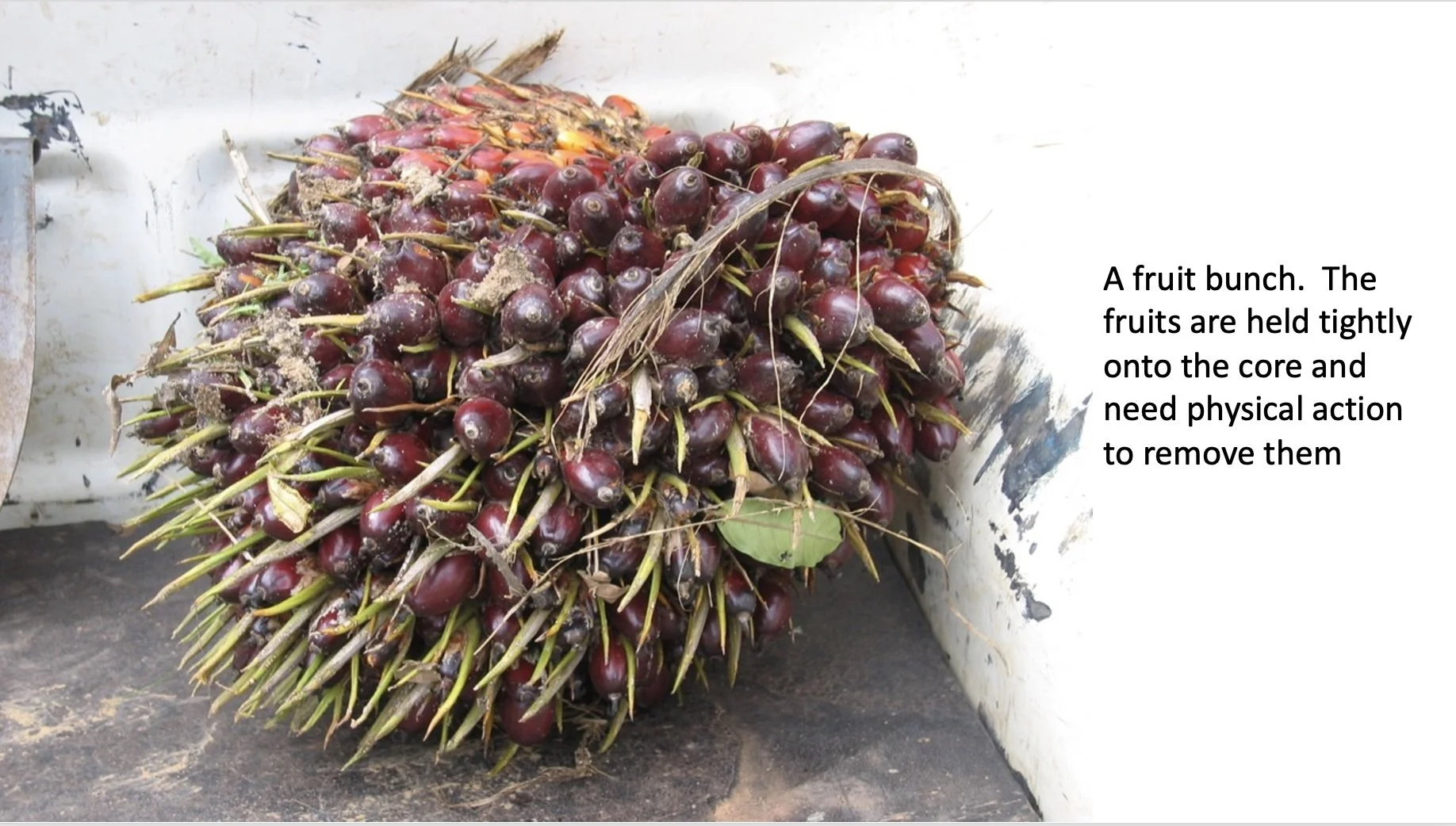
Oil Palm grows well in Liberia - perhaps not surprisingly since West Africa is its home. Traditionally growing wild in the forest, it has since been domesticated and industrialised and become the world’s most significant, traded vegetable oil. What is harvested are the fruit bunches (see below) which contain a large number of individual fruits - within each of which is a kernel or seed. There are two main products derived from the fruit. Palm oil itself comes from squashing and squeezing of the fruit’s flesh surrounding the kernel - yielding a nutrient-rich product that is widely used in processed foods. The kernel also contains an oil, quite different in nature, which can only be accessed by cracking it open. Its oil has a higher content of saturated fats and is often used in cosmetics and for industrial applications.
Although growing well in Liberia, when compared with rubber - which is the base of the Liberian economy (with just one of Firestone’s plantation (Harbel) having an area the size of Singapore island) - oil palm is a minnow. At the end of the civil war there were only around 38,000 acres of government/coop owned/managed oil palm in Liberia - but. in a country where every source of food or income is important they had the potential to provide a livelihood for at least 4,000 farm families or 40,000 people. Unlike rubber, where Firestone seems to have been able to largely continue with little hindrance through the war, these smaller oil palm estates were neglected and allowed to overgrow – unharvested, unpruned and smothered by weeds. How could they become productive again?
From 2004 - 6, I was working on a USAID-funded project in which my role was to find ways to revive the economy and create employment through rehabilitating the many entrepreneur-run businesses that had been destroyed by the war - about which more elsewhere, Early on we learnt of a co-operative way up-country that wanted to rehabilitate its modest oil palm plantation but lacked the resources to do so. We decided to take a look, packed our bags and set out to meet the people. The first hazard was the road….
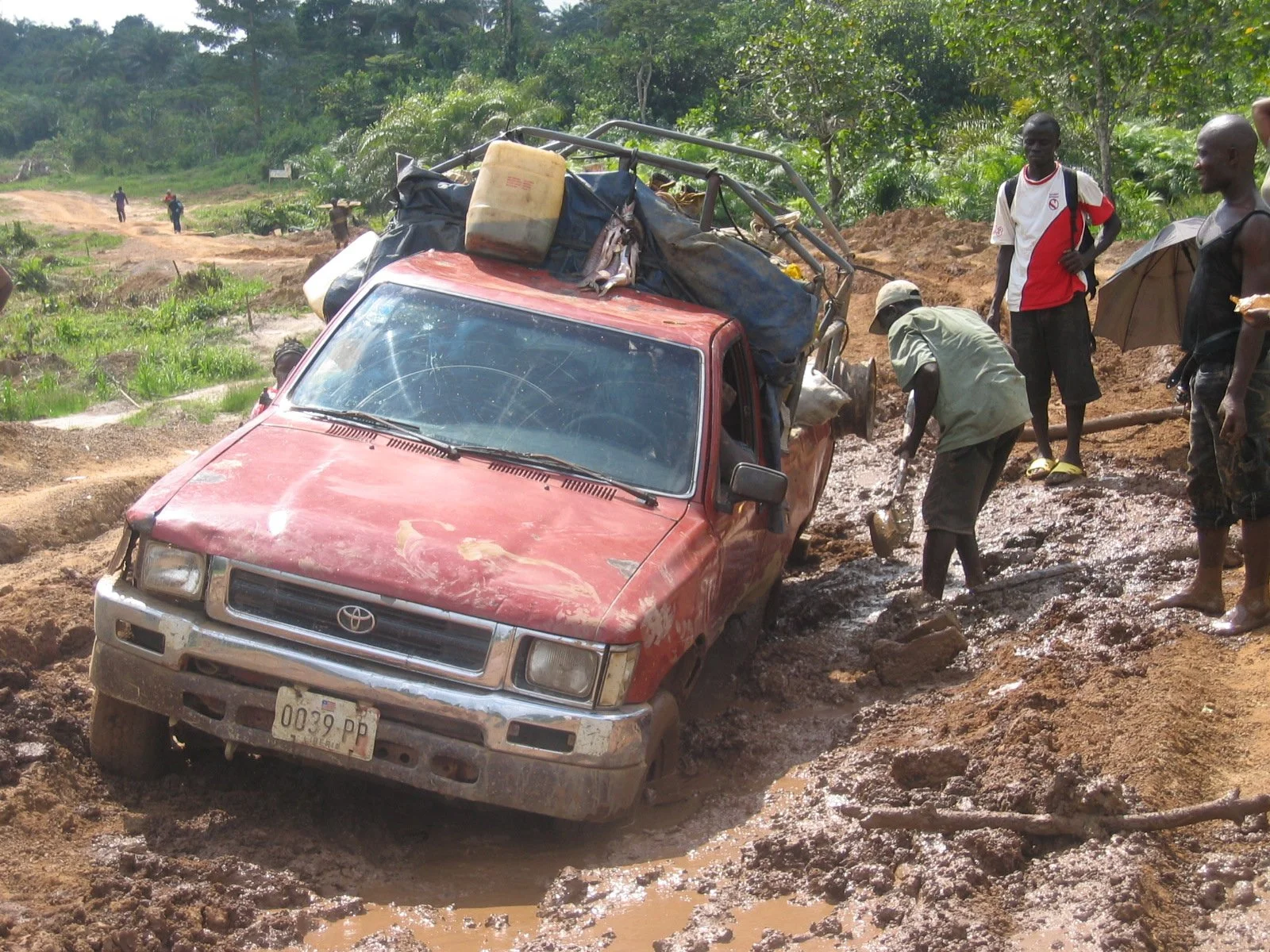
A local pick-up stuck in the mud and blocking the road….
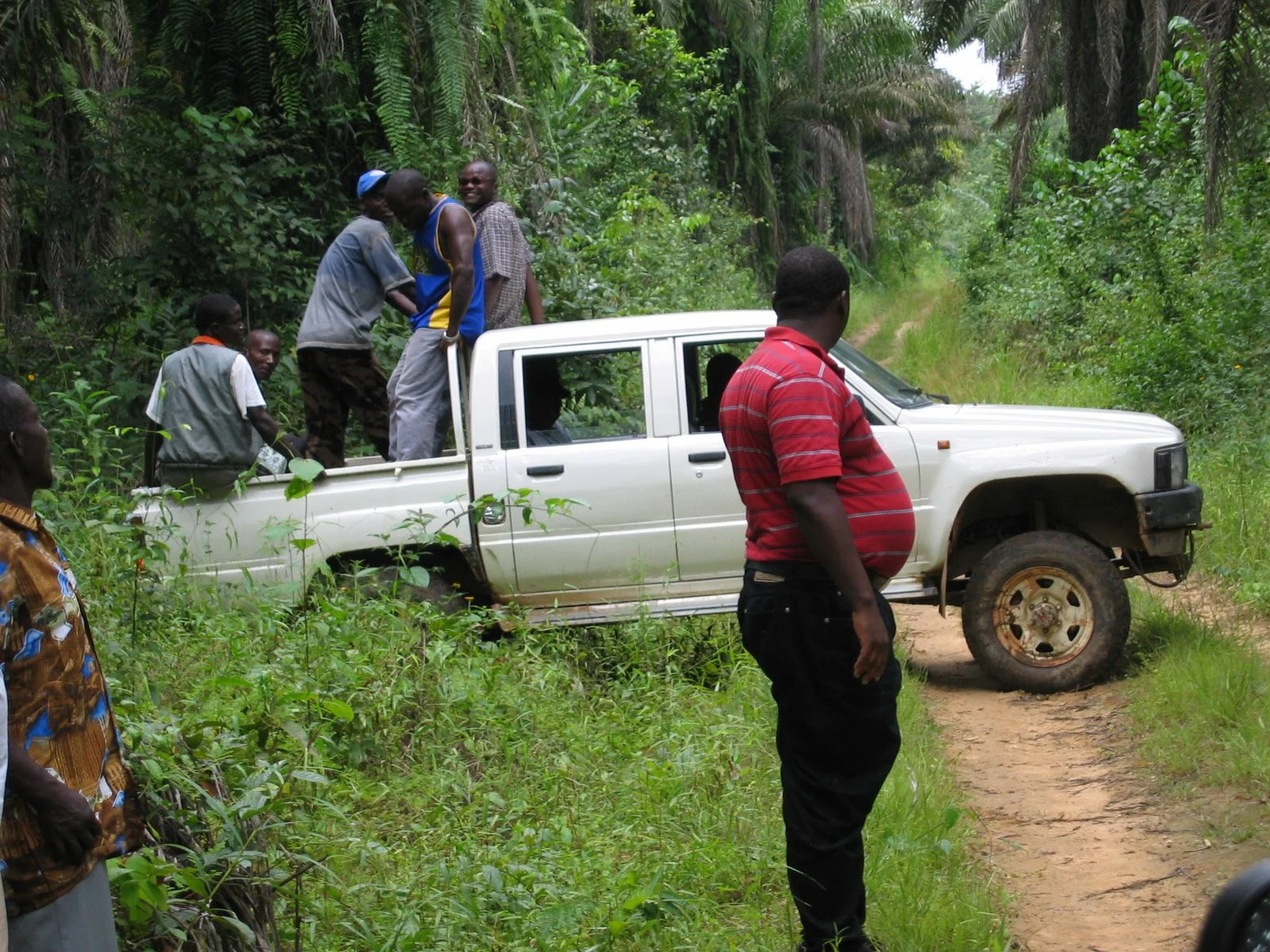
Arriving at the site - where the oil palm trees are smothered by uncontrolled vegetation.
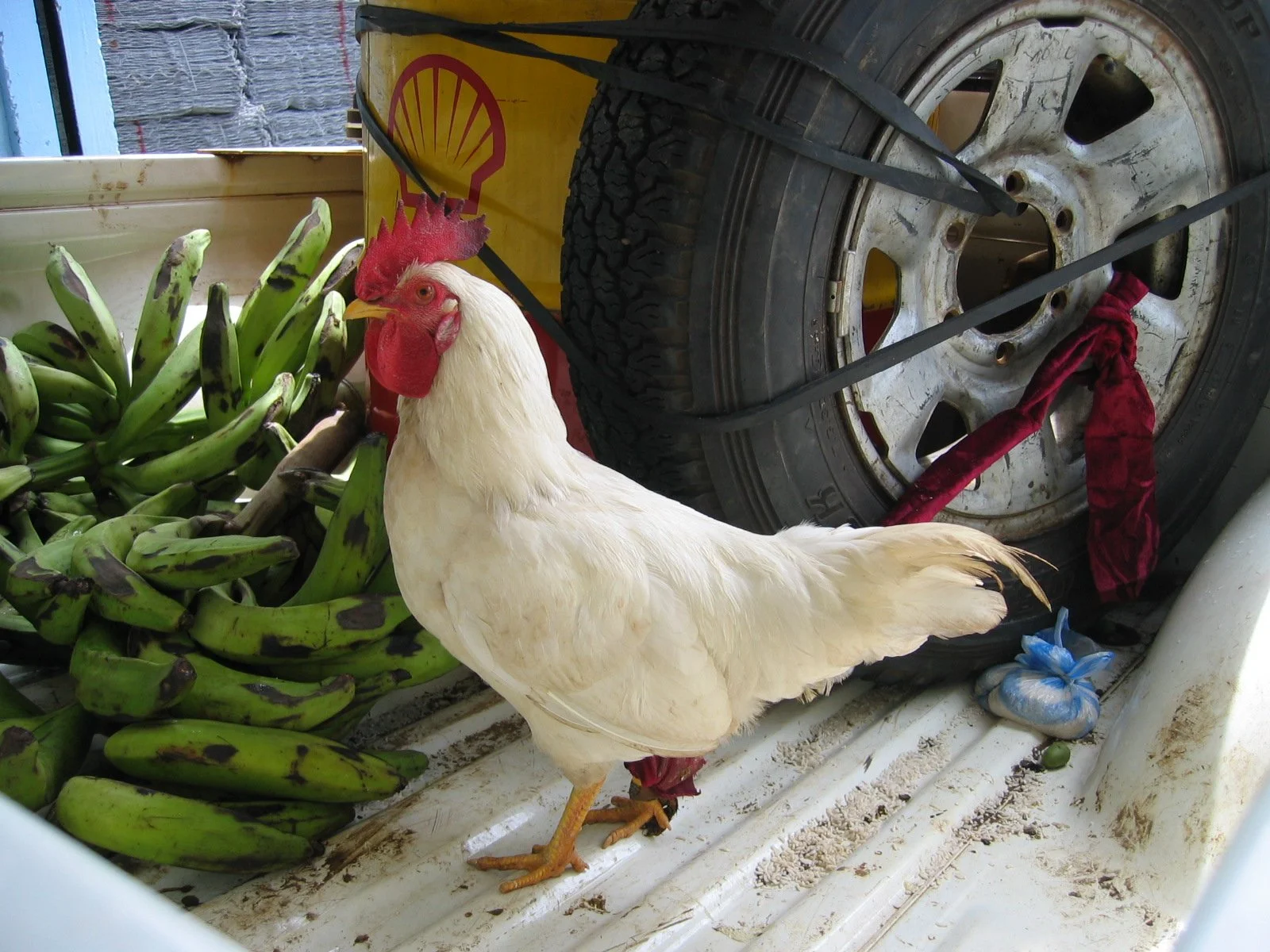
On arrival I was invited to join the members of the co-operative, who had built an open-sided “building” like this one. There were some benches and a “top-table”, behind which I was asked to sit and address the assembled company. But before doing so, one of the leaders came up to me with a piece of white chalk and drew a cross on my forehead as a sign of peace. He then further endorsed the peace message by presenting me with a live, white chicken - for which I thanked him, whilst wondering what I might do with it.
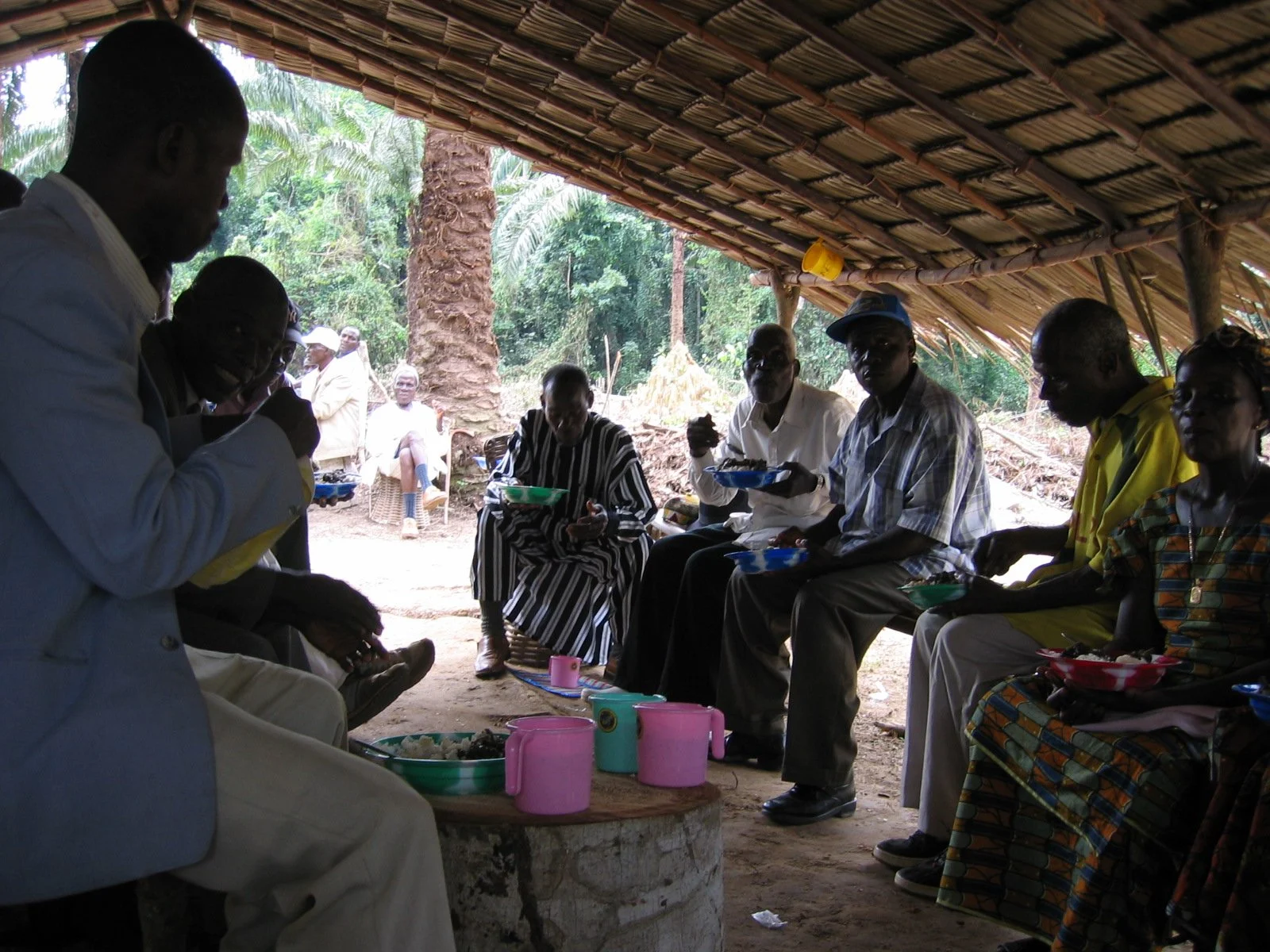
Having briefly introduced myself, I asked them to tell their stories whilst I listened and wrote copious notes. It transpired that they had been encouraged by the then government to provide this land to a foreign company to plant oil palm, not realising that their role would be one of labour rather than co-owner of the asset. When the war started, the foreigners left and discarded the plantation. And many of the local people fled from the fighting to the comparative safety of the local towns. The plantation was left behind. Neglected it became overgrown - unpruned and increasingly inaccessible. Our discussion then revolved around what might be done to make it productive again. Whilst replanting would be required at some point in the future, it was not practical now as there were no funds for the planting material or to sustain it until it. became productive. And the need was for income now.
It was clear that we needed some facts. So rather than just continue talking I suggested that we get some facts for the following..
1. The physical nature of the plantation…What is the area of land available to the coop? How much of this is planted to oil palm and what is the remainder used for? Is there any land available for the expansion of the plantation without cutting down primary forest? How many trees are there in the plantation (based on sample surveys)? Can we produce a map of the physical layout, including streams and roads/major paths?
2. The current capacity of the plantation to produce palm oil. When were the existing trees planted? What is the average number of bunches being produced per tree per annum? What is the average weight of the bunches? What information is available – if any – regarding the % of palm oil in the fruit bunches? If all the available land under palm were to be under-brushed, what yield could be produced/annum from the plantation without using fertiliser?
3. The future capacity of the plantation to produce palm oil. If a replanting programme were to be introduced, what rate of replanting would be realistic in order to maintain output whilst replanting took place? Once the plantation is replanted and in full production, what yield of palm oil and PK oil might be possible? What facilities exist for turning the harvested bunches into marketable palm oil?
4. The existing and future markets for palm oil. Where could harvested palm oil be marketed? What is the size of that market and what prices are being paid? What would be the cost of shipping palm oil to Monrovia?
5. The coop. What is the size of the coop (in terms of membership)? What is the state of its organisation and management? To what extent do you believe that it is capable of improving its management capacity so that it might attract international investment?
If we could secure this information then we should be able to make a plan to see whether there was potential for a full-scale rehabilitation. The first step needed was to clear the area of the undergrowth that was stifling the oil palm trees, after which we could begin to take some measurements to answer the questions above. And whatever we found, the fundamental process of clearing the undergrowth would at the very least allow the local community to harvest existing and future fruit bunches for their own, domestic use. We agreed that they would clear the undergrowth so that we could generate the information that we needed and said that we would be back in a few weeks to see the information they had collected, make a plan for the future and see how we could help them further.
At this point we left them and returned to Sannequelle for our overnight accommodation, taking with us the chicken that I had been given. On the journey back, conscious that I needed to find a home for the chicken, I asked my colleagues whether there might be an orphanage nearby to which I could donate it. I learnt that we would pass the Rainbow Town orphanage the next day and could call in to see them. This led to a whole other story and involvement ……about which more elsewhere.
It was some time before we returned to the oil palm plantation, but when we did it was clear that a lot had been going on.
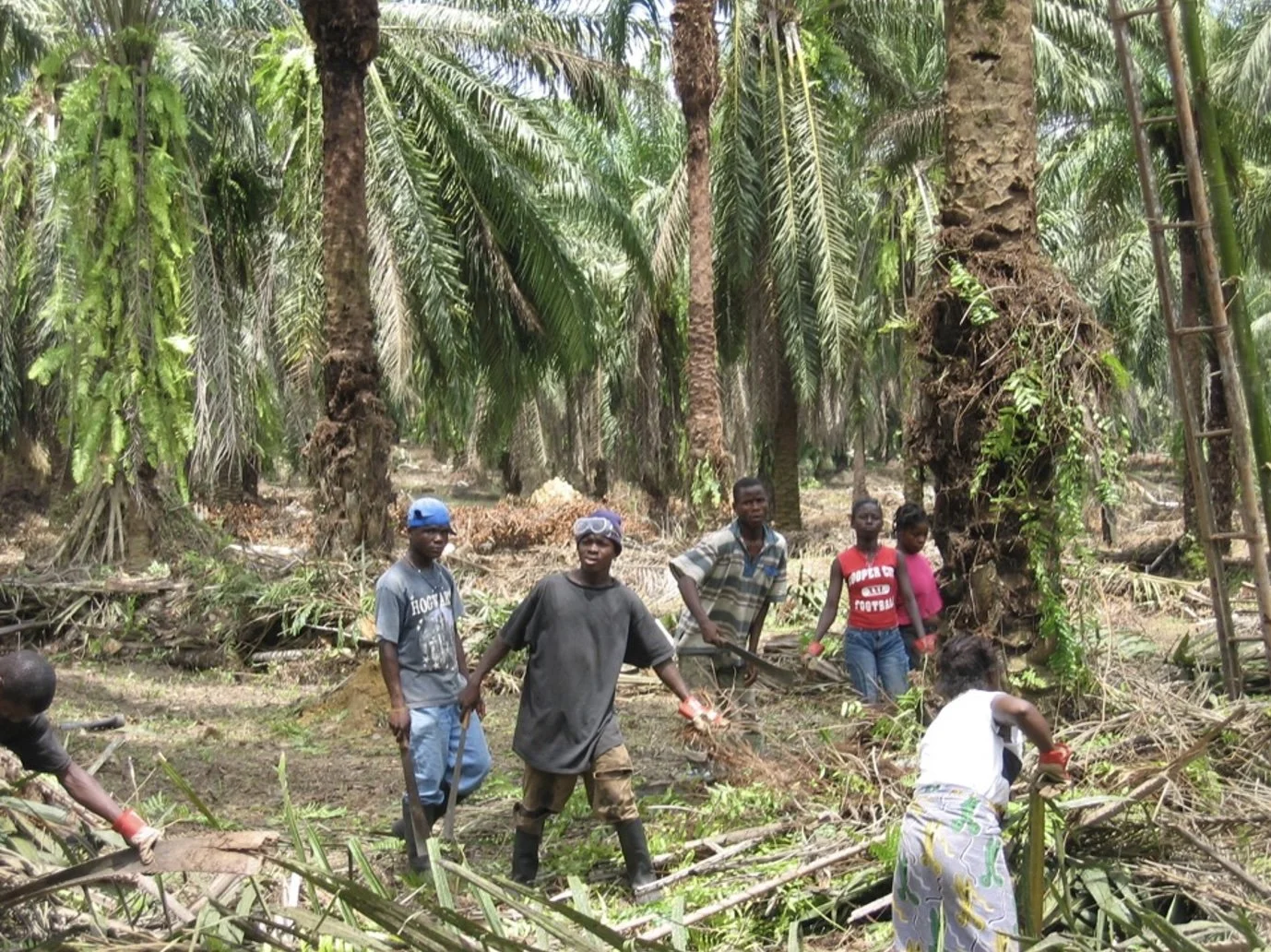
The oil palm groves that had been overgrown had been largely weeded and pruned. The weeding not only prevented competition immediately around the trees but also created a clean space into which the bunches could be dropped - allowing the collection of the fruits that fall off the bunch and bounce away when it hits the floor.
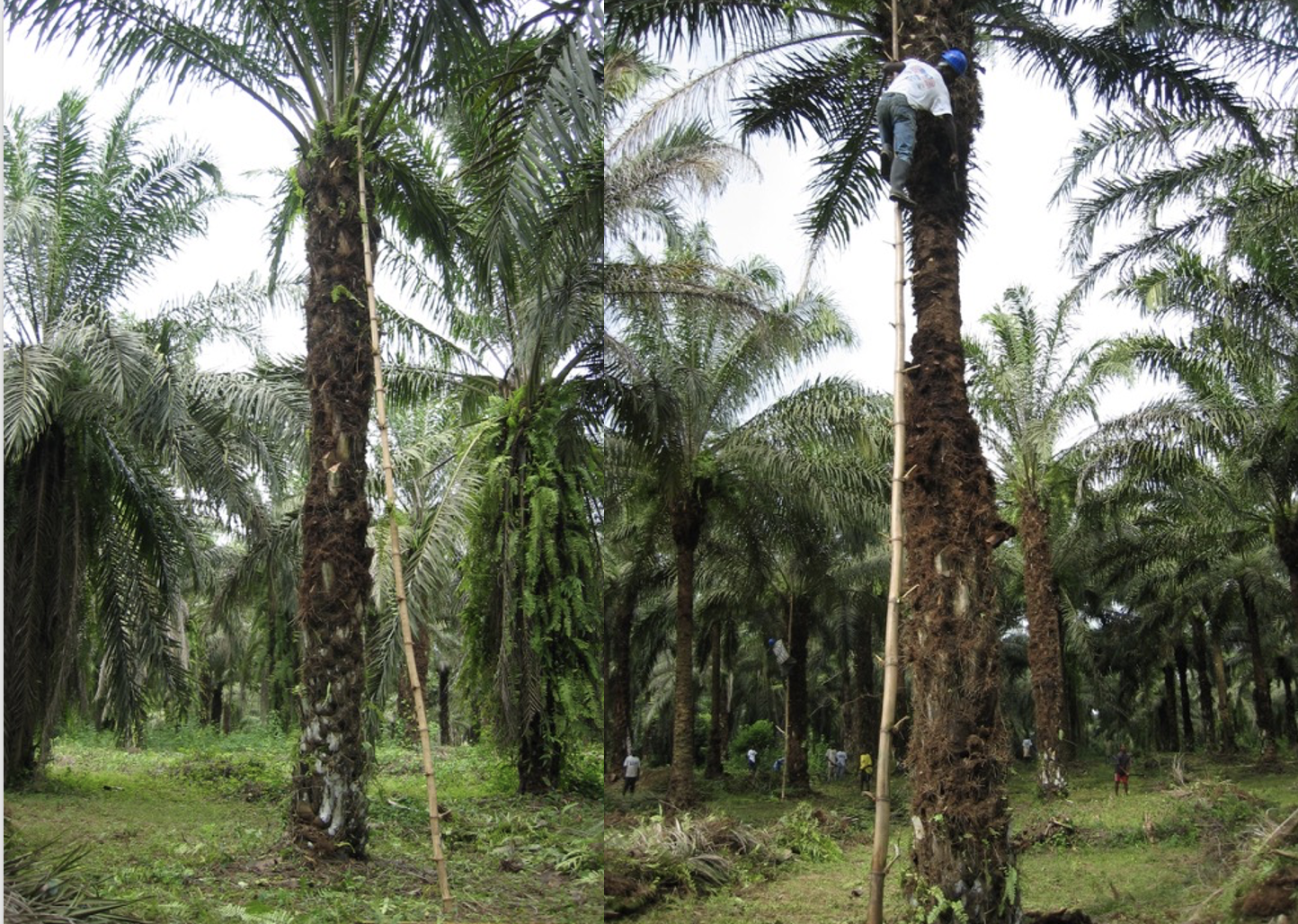
The trees have to be pruned back to give access to the bunches. Produced in the axils of the branches, the stems of the bucnhes have to be physically cut with a machete before being dropped to the ground. The local health and safety officer is clearly not expected…..
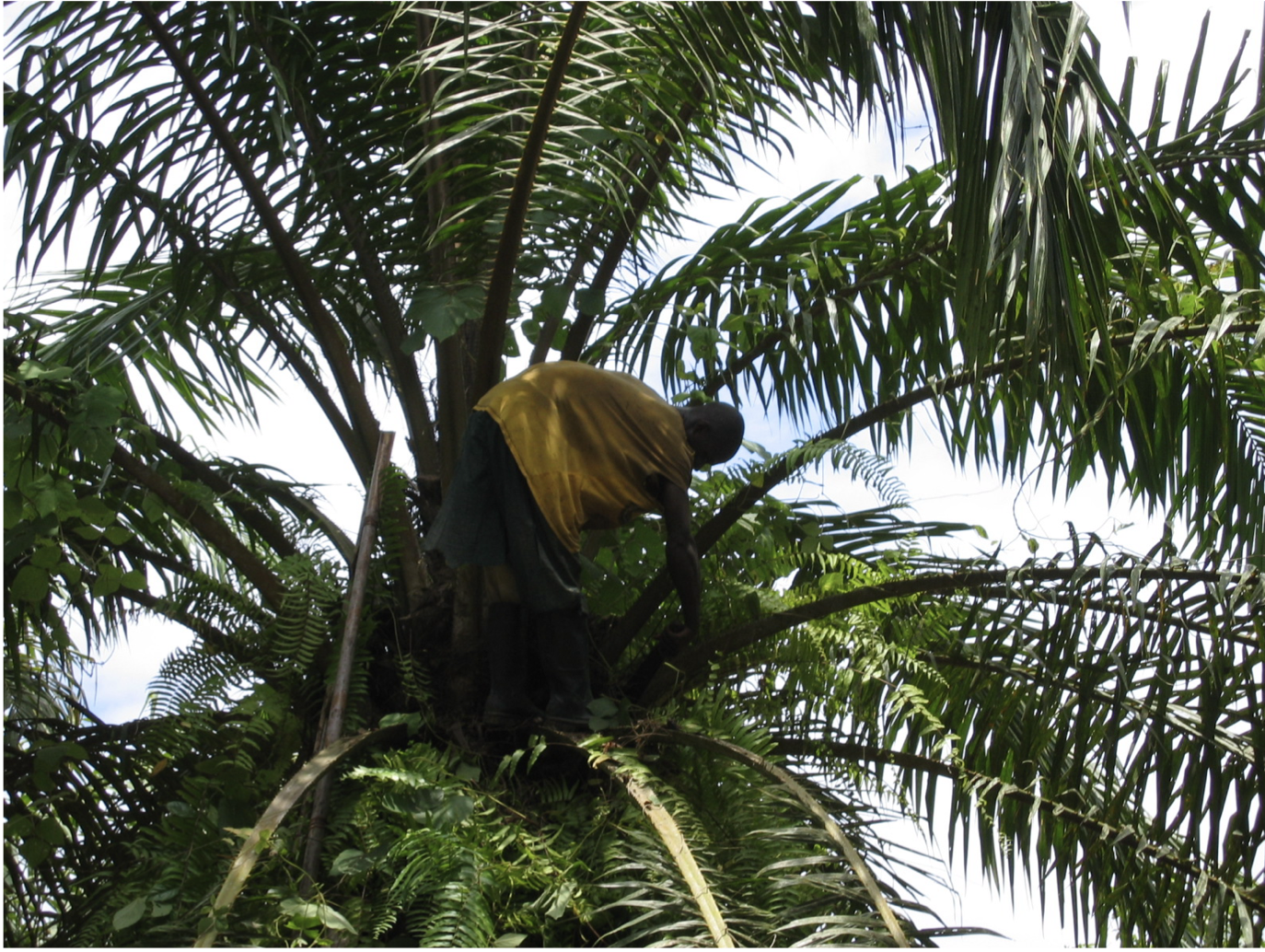
Cutting the fruit bunches at height….
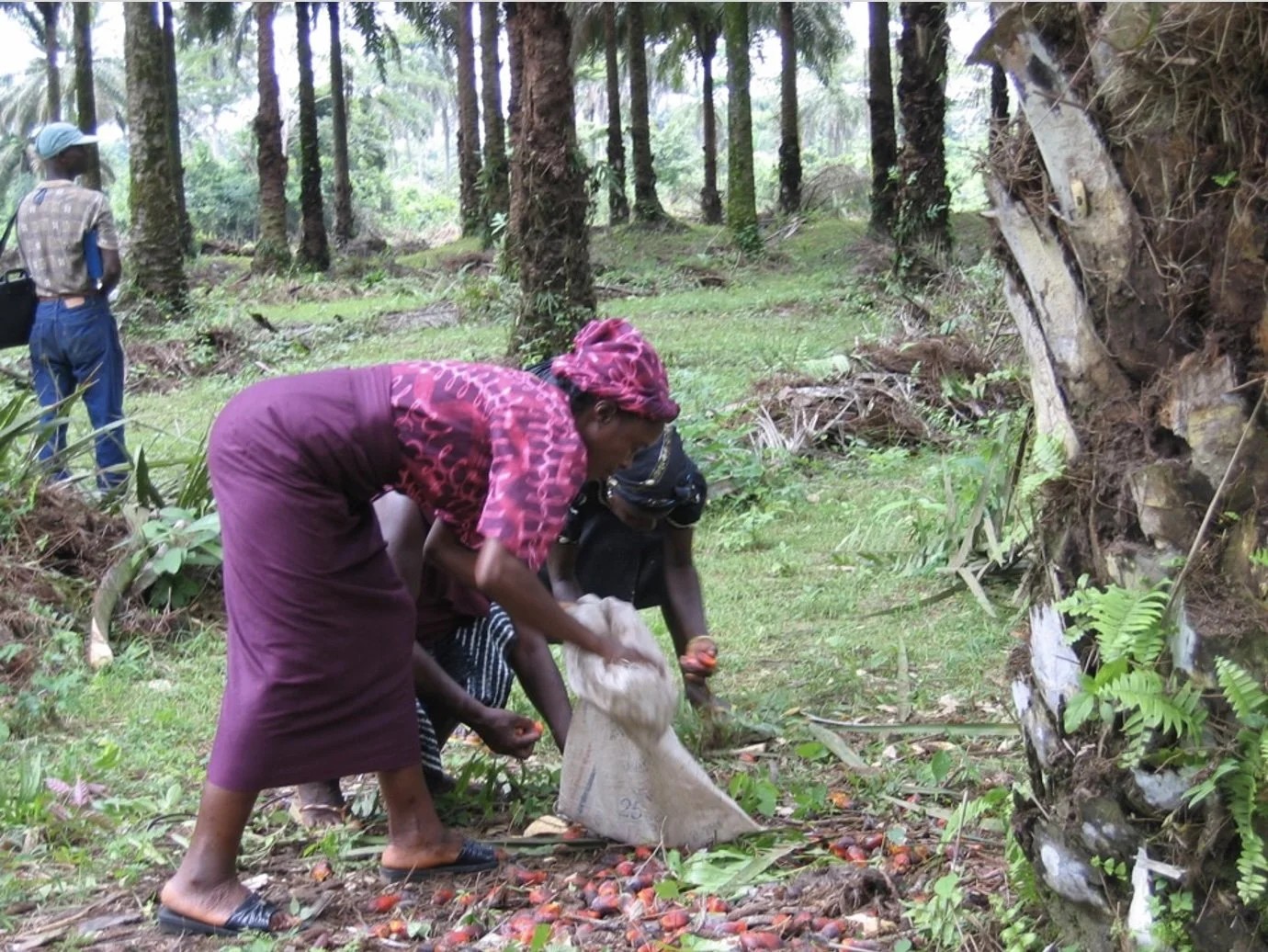
Collecting the loose fruits that have fallen off the bunch when dropped from a considerable height. Being up to 5% of the fruits in the bunch, if these fruit were lost in the undergrowth this could significantly reduce the profit….
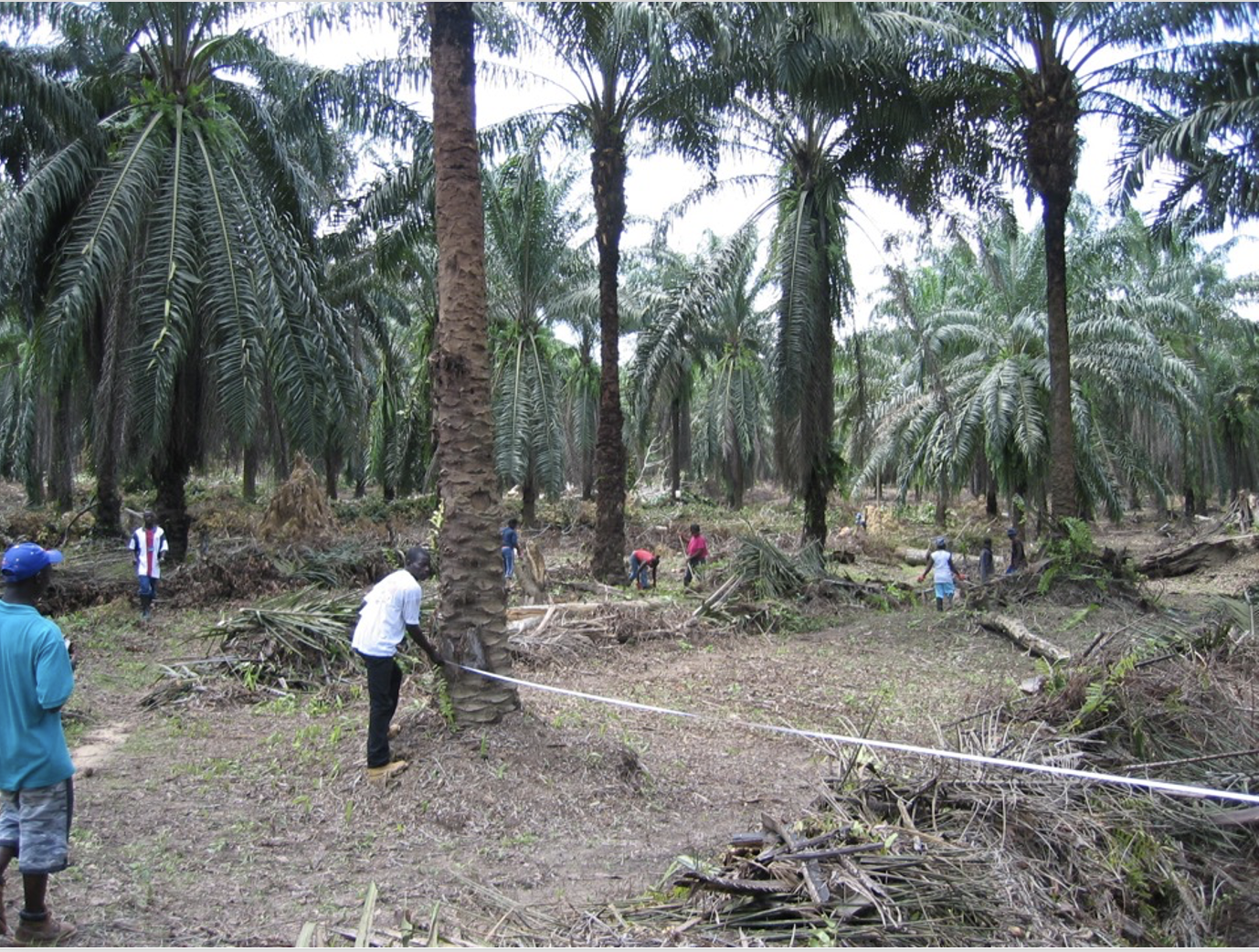
We began measuring the number of trees and the distance between them….
We started bringing in the bunches to weigh them….
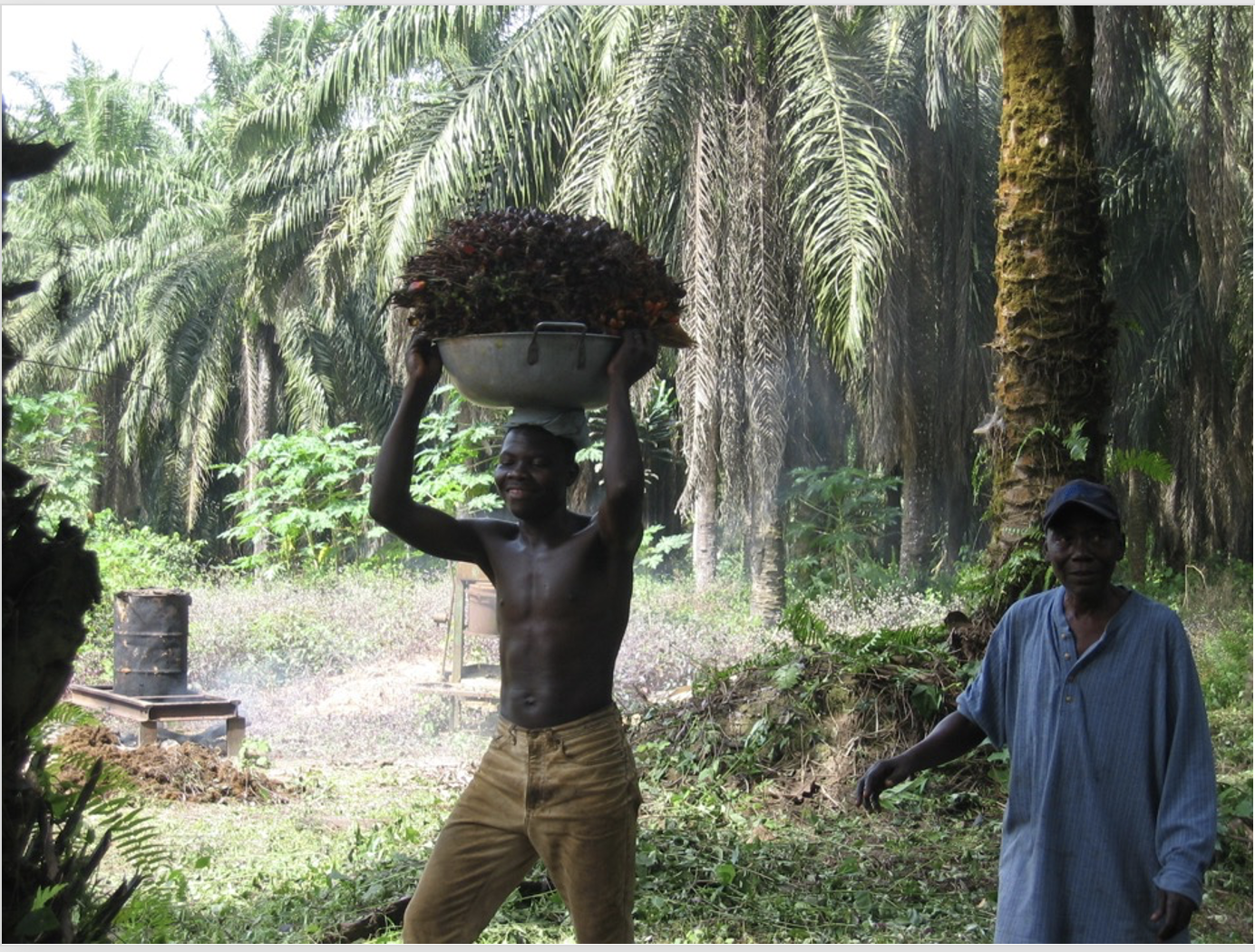
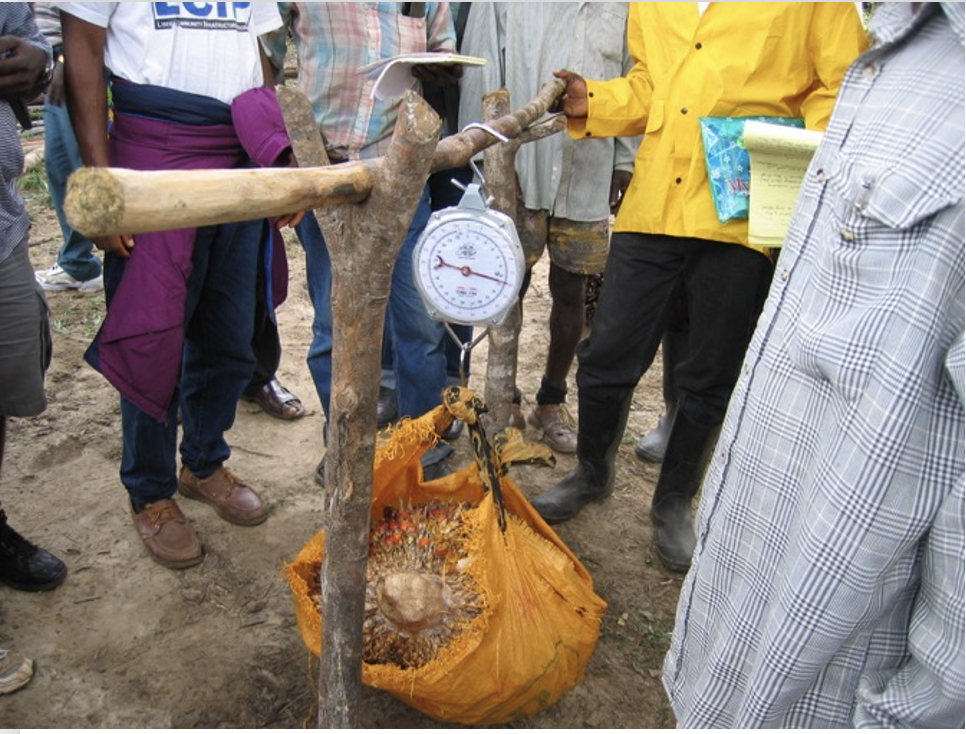
This bunch weighed 30 kg and at the start it seemed representative of the bunches - most were around this weight. It was only after some serious questioning that we found they were only bringing in the large fruits - to impress us!
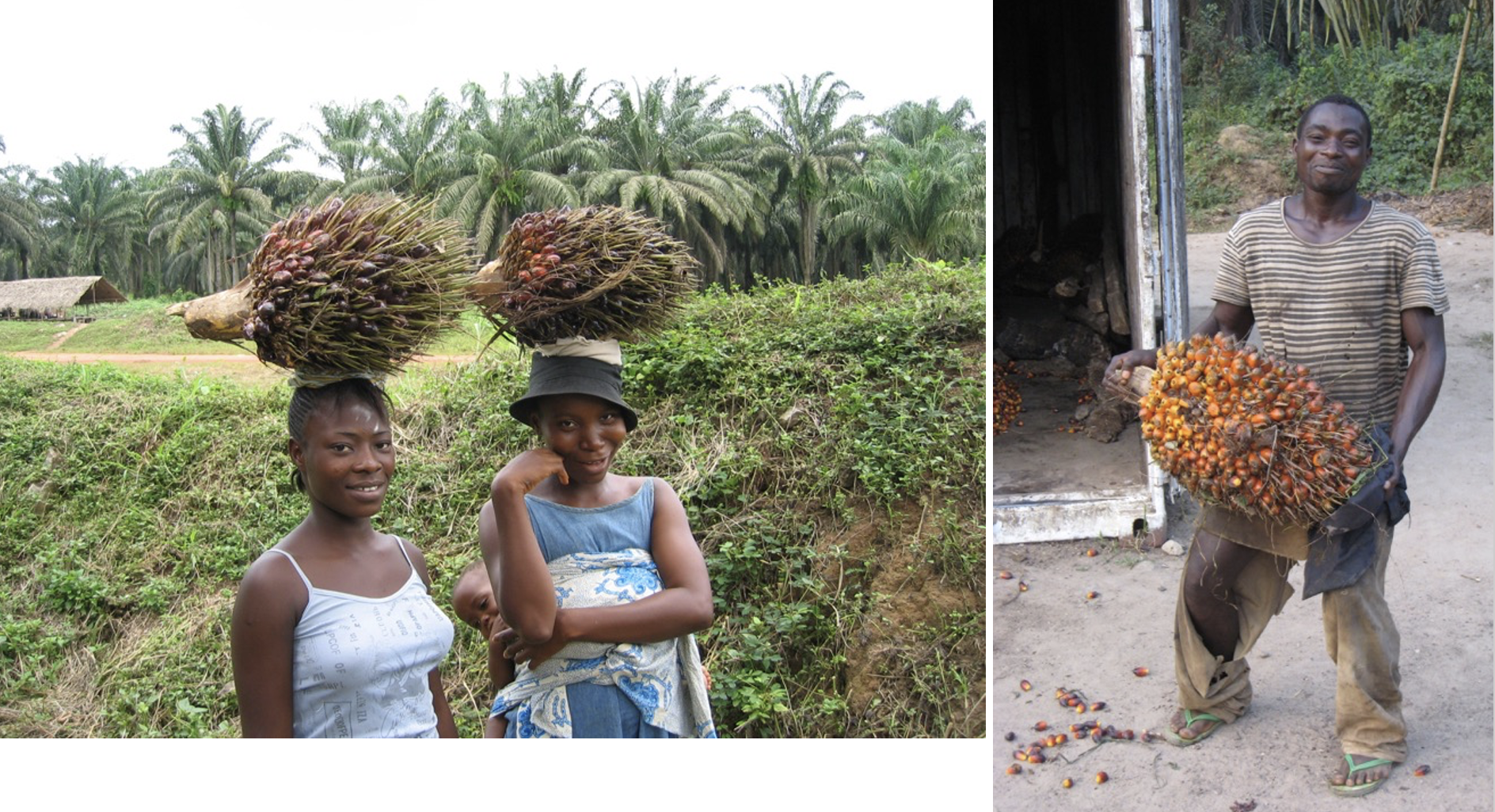
That the bunches are not all the same size soon became clear….
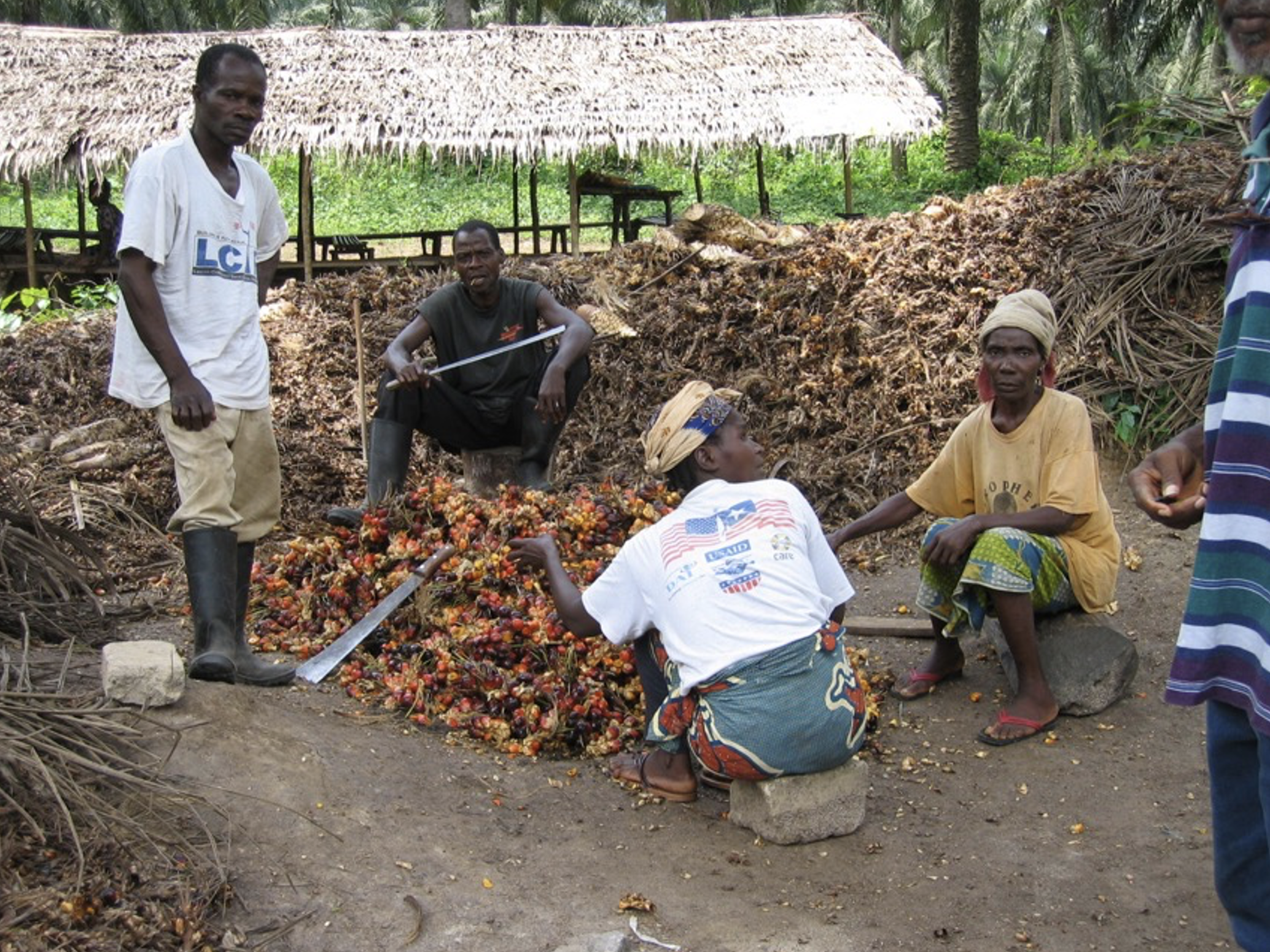
Having opened up the plantation and started harvesting the bunches, what to do with them? The starting point was to adopt the traditional, low-tech way of processing the fruit. The following pictures were taken when they were processing the first fruits from the newly opened plantations in the traditional way. The starting point is to remove the fruits from the bunch. As the fruits are tightly held to the stalk of the bunch, this is a tough physical process - easily done in a factory but tough by hand. Here it is being done using a machete.
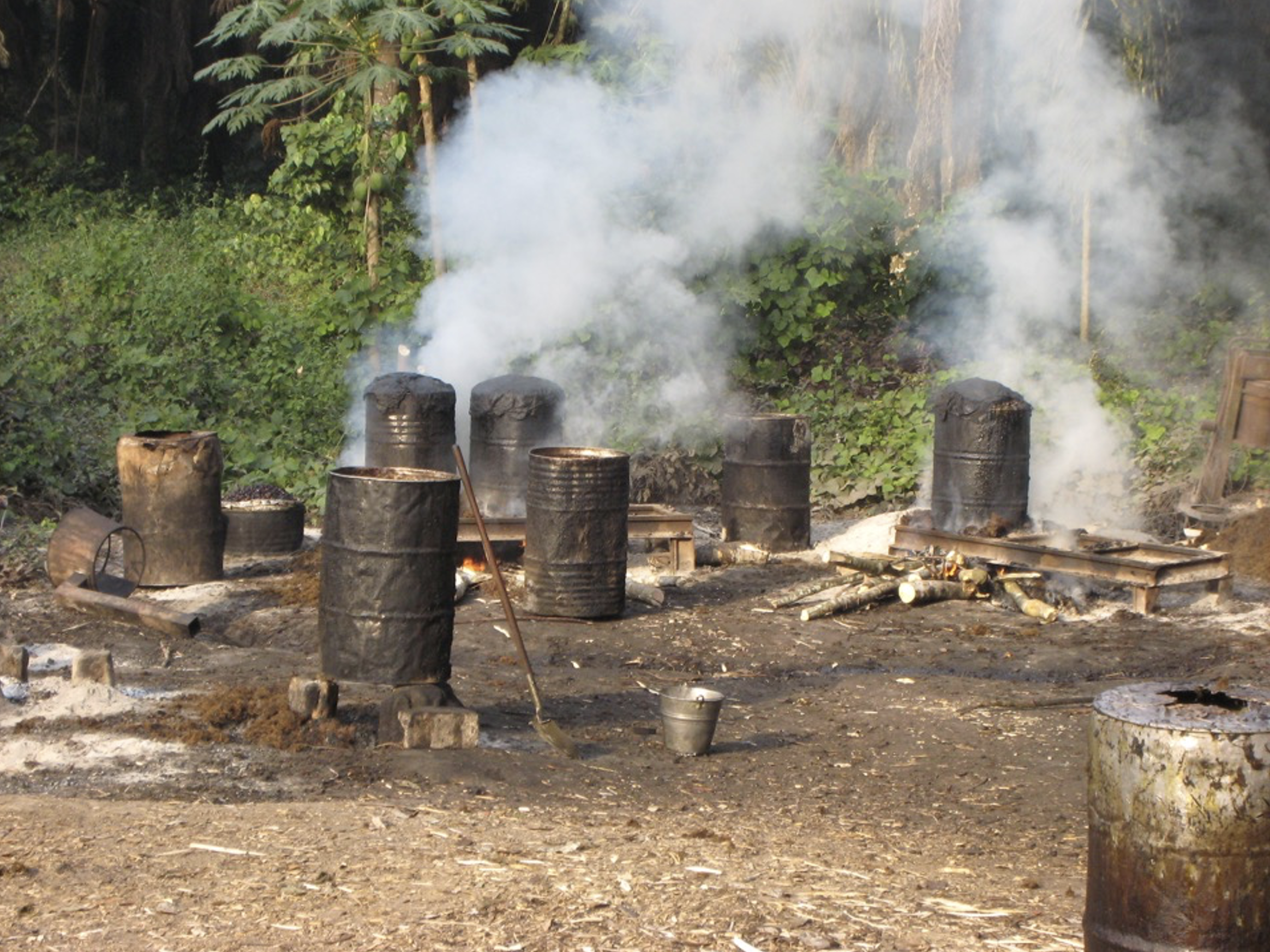
Once the fruits are removed, with some of them still sticking together as mini-bunches, they are placed in these 200 litres drums and boiled for several hours to both soften the fruit and break up the remaining mini-bunches.
Once boiled, the fruits are mashed communally with sticks to release the oil.
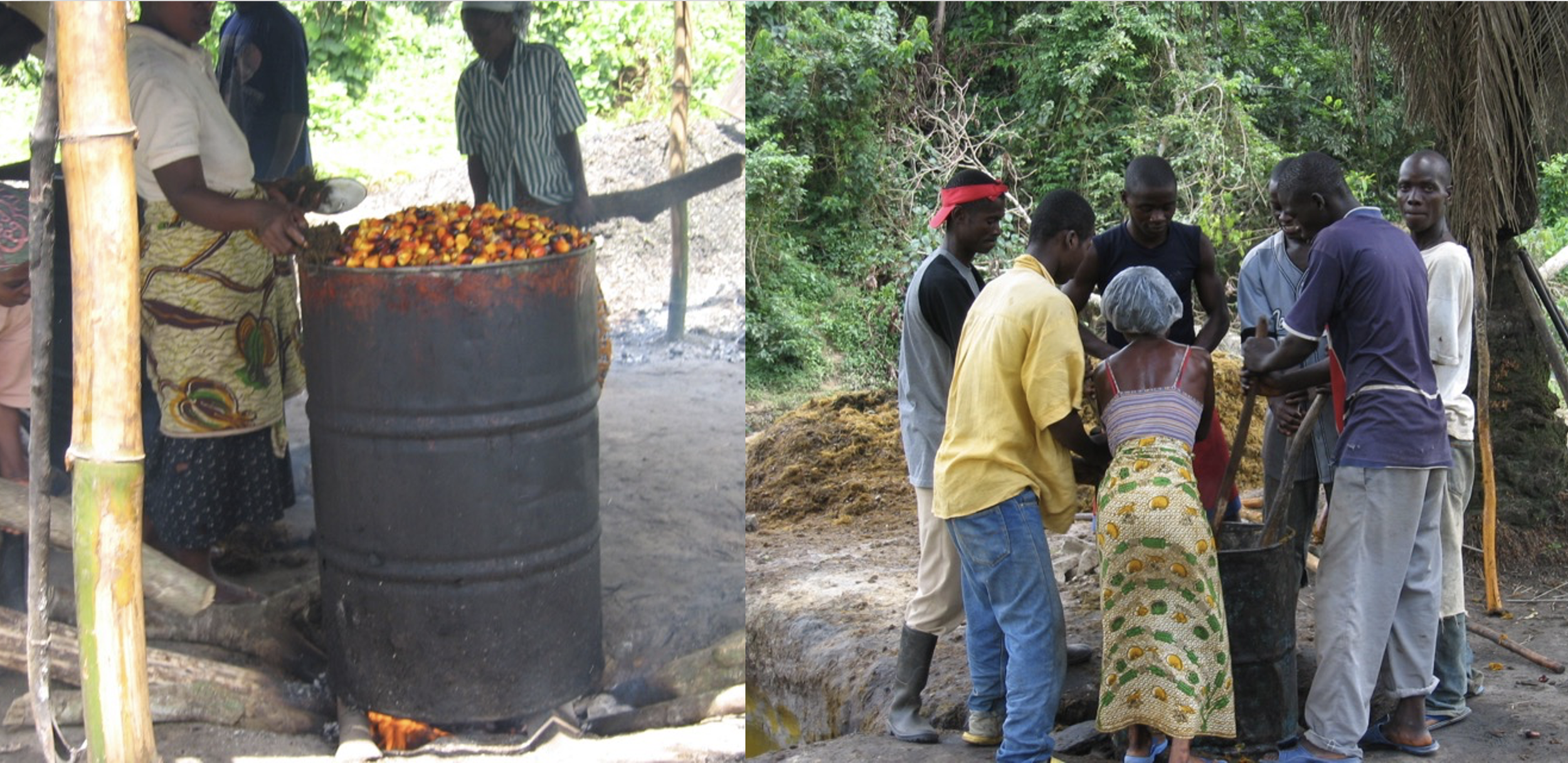
The mashed fruit is placed into an open pool of water to separate the oil from the fibre – the oil floating to the surface and the fibre sinking to the bottom….
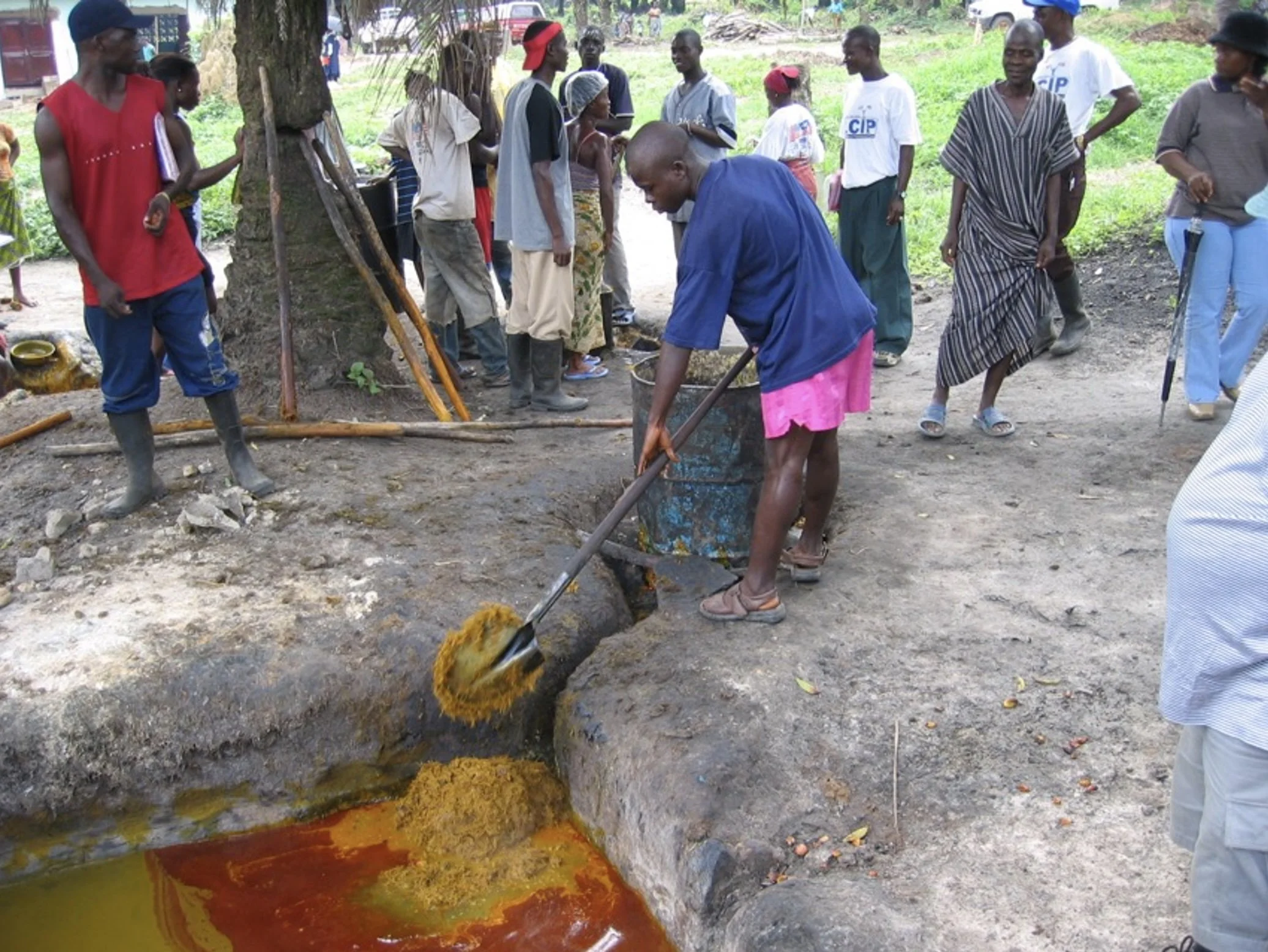
The oil is then skimmed off the surface….
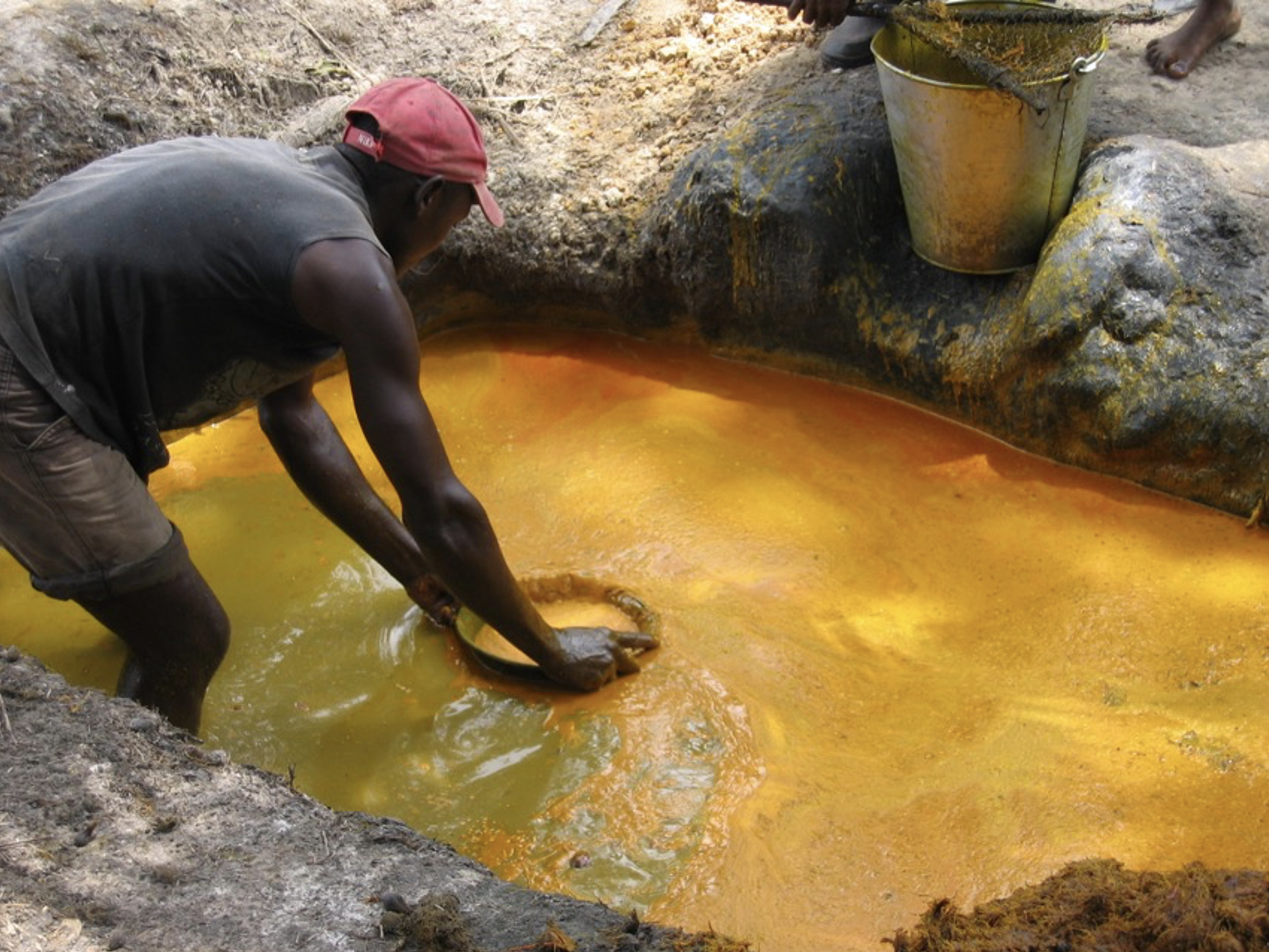
And filtered to remove any fibres….
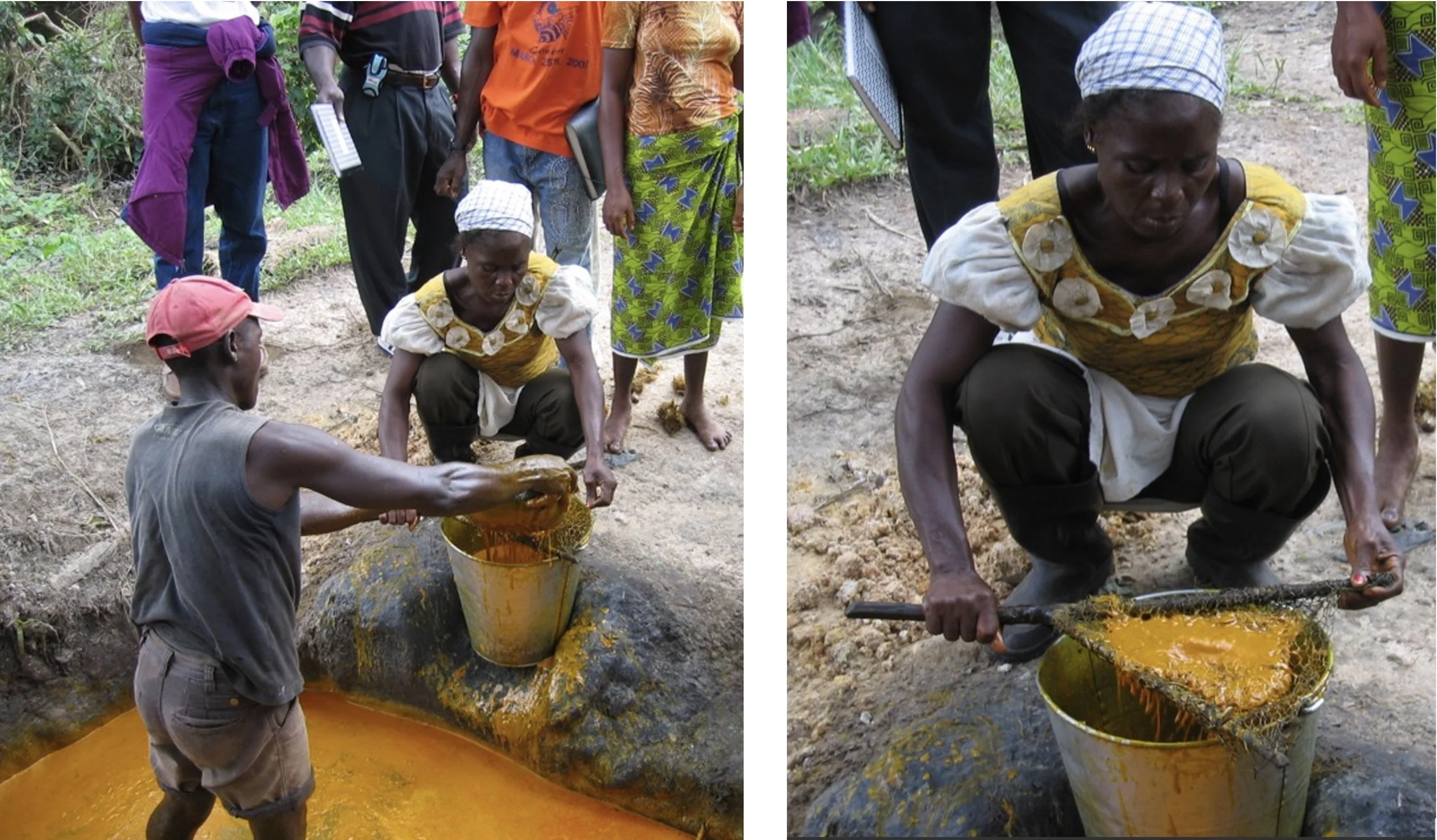
The fibres are then extracted from the pond where they are used for making compost….
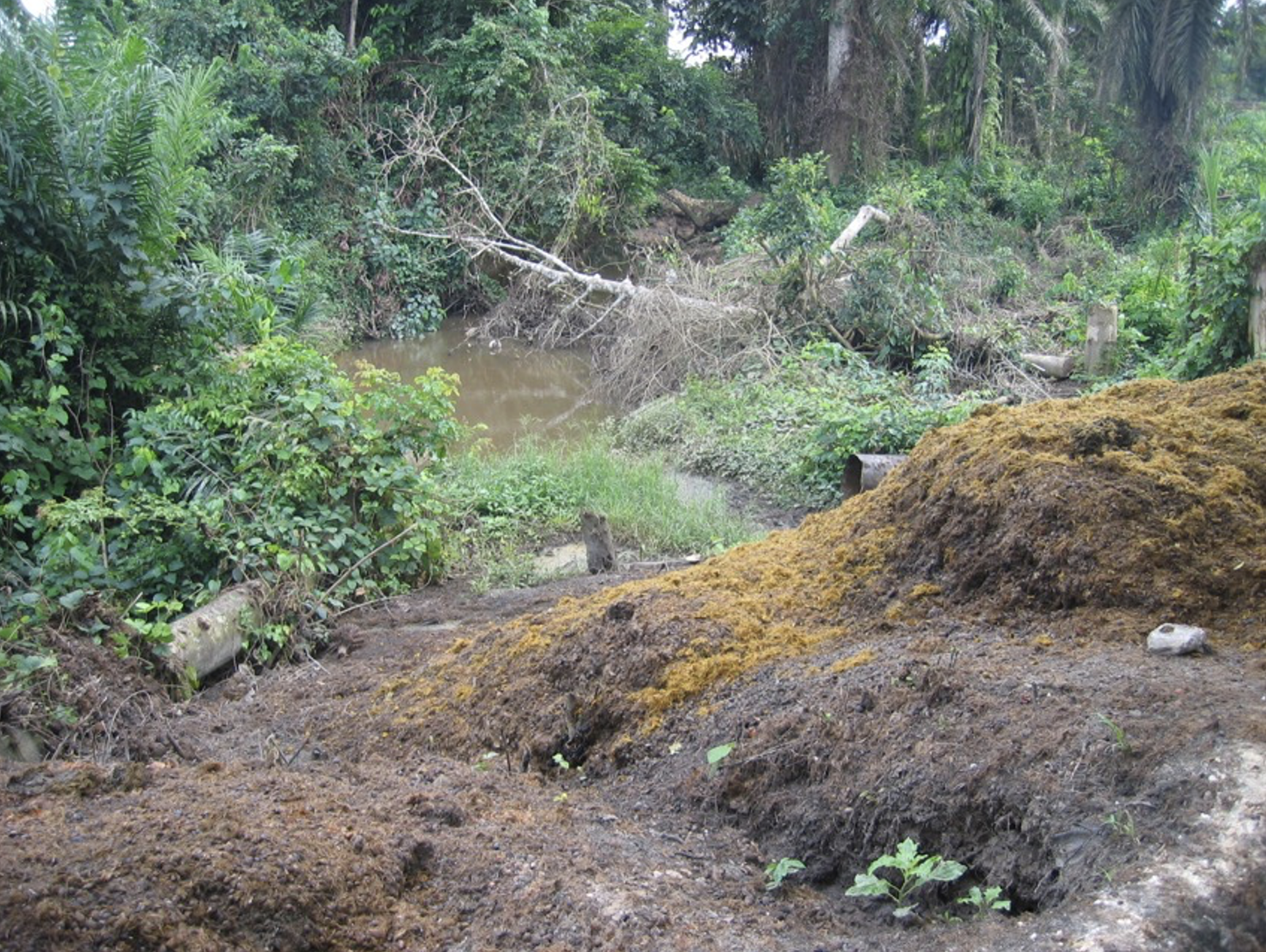
Looking to the future, this was clearly not a practical way of processing the palm fruit bunches and an alternative needed to be found.
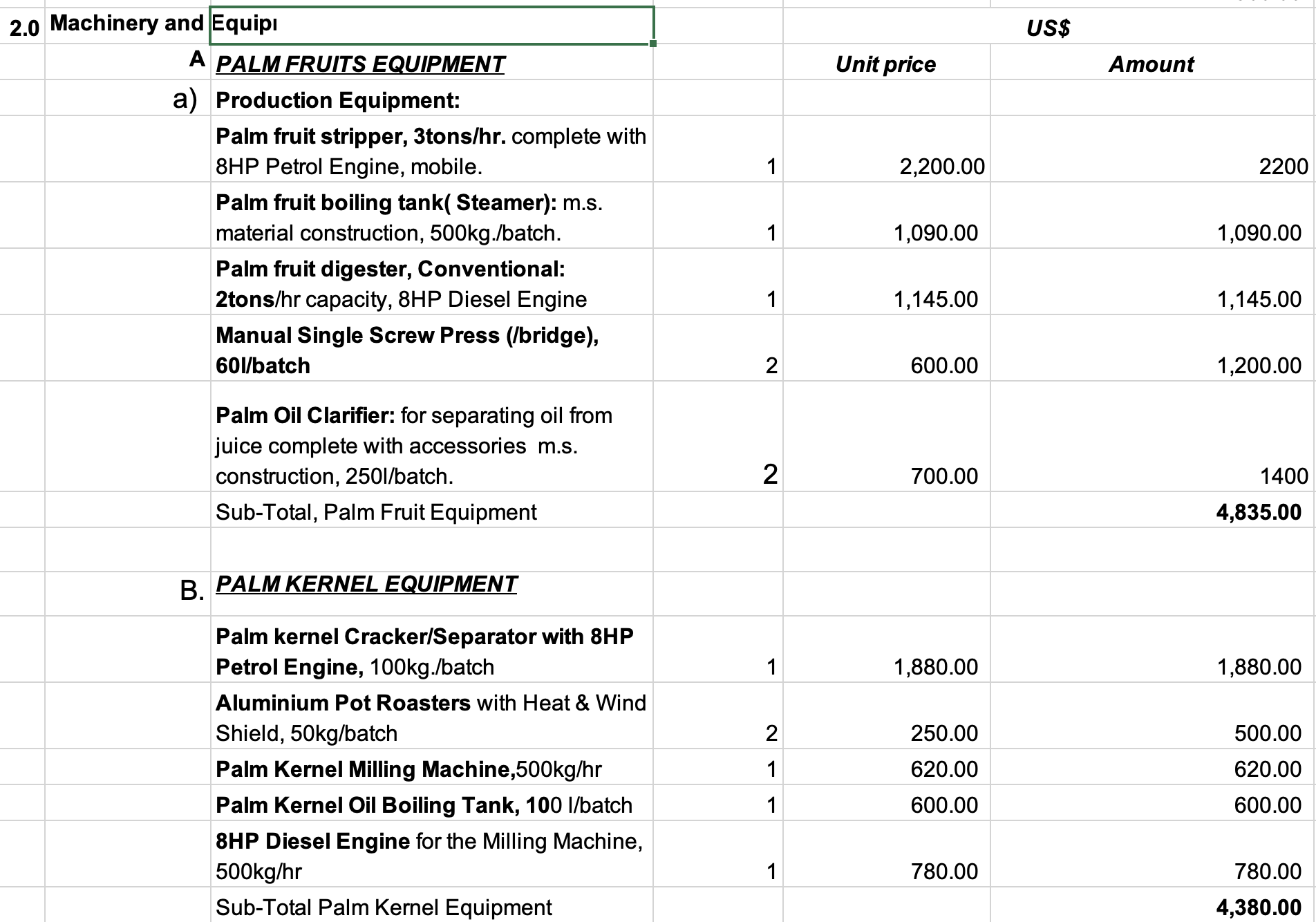
One of the advantages of having been around in Africa for quite a long time is knowing a lot of people. One of those with whom I had worked earlier in Ghana - on the Ghana Enterprise Development Project - was Kwabena Darfoor. He was now the Director of GRATIS - Ghana Regional Appropriate Technology and Industrial Services. So I approached him to see if they produced any mechanised but relatively low-tech equipment for processing palm fruit bunches. He answered in the affirmative. Our exchanges by the very slow email of those days continued until we had agreement for the equipment to be shipped to Liberia. “To be shipped to Liberia” slips off the tongue so easily - but in practice there was a lot involved in organising letters of credit, trucking the equipment to and from ports, and dealing with customs regulations and waivers on duty - because this is for a development project. But the equipment eventually arrived and somehow was brought up to the site along the muddy roads.
To those of you interested in the equipment and its cost here it is….
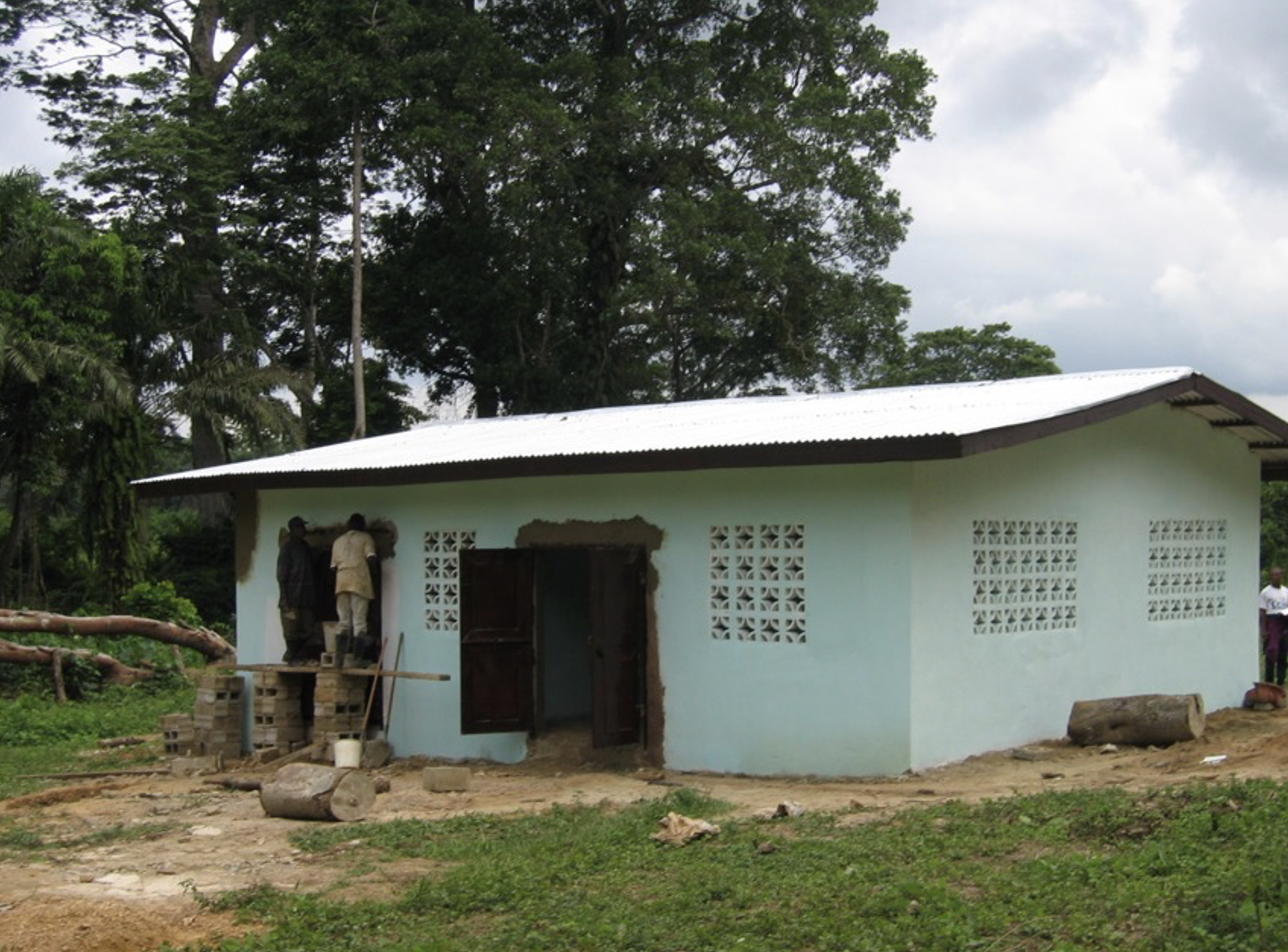
The “factory” under construction…
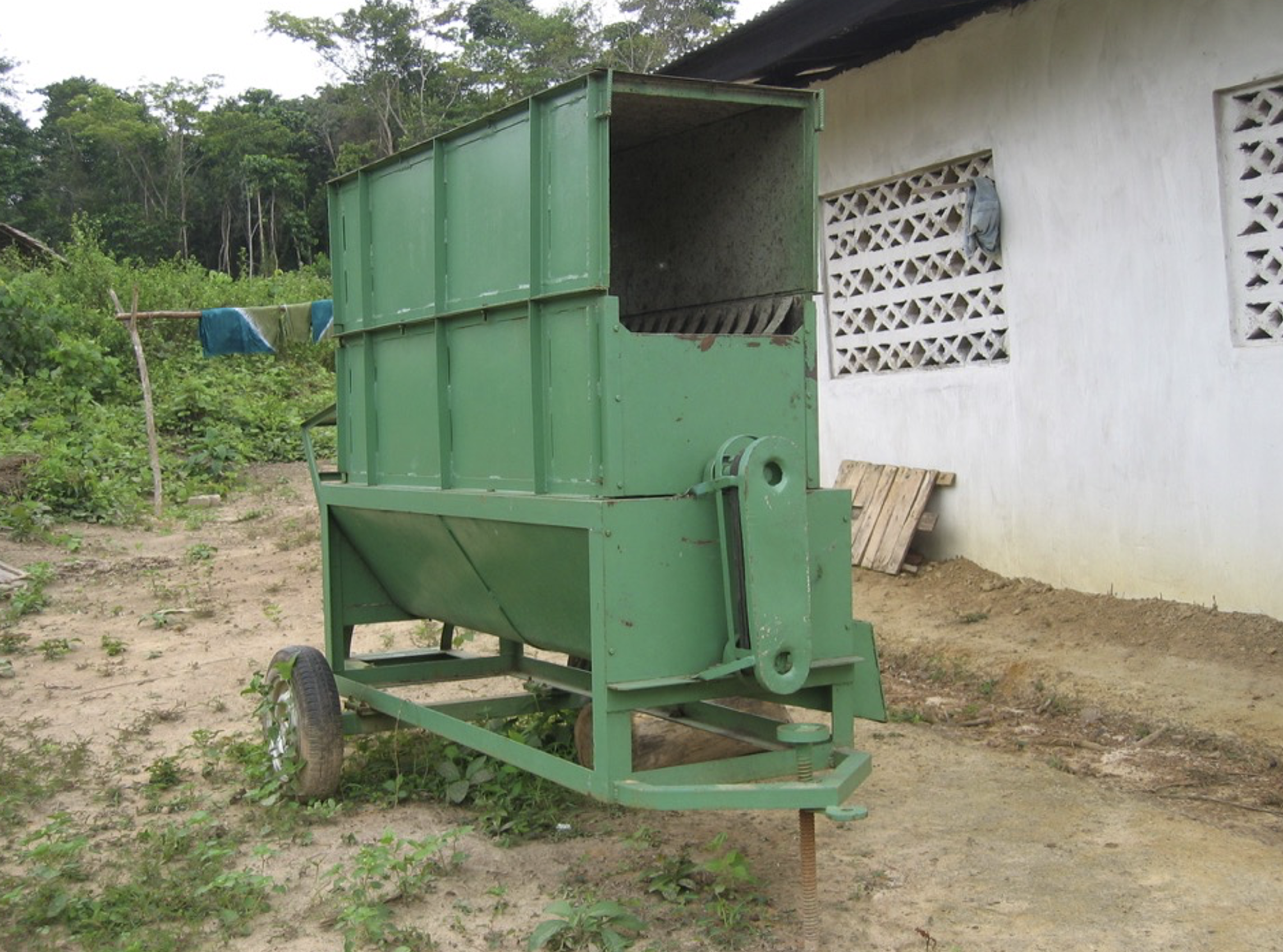
First the bunch had to be pulverised to free the fruits from the bunch. This was done by this piece of equipment. The bunches are placed inside it and a simple set of flails physically releases the fruits….
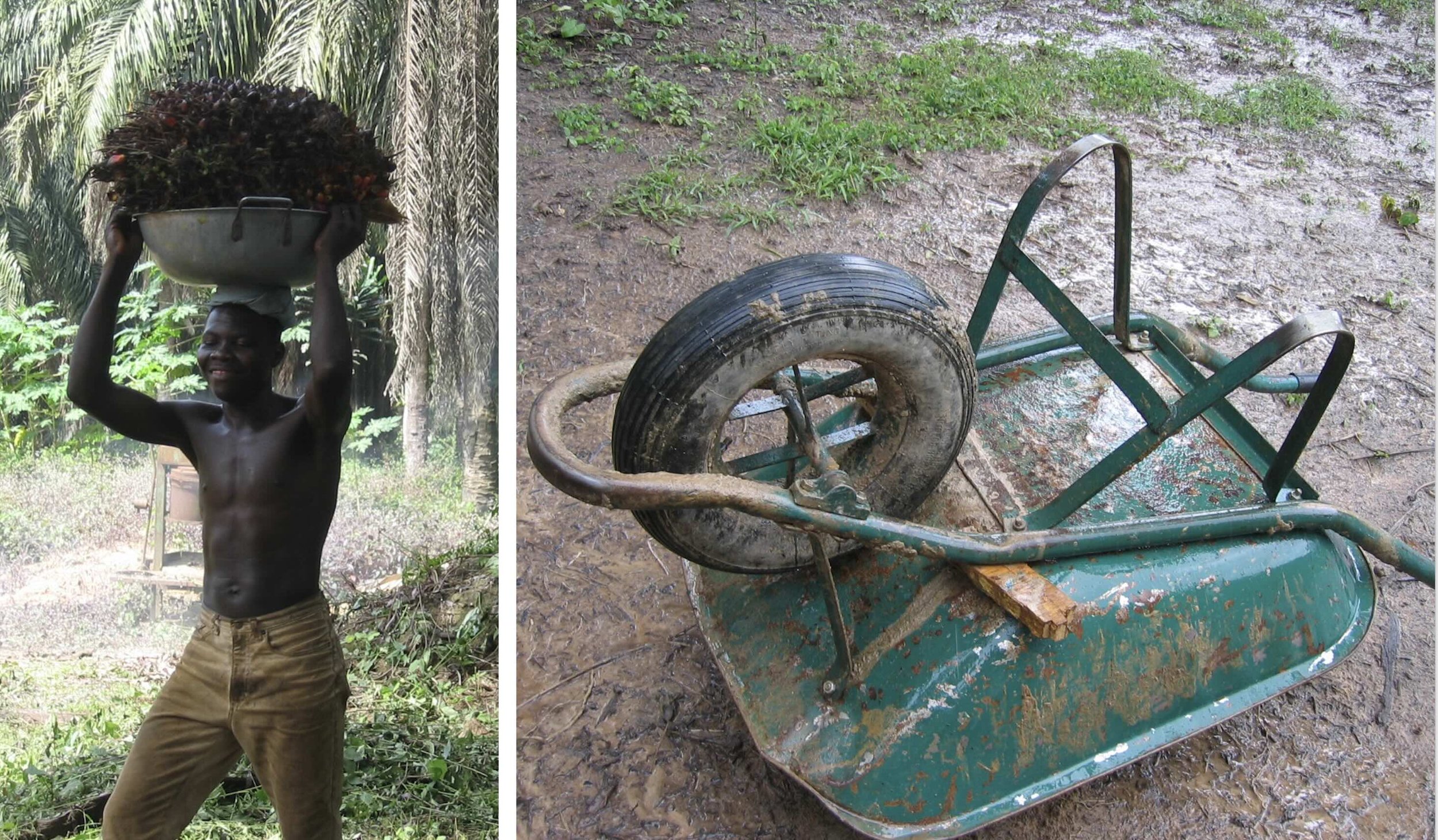
But the fruit bunches were still coming in on people’s heads - which is hard physical labour. So we provided some wheelbarrows that could be used to make it easier. But when we came back we found that only some of the wheelbarrows were working - others had fallen apart on the rough terrain, the nuts and bolts having worked their way free and the wheelbarrows had literally fallen apart. The solution was to bring all the wheelbarrows together in front of the factory before work started each morning like soldiers on parade, turn them upside down and inspect all the nuts to see that they were tight. Any sign of one becoming loose and it was tightened up with a spanner. A seemingly tedious practice in reality just highlighted the importance of regular maintenance - even with the simplest of equipment.
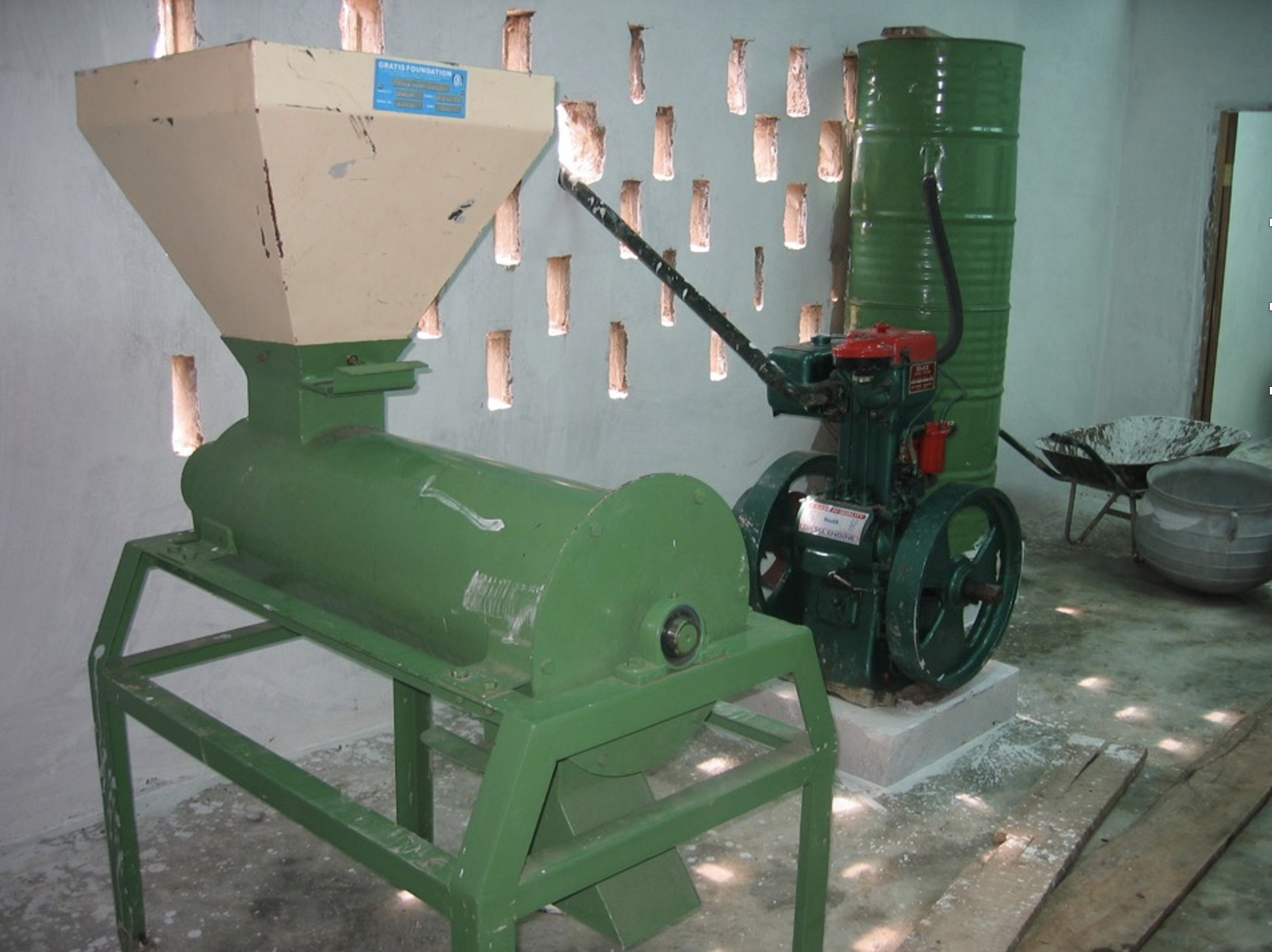
Once the bunches had been through the flailer they were placed in this hopper and mashed to produce a pulp.
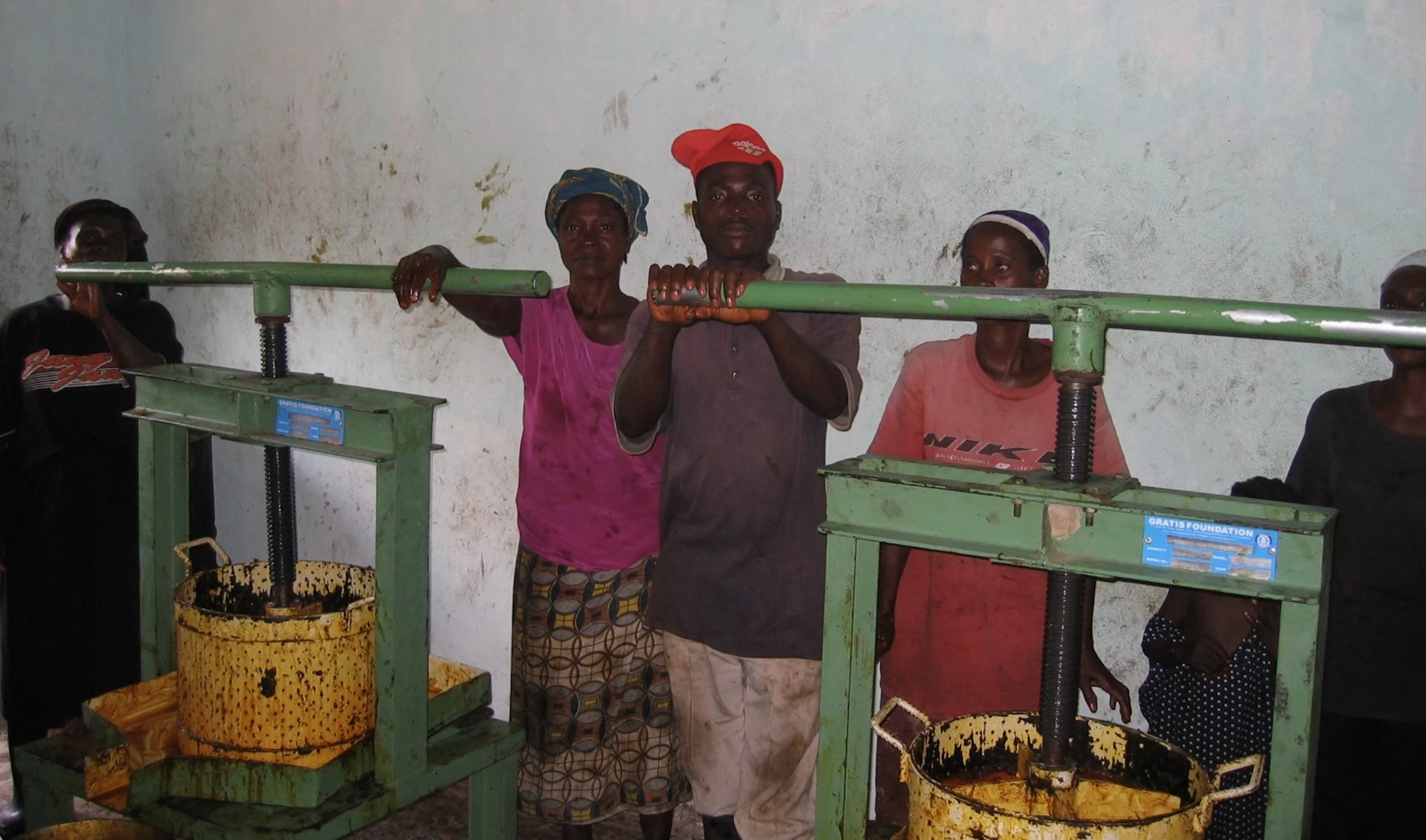
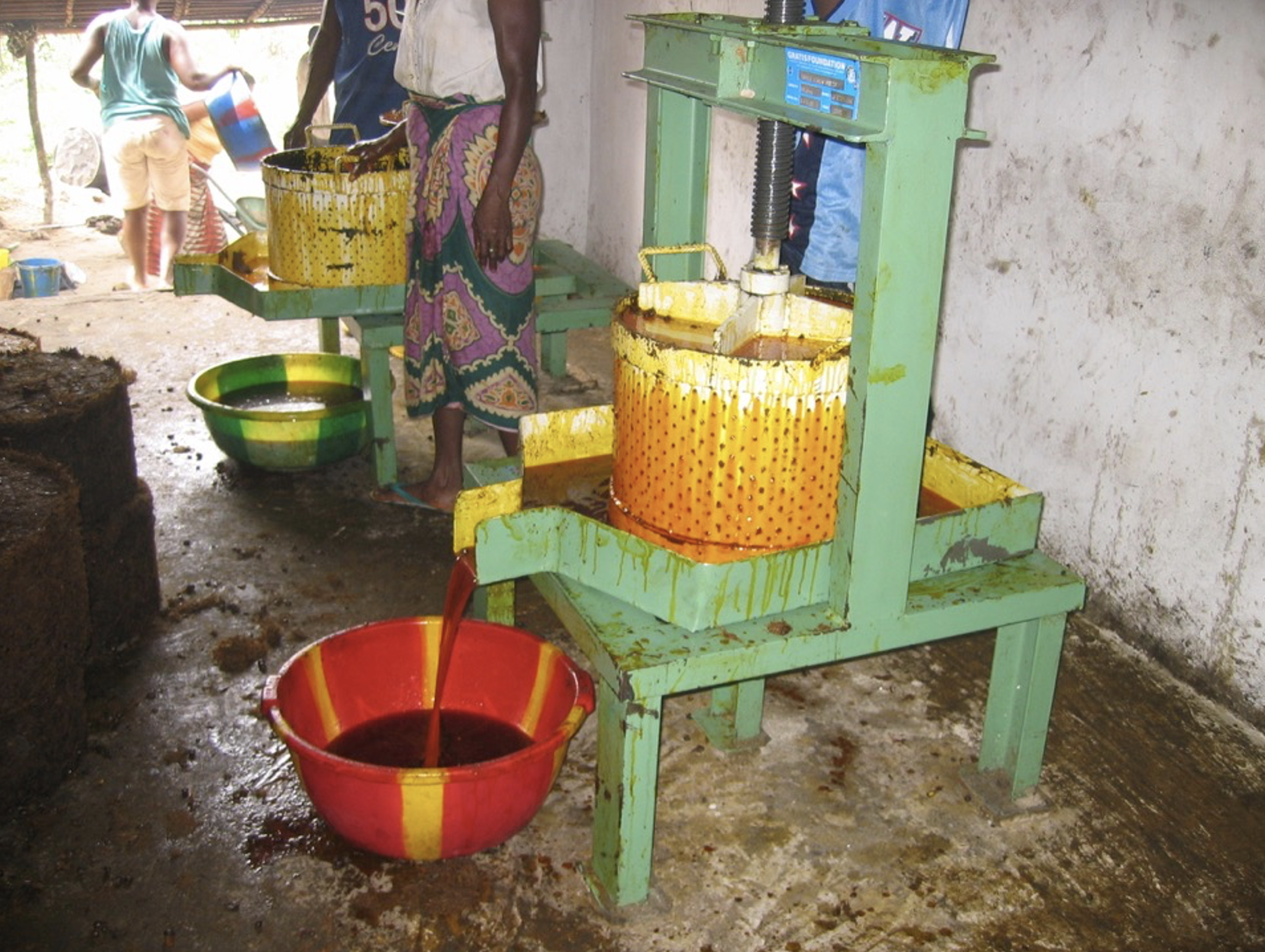
The mash was then placed in a press which was manually powered….
From which emerged the palm oil….
There was, of course, much more to the extraction process than this - not least the processing of the palm kernels.
Suffice to say that for less than $10,000, together with the hard work and commitment of the local community, the plantation has been rehabilitated, oil palm bunches were being harvested and processed in a way that was more hygienic and less labour-intensive, income was being generated and jobs created.
Needless to say it was not all plain sailing. None of the community had been given management experience or training by the foreign partner and there was much to learn about management, maintenance and marketing. But they had been given hope - not least by a couple of strangers being interested in them and seeking to address their needs in a practical way - and given opportunity with the arrival of this small factory through which they could hygienically process the oil palm fruits for their own needs and also for sale.