DIPLOMACY ON A RICE BARGE AND OTHER DIPLOMATIC ENCOUNTERS
VENEZUELA. It’s 1976 and I am on my way to Ecuador, Peru and Bolivia. Arriving early morning in Caracas for an overnight stay, my first port of call was the British Embassy. Here I was welcomed by the Second Secretary (Commercial) with the inimitable words “Come in Mr Meadley, we have thousands of carpet baggers like you coming through the Embassy”. That was the start of a bad 24 hours for when I arrived at the airport next morning I was asked for a tax clearance certificate. Having been in the country only a few hours the reason for this was not immediately clear.
Rewinding a few days, when I had applied for my visa for Venezuela I had asked for a transit or “transeunte” visa for such a short stay. Whether or not the visa officer had been distracted by a passing young lady I know not but the net effect was that he had picked up the wrong stamp and given me a “permiso de trabajo” or work permit, which was much prized by those wishing to work in the country. Neither of us noticed the error. So, after less than 24 hours in the country, as far as officialdom at immigration was concerned I had worked in the country and was therefore liable for tax. No ifs or buts – I required a tax certificate to leave. Other than a brown envelope under the table there was no way I was going to get out of the country without paying tax. Missing my flight, I returned to the British Embassy where a kind official took me to the relevant ministry. Here I paid tax on one day’s work calculated on an estimated salary paid by a mythical employer. Duly certificated, I arrived back at the airport and was waved through to take the last plane of the day to Quito.
BOLIVIA. It is 1979 and it is difficult to prepare yourself for arriving at El Alto airport at La Paz, Bolivia’s capital. At 4,061 metres it is the highest commercial airport in the world with 40% less oxygen than at sea level. As soon as you leave the plane your head starts to throb, whilst the icy cold wind penetrates your clothing. We walked across the tarmac to the terminal, which was little more than a shed with enough room to accommodate the first third of the passengers. The rest of us queued in the icy cold to await immigration formalities.
My taxi for the 14 km, 700 metre drop into town was an ancient red Chrysler with a thick crack the length of the windscreen. My driver was loquacious and friendly and he remained my driver and guide throughout my stay. In the hotel lift you are surprised to find a bottle of oxygen. The telephone in the room offers 1 for reception, 2 for room service, 3 for laundry and 4 for oxygen. Clearly I was not alone in having a throbbing head.
My first port of call was, once again, the British Embassy. I was delighted that this time the Second Secretary (Commercial) did not call me a carpet bagger, but shortly after we started talking we were interrupted by a portly gentleman in braided uniform entering the room - the military attaché. Why we needed a military attaché in Bolivia was never made clear. “Give me a hand with the braid old chap” he said to my host, who proceeded to pin the various bits of golden braid into place.
We had barely restarted our conversation when the phone rang. My host apologised as his face demonstrated deep concern. “This is really serious. How are we going to manage the situation? I see. What do the Americans think? OK. And the Japanese? Have you discussed it with the French, they normally have strong views on such matters?” I began to feel that I was at the centre of a major diplomatic incident, until my host said: “OK. Glad we’ve cleared that one up. Your courts or ours - and will you supply the balls?” It was a pattern of diplomatic conversation that I heard more than once over the years.
THE THAI BOAT SONG. It is early 1983 and I had barely formed my new company (Rural Investment Overseas Ltd – RIO) when I was invited to participate in a trade mission to Indonesia, Malaysia and Thailand organized by the British Agricultural Export Council (BAEC). BAEC was a membership organisation that promoted the export of British agricultural equipment and know-how, run out of a tiny office by the admirable and besuited John Thorneloe supported by Robert Whitcombe, later to become a colleague and then an acclaimed breeder of cattle.
Our particular mission, led by Robert, was made up of companies that had something tangible to sell - either equipment or seeds or technical know-how. In contrast, all I had to offer was my start-up business that had two ill-defined ideas - namely (1) that entrepreneurs were important in creating economic development and employment and that we needed to support them and the wider private sector and (2) that we should use public money to encourage private investment in those countries that lacked infrastructure or had weak currencies. Both ideas are mainstream now but forty years ago they were novel. That was a hard sell on a trade mission.
In each country our days were spent going around Ministries and attending receptions to which the great and the good were invited - ending the day at the bar to draw the threads together. We all featured in a brochure, with a mug shot of each of us and it was in Malaysia that things began to happen. I was sitting quietly in my room when the phone rang. “John, this is Syed. Remember? From Wye College”. I dragged my memory back more than 15 years. Syed was a contemporary postgraduate doing his PhD on aspects of poultry. I learned that he was now Vice Chancellor of the University Pertanian Malaysia (the Agricultural University of Malaysia) with more than 20,000 students. Within the hour a chauffeured Mercedes arrived to whisk me to the campus. We sat and chatted and remembered old times. I had quite forgotten it, but it transpires that when he first arrived at Wye I had gone to the railway station to meet and welcome him (in my capacity as President of the Postgraduate Common Room) and later helped find accommodation for him and his wife. Of such encounters are friendships made and we remain in touch to this day.
But whereas both the Philippines and Malaysia were new countries to me, Thailand was not. Back in 1978 when I had been on one of my regular visits to Brussels I learnt about the friction between the EU and Thailand over the export of large quantities of dried cassava chips from Thailand to the EU, which the EU was proposing to ban or to impose strict limits.
Suffice to say that some months later I had found myself contracted to help the Thais to find an alternative, compensatory source of income for its farmers and this brought me into close contact with the Ministry of Agriculture in Bangkok.
When we arrived in Thailand the mission was invited to a dinner in a converted rice barge on the Chao Phrya River that runs through Bangkok.
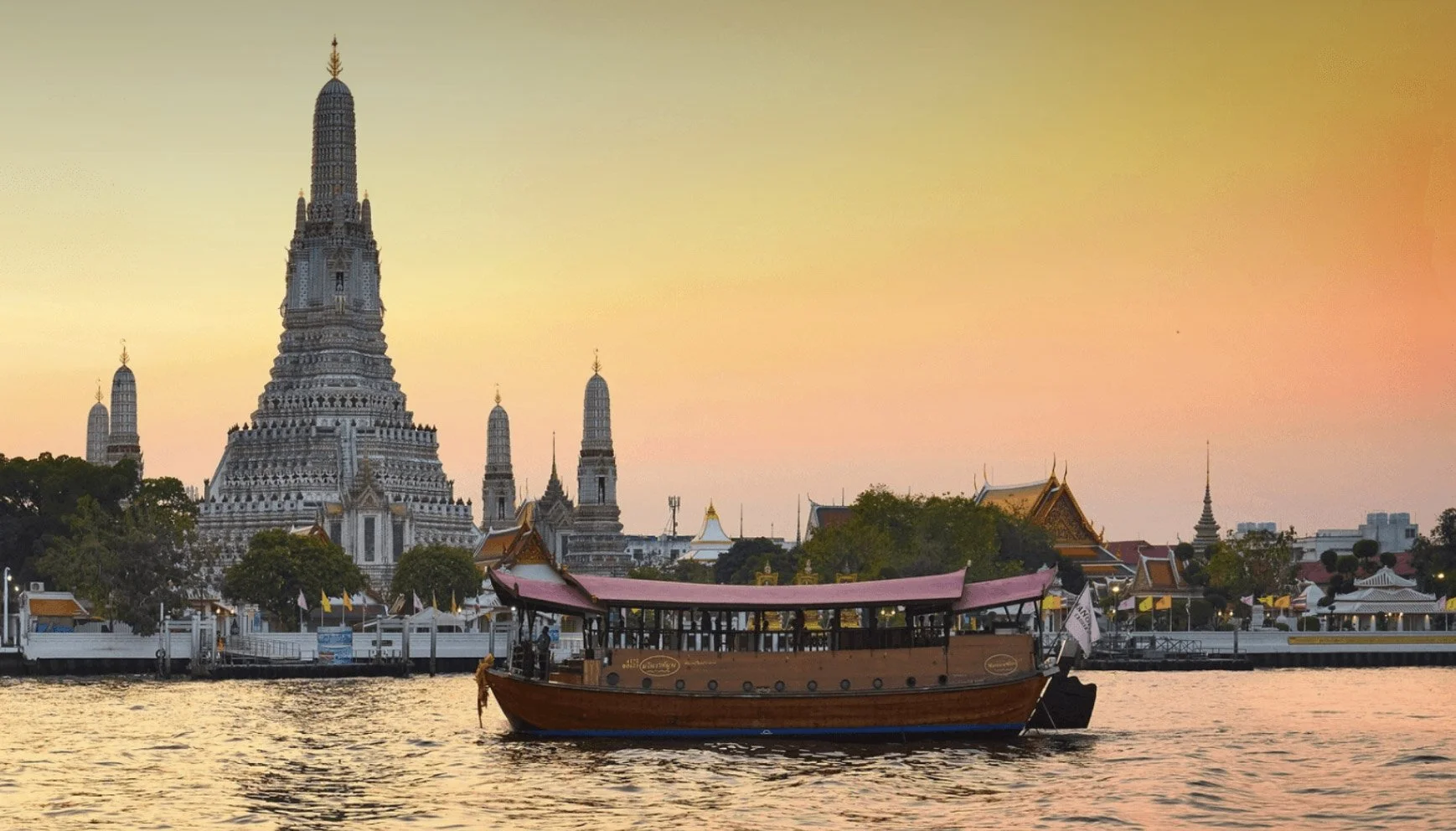
The dinner was hosted by the Deputy Minister of Agriculture, an unusually tall, slim man who had earlier been a champion kick boxer. On his right sat the British Ambassador. At the far end of the room, facing the top table, was a small group of Filipino musicians who quietly strummed away in the background. In Southeast Asia the Filipinos are renowned and respected for their musical skills and range of repertoire and were regularly found at events involving groups from different nations.
I was seated next to the Permanent Secretary of the Ministry of Agriculture, who I knew well – a rather taciturn individual with a dry sense of humour that surfaced only occasionally. Learning of my interest in the role of the private sector he told me that, whilst the Thai government controlled the production and prices of most crops, they had no control over the production and price of maize. As maize suffered from the serious problem of Aflatoxin [1], resulting in an annual loss to the economy of around $50 million, both the crop and Aflatoxin were of significant interest to it. From my experience in Swaziland I knew that Aflatoxin was produced by a fungus (Aspergillus flavus) and that the secret was to get the maize dry immediately after harvesting – information which I shared with him. The upshot of the conversation was that he challenged me to demonstrate at a national and commercial scale how Aflatoxin could be prevented - a challenge which I duly accepted.
As we floated magically along the river through the skyline of Bangkok and as the meal progressed and the alcohol flowed the Deputy Minister became more vocal. At one point he rose and walked somewhat unsteadily to the microphone and sang a rather mournful, traditional Thai song, which the Filipinos managed to master and to provide a suitable backing.
A few more glasses later, somewhat to the surprise of the assembled company, he returned to the microphone again and sang Strangers in Night. As he returned to his seat he slapped the British Ambassador on the back and said: “Now Ambassador, your turn!”. There was a stunned silence.
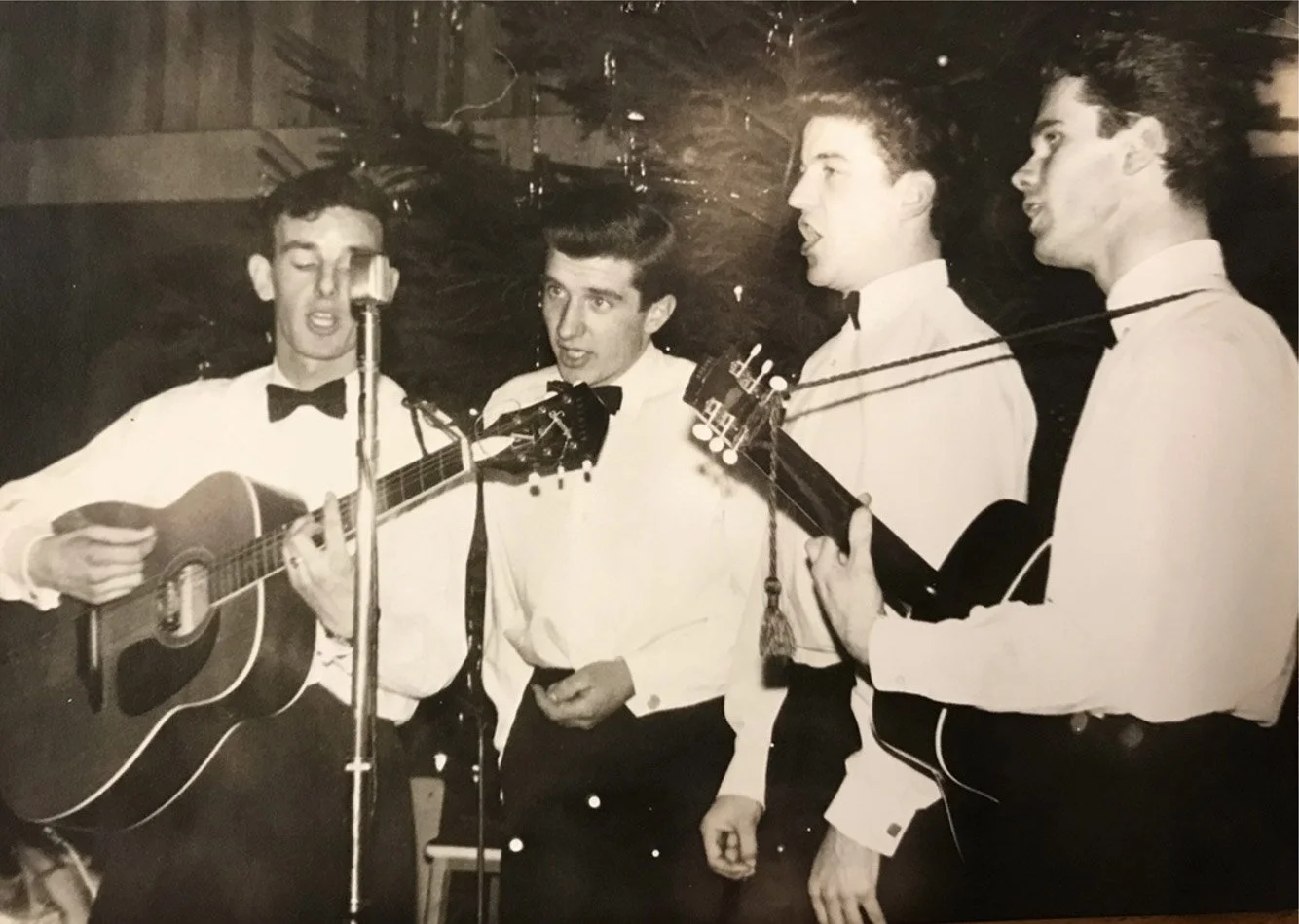
As the son of a Methodist Minister I had been brought up with a strong sense of responsibility and an expectation to find solutions to awkward human situations like this. And, as can be seen in the picture, in in my undergraduate days in the 1960s I had sung in a “Beatles” band – although at that point yet to learn the guitar. Compelled by my upbringing, I pushed back my chair, walked to the band and asked to borrow a guitar. Somewhat surprised they agreed and I started singing a song that I could remember from Wye days called “It’s a lesson too late for the learning”. You can hear Tom Paxton singing it here.
It's a lesson too late for the learning
Made of sand, made of sand
In the wink of an eye my soul is turnin'
In your hand, in your hand.
Are you going away
With no word of farewell
Will there be not a trace left behind
Oh I could've loved you better
Didn't mean to be unkind
You know that was the last thing on my mind
Within a few bars the Filipinos had picked up the chord sequence and provided both musical and vocal backing, resulting in a surprisingly good sound. Everyone cheered as I returned to my seat and we continued eating. There was a palpable sense of relief. Honour had been restored.
At the end of the meal the Ambassador approached me and thanked me for what I had “done for Britain”. It seems that diplomatically I had “saved the day” and that “if ever I wanted a game of golf I should give him a call”. Not being a golf player I never took up the offer but I did quietly glow at the thought that I had “saved the day”.
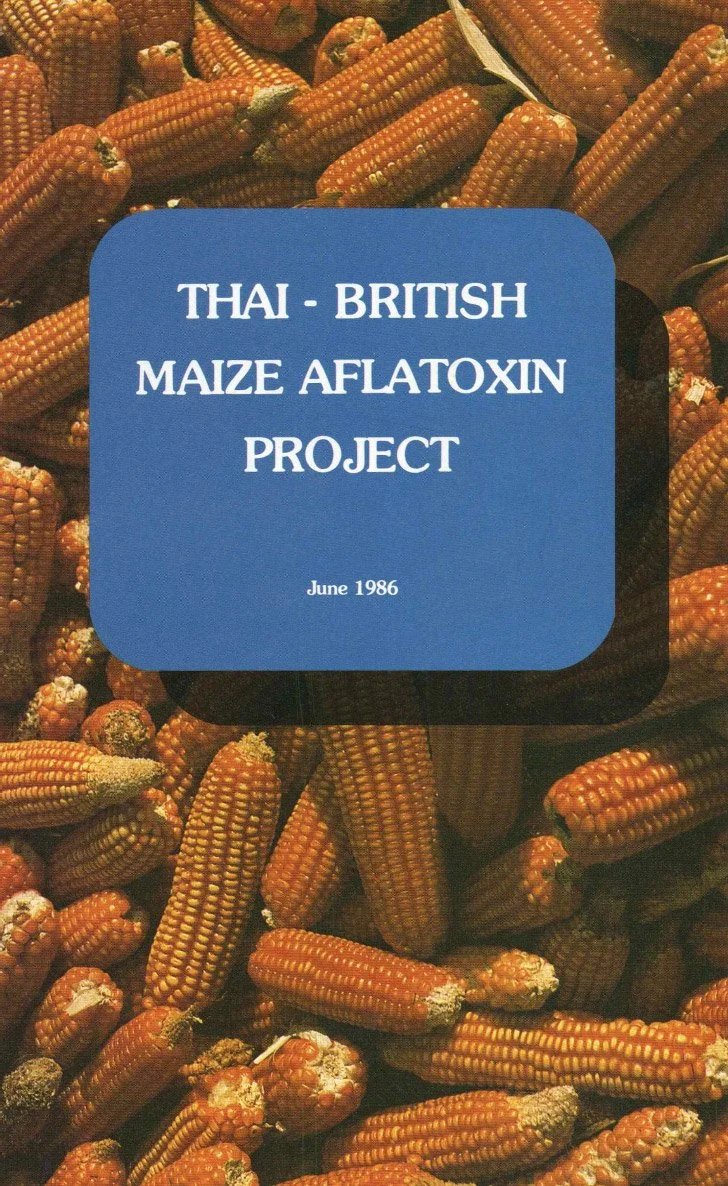
More important in the longer term was the conversation that I had with the permanent secretary - who had probably been surprised by my bursting into song – as I took his challenge seriously……….
…….by mid 1986 we had not only established field trials in key locations but, based on the results,had persuaded the government to change its national policy on the harvesting and storage of maize whilst a major exporter had introduced a premium grade for “low-aflatoxin maize”. But that’s another story….
DIPLOMATIC EXCHANGES. A few months later I received a phone call, asking me to go and see the Minister. He was a charming gentleman called Khun Narong Wongwan [2], an astute politician who made his fortune in the tobacco business. He tells me that he has been invited on an official visit to England by the British Minister of Agriculture, Michael Jopling [3], and that he would like to make an extra-curricular visit to Windsor Safari Park. Would l please organise it? The reason for this side-visit, when I ask, is that he would like to create a similar safari park for Bangkok.
When back in the UK I contact the Thai Embassy and discuss how best to organize this as an informal visit but with the appropriate diplomatic niceties and security. Together we make a plan. In due course, the Minister arrives and I accompany him and his officials around the safari park. The visit is a success. He is delighted.
When I am next back in Bangkok he calls me into his office and tells me that the entire visit was a great success and would I write a letter of thanks to the British Minister? Having no diplomatic training, I put together a straightforward letter of thanks, not forgetting to mention the projects in which Thailand and Britain were cooperating – slipping in a supportive reference to our own work. The letter was duly typed on headed paper, signed and dispatched. I thought no more about it.
Sometime later, when back in UK, I received a phone call from the private secretary of Mr. Jopling. “Hello Dr Meadley. We have received a very thoughtful and informative letter from Mr. Narong Wongwan, thanking us for organizing his visit and appreciative of the various Thai-British initiatives - including your own work. As you are well-acquainted with both Mr Wongwan and the local situation, the Minister wonders if you would draft the reply”.
It was only a short while after that I was invited to Mr. Wongwan’s office to read the “very thoughtful and appreciative letter” that he had received from the British Minister, in which amongst other things he was given reassurance of continued support for our work. And so it was that I replied to myself and began to wonder if this is how diplomacy works.